Mohs sertliği 7 olan kuvars kumu, endüstriyel mineral sertlik ölçeğinin en üst sıralarında yer alır. Karşılaştırılabilir verimde işlenen diğer minerallerin neredeyse tamamından daha hızlı bir şekilde sınıflandırıcı bileşenlerini aşındırır. Cam kalitesinde kuvars, petrol ve gaz proppant üretimi ve yüksek saflıkta yarı iletken silika üretimi için aynı sınıflandırıcı tasarımının (saatte 4 t ile 840 t arasında üretim kapasitesiyle) kullanılabilmesi için, sınıflandırıcının hem mekanik olarak sağlam hem de aerodinamik olarak hassas olması gerekir.
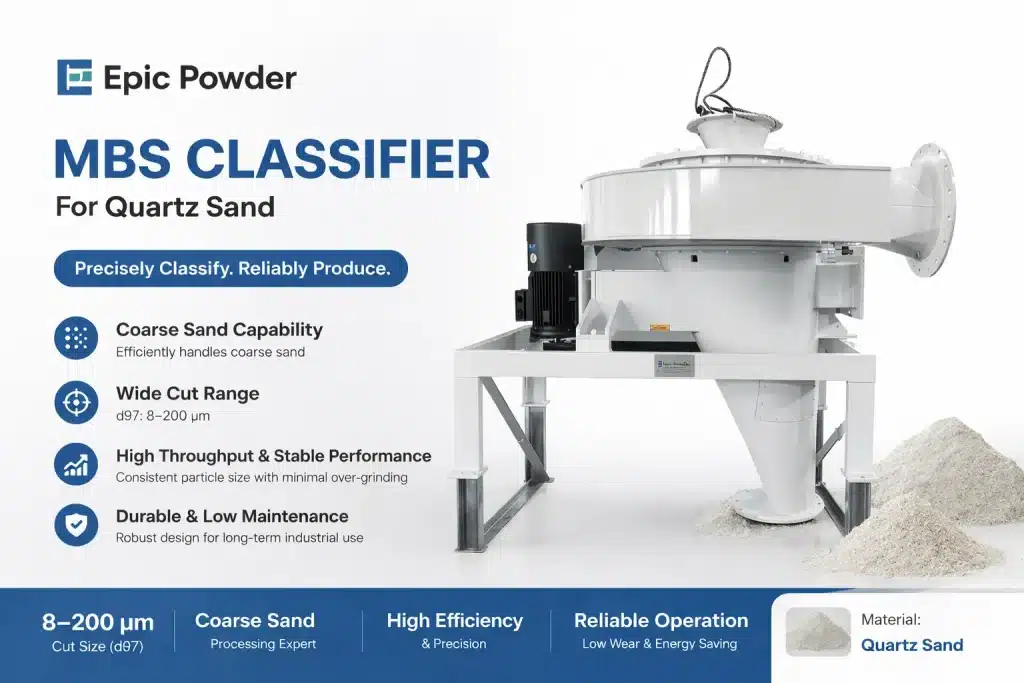
MBS Serisi hava sınıflandırıcı, bu tür aşındırıcı, geniş aralıklı uygulamalar için özel olarak geliştirilmiştir. Aşınmaya dayanıklı yapısı, standart sınıflandırıcı tasarımlarına kıyasla bileşen ömrünü uzatır ve düşük basınç düşüşlü iç mimarisi, tüm çalışma aralığı boyunca fan enerji tüketimini azaltır. Elektronik sınıfı silika için 8 mikrondan cam kumu için 200 mikrona kadar olan D97 kesme noktası, sınıflandırıcı çark hızıyla kontrol edilir; bu, hattın durdurulmasını gerektirmeyen, sürekli olarak ayarlanabilen bir parametredir.
Bu makale, kuvars kumunun kullanım alanlarını incelik gereksinimleriyle eşleştiriyor, kuvars kumunu daha yumuşak minerallerden daha zor sınıflandırılan bir malzeme olarak açıklayan faktörleri ele alıyor, MBS model seçimini inceliyor ve iki kuvars kumu işleme tesisinden üretim verileri sunuyor.
Her Kuvars Kumu Pazarının Gereksinimleri ve Yanlış Yapmanın Sonuçları
Kuvars kumu, neredeyse diğer tüm endüstriyel minerallerden daha fazla farklı pazara hizmet vermektedir ve bu pazarların partikül boyutu gereksinimleri de son derece farklıdır. Aşağıdaki tablo, başlıca kuvars pazarlarını D97 hedefleriyle eşleştirmekte ve sınıflandırmanın yanlış olması durumunda neler olduğunu açıklamaktadır.
| Pazar | Tipik D97 | Saflık Gereksinimi | Aşırı Büyük Parçacıkların Sonucu |
| Elektronik / yarı iletken | 5-15 µm | SiO2 > 99.9%, Fe < 30 ppm | EMC paket kusurları; yarı iletken paketlemede tel eğriliği |
| Boyalar ve kaplamalar | 10-30 µm | Yüksek beyazlık; düşük demir | Yüzey pürüzlülüğü; parlaklık düşüşü; film süreksizliği |
| Yapay kuvars taşı | < 45 µm (ince fraksiyon) | Tutarlı SiO2 oranı | Renk farklılığı; yüzey kusurları; reçine tüketiminde artış |
| Seramik ve refrakter malzemeler | 20-80 µm | Düşük safsızlık oksitleri | Sinterleme kusurları; termal çatlak oluşum noktaları |
| Cam üretimi | 50-150 µm | Fe2O3 < 0.03% | Camda tohum kusurları; düzensiz erime davranışı |
| Dökümhane ve kalıplama | 75-200 µm | Tutarlı AFS numarası | Geçirgenlik varyasyonu; dökümlerdeki yüzey kusurları |
| Petrol ve gaz propanı | 100-400 µm | Yuvarlaklık ve güç | İnce taneciklerin göçü kırıkları tıkıyor; iletkenlik azalıyor. |
Bu aralıktaki fiyat farkı oldukça büyüktür. Elektronik sınıfı D97 10-15 mikronluk erimiş silika tozu $30-80/kg'dan satılmaktadır. Standart endüstriyel dolgu maddesi sınıfı D97 45-100 mikronluk ise $0.15-0.50/kg'dan satılmaktadır. Fark esas olarak hammadde maliyetinde değil, işleme hassasiyetinde ve temizliğindedir. D97'yi düşük kirlilikle sürekli olarak 12 mikronda tutan bir sınıflandırıcı, D97 50 mikron üreten bir sınıflandırıcıdan temelde farklı bir ticari ürün üretir.
Kuvars kumunun yumuşak minerallere göre sınıflandırılmasının neden daha zor olduğu
Aşınma: Aşınma Oranı Sorunu
Mohs sertliği 7 olan kuvars, çelik sınıflandırıcı bileşenlerini, çoğu kuvars uygulaması için standart karbon çelik konstrüksiyonu ekonomik olarak pratik olmaktan çıkaracak bir oranda aşındırır. Saatte 50-100 ton kuvars işleyen standart bir çelik sınıflandırıcı tekerleğin genellikle 300-800 çalışma saatinde bir değiştirilmesi gerekir; bu da bakım ekiplerini meşgul eder ve işletme maliyetlerini önemli ölçüde artırır.
Aşınmanın sınıflandırma performansı üzerinde ikincil bir etkisi vardır: sınıflandırıcı tekerlek bıçakları aşındıkça, etkili tekerlek yarıçapı azalır ve bu da kesme noktasını daha kaba hale getirir. D97 ürünü, kalite kontrolü tarafından fark edilene kadar veya daha pahalıya mal olan bir müşteri şikayeti sorunu ortaya çıkarana kadar, genellikle haftalar boyunca kademeli olarak yukarı doğru kayar. Bu nedenle aşınmaya dayanıklı yapı sadece bir maliyet sorunu değil; aynı zamanda bir ürün kalitesi sorunudur.
Yüksek Veri İşleme Talepleri ve Sınıflandırma Kararlılığı
Büyük kuvars kumu işletmeleri (cam fabrikaları, proppant üreticileri, inşaat agregası işleyicileri) sürekli olarak saatte 100-600 ton üretim kapasitesiyle çalışmaktadır. Bu oranlarda, sınıflandırma bölgesindeki küçük dengesizlikler (düzensiz besleme dağılımı, hava akışı asimetrisi veya bileşen titreşimi) bile üründe ölçülebilir D97 varyasyonuna neden olur. Sınıflandırıcının mekanik tasarımı, yalnızca düşük hacimli test koşullarında değil, yüksek üretim kapasitelerinde de istikrarlı hava akışı düzenlerini ve tekerlek dengesini korumalıdır.
Geniş Hedef Hassasiyet Aralığı
Tek bir tesisten birden fazla pazara tedarik sağlayan bir kuvars kumu üreticisi, aynı sınıflandırıcıyı farklı zamanlarda D97 15 mikron (elektronik sınıfı), D97 45 mikron (kaplama dolgu malzemesi) ve D97 120 mikron (cam kumu) seviyelerinde çalıştırmak zorunda kalabilir. Tekerlek hızını ayarlayarak ve parçacık boyutu dağılımı (PSD) ölçümüyle doğrulayarak, tesisi kapatmadan veya mekanik bileşenleri değiştirmeden bu kesim noktaları arasında güvenilir bir şekilde geçiş yapabilme yeteneği, çok seviyeli işlemler için önemli bir operasyonel avantajdır.
MBS Sınıflandırıcı Aşındırıcı Kuvars Üzerinde Nasıl Keskin Kesim Noktaları Elde Ediyor?
Ayırma Mekanizması
MBS, diğer dinamik hava sınıflandırıcılarıyla aynı temel ayırma prensibini kullanır: merkezkaç kuvveti (dönen sınıflandırıcı tekerleği tarafından uygulanan ve dışa doğru yönlendirilen) ve aerodinamik sürüklenme (içeri doğru hava akışından kaynaklanan ve tekerleğe doğru yönlendirilen) arasındaki denge. Kesme noktasının altındaki parçacıklar, sürüklenmenin merkezkaç kuvvetini yenebileceği kadar hafiftir; içeri doğru taşınırlar ve ürün olarak dışarı çıkarlar. Kesme noktasının üzerindeki parçacıklar ise merkezkaç kuvvetinin kazanabileceği kadar ağırdır; dışarı doğru fırlatılırlar, sınıflandırıcının tabanına düşerler ve değirmene geri dönerler.
Kesimin keskinliğini belirleyen şey – ince ve kaba fraksiyonlar arasındaki geçişin keskin mi yoksa kademeli mi olacağı – bu dengenin sınıflandırıcı tekerleğinin tüm çevresi boyunca ne kadar homojen bir şekilde korunduğudur. MBS'nin hiyerarşik iç yapısı ve ayarlanabilir kılavuz kanatları, sınıflandırma bölgesinde homojen hava akışı dağılımı sağlamak üzere tasarlanmıştır. Homojen hava akışı, belirli bir boyuttaki tüm parçacıkların aynı sürüklenme kuvvetine maruz kalması anlamına gelir; bu da geniş bir geçiş bölgesi yerine tutarlı bir kesim üretir.
Kuvars yüzeyler için aşınmaya dayanıklı yapı.
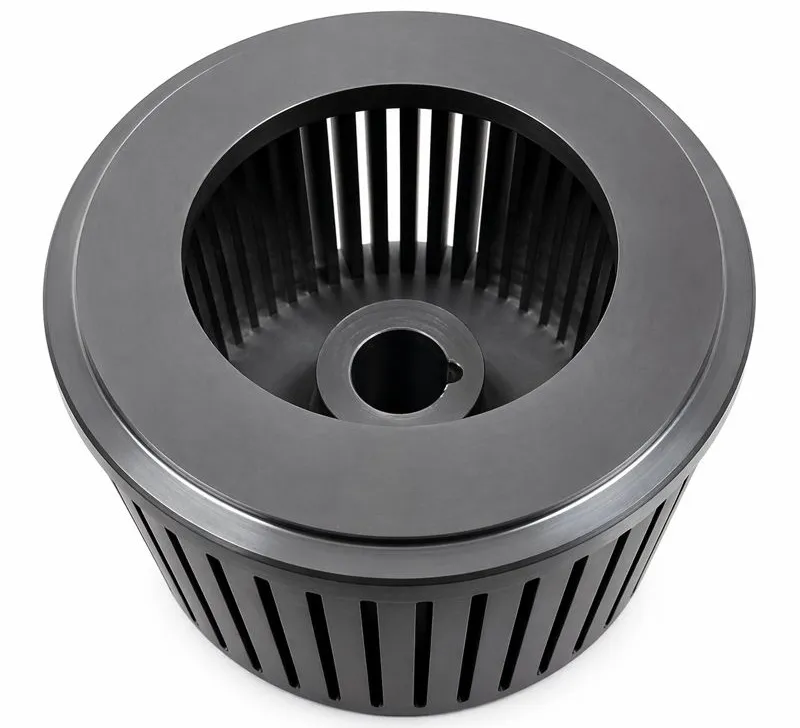
MBS, tüm yüksek temas bölgelerinde aşınmaya dayanıklı malzemeler kullanır: sınıflandırıcı tekerlek bıçakları, kılavuz kanatlar ve partikül akışına bakan gövde yüzeyleri. Özellikle kuvars kumu için, aşınma bölgesi geometrisi, partiküllerin bıçak yüzeylerinde oyulma aşınmasını en aza indiren açılarla çarpmasını sağlayacak şekilde tasarlanmıştır. Aşınmaya dayanıklı malzeme seçimiyle birleştiğinde, bu, tipik kuvars hizmetinde bileşen değiştirme aralıklarını 3.000-5.000 saate kadar uzatır. Eşdeğer verimde standart karbon çelik konstrüksiyona göre dört ila sekiz kat daha uzun ömür sağlar.
Tutarlı aşınma ömrü aynı zamanda tutarlı sınıflandırma performansı anlamına da gelir: tekerlek geometrisi, yüzlerce saat içinde değişmek yerine binlerce saat boyunca tasarım özelliklerine yakın kalır, bu nedenle D97 sık sık yeniden kalibrasyona gerek kalmadan istikrarlı kalır.
Düşük Basınç Düşüşü: Enerji Maliyeti Açısından Ne Anlama Geliyor?
Çoğu hava sınıflandırıcı tesisinde en büyük işletme maliyeti kalemi fan enerji tüketimidir; bu, tipik olarak toplam sistem gücünün -251 TP3T'sini oluşturur. Fan gücü, basınç düşüşüyle doğrusal olarak artar: basınç düşüşündeki 251 TP3T'lik bir azalma, fan gücü ile hava hızı arasındaki doğrusal olmayan (kabaca kübik) ilişki nedeniyle fan gücünü yaklaşık 351 TP3T azaltır. MBS'nin iç yapısı, eşdeğer verimde geleneksel hava ayırıcı tasarımlarına kıyasla basınç düşüşünü 20-301 TP3T azaltır. Bu, günde 24 saat çalışan bir tesiste doğrudan fan enerji tasarrufuna dönüşür.
MBS Serisi: Kuvars Kumu İçin Model Seçimi
MBS serisi, küçük ölçekli hassas sınıflandırmadan büyük ölçekli endüstriyel işleme kadar 18 modeli kapsamaktadır. Kuvars kumu işleme için en sık tercih edilen modeller şunlardır:
| Model | Tahrik Gücü (kW) | Hava Akışı (m³/sa) | D97 Aralığı (um) | Maksimum Besleme Hızı (t/saat) |
| MBS-5 | 37 | 23,400 | 14-200 | 32.8 |
| MBS-7 | 75 | 49,000 | 18-200 | 68 |
| MBS-9 | 132 | 107,000 | 25-200 | 140 |
| MBS-12 | 220 | 237,000 | 29-200 | 400 |
| MBS-15 | 380 | 402,000 | 35-200 | 560 |
| MBS-18 | 630 | 606,000 | 38-200 | 840 |
Kapasite değerleri, 3 mm'nin altında besleme tane boyutu ve ,35'in altında nem içeren kuvars kumu için geçerlidir. Gerçek performans, besleme tane boyutu dağılımına, malzeme sertliğine ve hedef D97 değerine bağlıdır. Uygulamaya özel tahminler için EPIC Powder ile iletişime geçin.
Quartz Uygulaması ile Model Seçimi
- Elektronik/yarı iletken silika (D97 8-20 µm), saatte 35 tona kadar: MBS-5 — MBS serisinde elde edilebilecek en hassas kesim noktası; yüksek değerli, düşük hacimli uygulamalar için uygundur.
- Kaplamalar ve yapay taş dolgu malzemesi (D97 15-45 µm), 35-80 t/saat: MBS-7 — orta ölçekli kaplama ve taş dolgu işlemleri için en yaygın model
- Çok kademeli tesis (D97 15-100 µm), 80-200 t/saat: MBS-9 — bu kapasitede en geniş D97 yelpazesini işler; birden fazla pazara hizmet veren tesisler için pratiktir.
- Cam ve seramik (D97 30-150 µm), 200-500 t/saat: MBS-12 - MBS-15 arası — cam ve refrakter malzeme müşterileri için büyük ölçekli üretim.
Destekleyici malzeme ve yüksek hacimli cam kumu (D97 50-200 µm), saatte 500 tonun üzerinde: MBS-18 — en yüksek hacimli işlemler için MBS serisinin maksimum verim kapasitesi.
Üretim Sonuçları: İki Kuvars Kumu Sınıflandırma Uygulaması
VAKA ÇALIŞMASI 1
Kaplama Kalitesinde Kuvars Tozu — 120 t/h'de Kararlı D97 35 Mikron Elde Edilir ve Uzun Aşınma Ömrü Sağlanır
Durum
Boya ve kaplama pazarına kuvars tozu tedarik eden bir firma, 90-95 ton/saat kapasiteyle 35-40 mikron D97 boyutunda kuvars üretmek için kapalı devre bir bilyalı değirmenle çalışan geleneksel bir hava ayırıcı kullanıyordu. Mevcut ayırıcının sınıflandırıcı tekerleği, kuvars aşınması nedeniyle her 600-800 saatte bir değiştirilmeyi gerektiriyordu. Her değişim 12 saatlik bir durdurmayı gerektiriyordu. Bir yıl boyunca bu, yaklaşık 6-8 durdurma anlamına geliyordu; bu da yıllık yaklaşık 72-96 saatlik üretim kaybına yol açıyordu. Ayrıca, tekerlek aşınması nedeniyle her değişimden önceki 200-300 saat içinde D97 ürününün boyutu 35 mikrondan 42-48 mikrona çıkıyordu ve bu da müşteri kalite şikayetlerine neden oluyordu.
Çözüm
EPIC Powder Machinery, aşınmaya dayanıklı sınıflandırıcı çark ve kılavuz kanat yapısına sahip bir MBS-9 tedarik etti. Ünite, mevcut ayırıcının yerine minimum havalandırma sistemi modifikasyonuyla monte edildi.
Sonuçlar
• Verim: 90-95 t/saatten 118 t/saate yükseltildi — MBS'nin daha düşük basınç düşüşü, aynı fan gücünde daha yüksek hava akışına olanak tanıyarak sınıflandırıcı verim kapasitesini artırdı.
•D97 kararlılığı: Devreye alma sırasında ölçülen 35,8 mikron; 3.000 saatlik denetimde 36,4 mikron — 3.000 saatlik sürekli kuvars hizmeti boyunca 1 mikrondan daha az sapma
•Aşınma aralığı: Sınıflandırıcı tekerleği 3.200 saatte kabul edilebilir aşınma gösterdi; 4.000 saatte değiştirilmesi önerildi - önceki ayırıcıya göre yaklaşık 5 kat daha uzun ömür.
Yıllık üretim kesintisi: Tahmini yıllık kesinti sayısı, önceki 6-8 kesintiye kıyasla 2'ye düşecek; bu da yıllık yaklaşık 60-70 saatlik üretim kaybı anlamına geliyor.
VAKA ÇALIŞMASI 2
Destekleyici Malzeme Kalitesinde Kuvars Kumu — Sürekli Çalışmada 550 t/saat Kapasiteyle D97 150 Mikron Hassasiyetini Koruma
Durum
Bir petrol ve doğalgaz proppant üreticisi, sürekli üç vardiya operasyonunda saatte 500-600 ton üretim kapasitesiyle kuvars kumunu 150 ± 10 mikronluk sıkı bir D97 spesifikasyonuna göre sınıflandırmak zorundaydı. Bu üretim kapasitesinde ve kuvars aşınmasıyla, önceki sınıflandırma ekipmanları her 700-900 saatte bir tekerlek değişimi gerektiriyordu ve D97'yi ±10 mikron tolerans aralığında tutmakta zorlanıyordu; 160 mikronun üzerindeki sapmalar, ince tanelerin çatlaklarda göç etmesine neden oluyor, bu da proppant iletkenliğini azaltıyor ve petrol şirketi müşterileri tarafından uyarı olarak işaretleniyordu.
Çözüm
EPIC Powder, D97 150 mikron çözünürlükte 560 t/saat kapasiteli bir MBS-15 tedarik etti. MBS-15'in geniş rotorlu tasarımı, yüksek verimlilikte sınıflandırma kararlılığını korurken, aşınmaya dayanıklı yapısı sürekli kuvars hizmeti için özel olarak tasarlandı.
Sonuçlar
• D97, saatte 560 ton kapasiteyle: Devreye alma sırasında 149,6 mikron; 12 aylık çalışma süresi boyunca sürekli olarak ±10 mikron spesifikasyonu dahilinde.
• 3.500 saatlik kullanımda D97 sapması: 4 mikrondan az — döngü ortası yeniden kalibrasyon gerektirmeden müşterinin tolerans aralığı dahilinde.
• Aşınma aralığı: 3.500 saatte yapılan tekerlek muayenesinde kabul edilebilir aşınma tespit edildi; 4.500 saatte değiştirilmesi planlanıyor.
• Fan enerji tasarrufu: Eşdeğer hava akış hacminde önceki sınıflandırıcıya kıyasla fan güç tüketiminde 17% azalma — bu, MBS-15'in daha düşük basınç düşüşüne bağlanabilir.
• Proppant müşteri geri bildirimi: MBS kurulumunu takip eden 12 ay içinde petrol şirketi müşterilerinden D97 ile ilgili iletkenlik şikayeti alınmadı.
| Kuvars Kum Hattınız İçin MBS Hava Sınıflandırıcısı Seçimi? EPIC Powder Machinery'nin uygulama mühendisleri, kuvars kumu uygulamanız, besleme boyutunuz ve hedef D97 değeriniz için doğru MBS modelini önerebilir. Ücretsiz numune testi sunuyoruz — bize temsili bir kuvars numunesi gönderin, size önerilen sınıflandırıcı parametreleriyle birlikte eksiksiz bir PSD analiz raporu gönderelim. Ayrıca, mevcut bilyalı değirmen veya öğütme devrelerine sonradan takılacak kurulumlar için yerleşim çizimleri ve entegrasyon desteği de sağlıyoruz. Ücretsiz numune testi veya danışmanlık için: www.quartz-grinding.com/contact MBS Sınıflandırıcı Serisinin Tamamını Keşfedin: www.quartz-grinding.com |
Sıkça Sorulan Sorular
MBS sınıflandırıcısının kuvars kumunda güvenilir bir şekilde elde edebileceği en ince D97 değeri nedir?
MBS-5, standart kuru çalışma koşullarında kuvars kumunda 14 mikrona kadar ince D97 elde eder. 14 mikronun altında, standart MBS performansı büyük ölçüde belirli kuvarsa bağlıdır. Düşük yüzey pürüzlülüğüne sahip yüksek saflıkta kaynaşmış silika, düzensiz yüzey dokusuna sahip doğal kuvars kumuna göre daha tutarlı bir şekilde sınıflandırma yapar. Bunun nedeni, düzensiz parçacıkların aerodinamik davranışının daha az tahmin edilebilir olmasıdır. Kuvars veya silikada 12 mikronun altındaki D97 için, EPIC Powder, ekipman belirtmeden önce belirli besleme malzemeniz üzerinde bir pilot deneme yapılmasını önerir. D97 5-10 mikron aralığında elektronik sınıfı kaynaşmış silika için, yarı iletken paketleme uygulamalarında tipik olan D98 ve Dmax özelliklerine ulaşmak için daha yüksek hızlı bir sınıflandırıcı konfigürasyonu veya aşağı akışta ikincil bir sınıflandırma aşaması gerekebilir.
Aynı MBS ünitesini kullanarak aynı üretim hattında birden fazla kuvars kumu kalitesi üretebilir miyim?
Evet, bu, hem ince taneli hem de daha kaba taneli pazarlara tedarik sağlayan kuvars kumu üreticileri için yaygın bir konfigürasyondur. MBS kesme noktası, sürekli olarak ayarlanabilen bir çalışma parametresi olan sınıflandırıcı tekerlek hızıyla kontrol edilir. D97 35 mikron (kaplama sınıfı) ile D97 120 mikron (cam sınıfı) arasında geçiş yapmak, tekerlek hızı ayarını değiştirmeyi ve sınıflandırıcı devresinin kararlı duruma ulaşmasını beklemeyi gerektirir. Bu süre, yıkama süresi de dahil olmak üzere genellikle 20-40 dakikadır.
Pratik prosedür şöyledir: tekerlek hızını yeni reçete ayarına göre ayarlayın, ardışık iki numune hedef D97 değerini doğrulayana kadar her 10 dakikada bir ürün numunesi alın, ardından ürünü yeni kalite akışına verin. Yerleşme süresi boyunca (tipik olarak 15-25 dakika üretim) üretilen geçiş malzemesi ya atılır ya da iki kaliteden daha kaba olanına yeniden sınıflandırılır. Bu, daha kaba spesifikasyonu karşılayıp karşılamadığına bağlıdır. Çok farklı D97 hedefleri arasında (50 mikrondan fazla farkla) geçiş yapan tesisler için, her kalite için doğrulanmış bir reçete ve belgelenmiş bir geçiş prosedürü, her geçiş sırasında spesifikasyon dışı üretimi azaltır.
Destansı Toz
At Destansı Toz, Geniş bir ekipman modeli yelpazesi sunuyoruz ve özel ihtiyaçlarınızı karşılayacak çözümler geliştiriyoruz. Ekibimiz, çeşitli toz işleme alanlarında 20 yılı aşkın deneyime sahiptir. Epic Powder, maden endüstrisi, kimya endüstrisi, gıda endüstrisi, ilaç endüstrisi vb. için ince toz işleme teknolojisinde uzmanlaşmıştır.
Ücretsiz danışmanlık ve size özel çözümler için bugün bizimle iletişime geçin!

“Okuduğunuz için teşekkürler. Umarım makalem yardımcı olmuştur. Lütfen aşağıya yorum bırakın. Ayrıca EPIC Powder çevrimiçi müşteri temsilcisiyle de iletişime geçebilirsiniz. Zelda Daha fazla bilgi için lütfen iletişime geçin.”
— Jason Wang, Mühendis