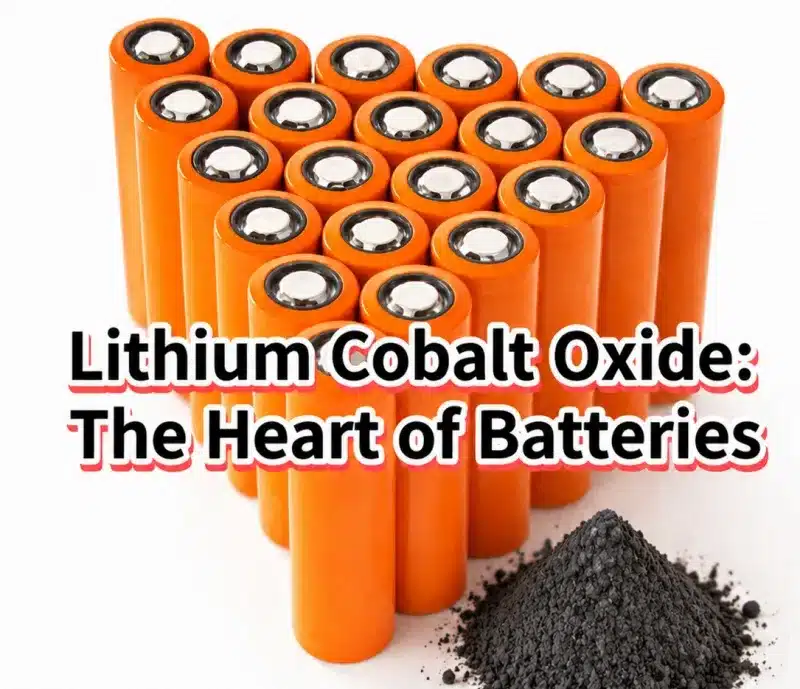
In lithium-ion battery cathode material systems, lithium cobalt oxide (LiCoO₂) boasts high energy density, a stable discharge platform, and excellent cycle performance. It remains a core cathode material for 3C consumer electronics batteries. The particle size distribution, morphology, purity, and dispersibility of lithium cobalt oxide powder directly affect electrode compaction density, ion transport efficiency, and battery safety performance. Ultra-fine grinding is a critical process in lithium cobalt oxide production. Equipment selection directly impacts product quality and production costs.
Currently, mainstream grinding equipment in the industry is mainly divided into two categories: air jet mills and mechanical mills. These two differ significantly in their working principles, grinding precision, and applicable scenarios.
This article, considering the material characteristics of lithium cobalt oxide and the stringent standards of the lithium battery industry, compares and analyzes the performance advantages and disadvantages of these two types of equipment. It also clarifies the optimal solution for ultra-fine grinding of lithium cobalt oxide and answers frequently asked questions in production practice. The aim is to provide a scientific basis for lithium battery material companies in equipment selection.
I. Core Process Requirements for Lithium Cobalt Oxide Ultrafine Grinding
Lithium cobalt oxide is a layered metal oxide with a Mohs hardness of approximately 5.5–6.5. After sintering, it tends to form agglomerated blocks. Ultrafine grinding must meet the following four core requirements:
- Precisely controllable particle size
(typically D50 = 4–8 μm, D97 ≤ 15 μm; high-end products require D50 ≤ 3 μm) - Narrow particle size distribution
(to avoid coarse particles piercing separators and fine particles causing side reactions) - Zero metal contamination
(Fe impurities ≤ 50 ppm; high-end products ≤ 10 ppm) - Low-temperature inert protection
(to prevent high-temperature oxidation, structural collapse, and dust explosion risks)
At the same time, production must balance continuous stability, energy cost, and environmental compliance. Any process deviation can directly reduce battery capacity, shorten cycle life, and even cause safety hazards.
II. Core Principle Comparison: Jet Mill vs Mechanical Grinding Mill
Jet Mill: Particle Self-Impact Ultrafine Grinding
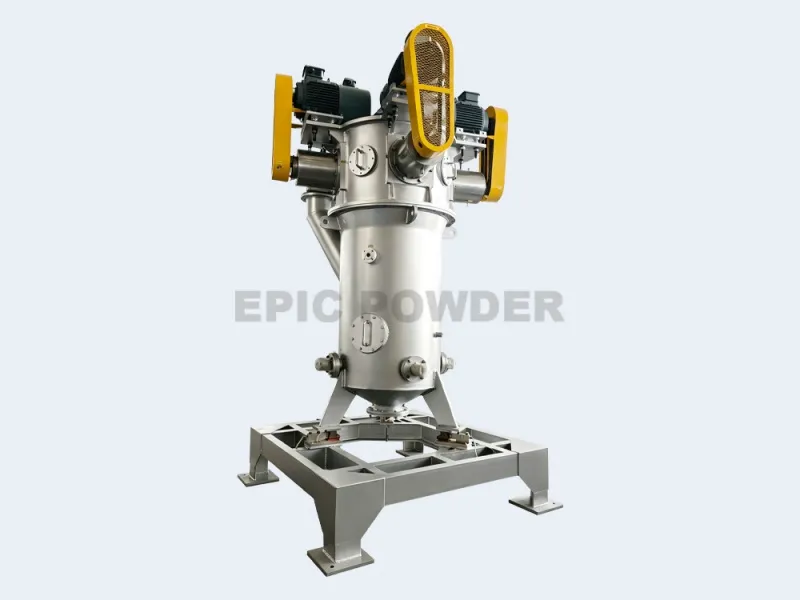
Air Jet mills utilize supersonic airflow as power. Compressed gas is accelerated to 300-400 m/s through a Laval nozzle, causing lithium cobalt oxide particles to collide, shear, and rub at high speed within the grinding chamber, achieving self-grinding. There is no direct contact between the grinding media and the material. The equipment incorporates a high-precision turbine classifier. Centrifugal force separates coarse and fine particles in real time. Qualified fine powder is collected directly. Coarse powder is returned to the grinding zone for recycling, operating in a closed loop throughout the process.
Mechanical Grinding Mill:
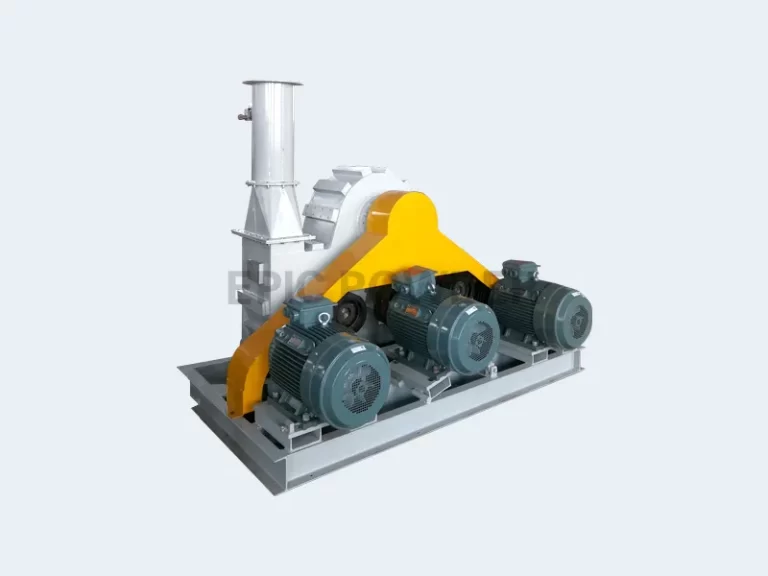
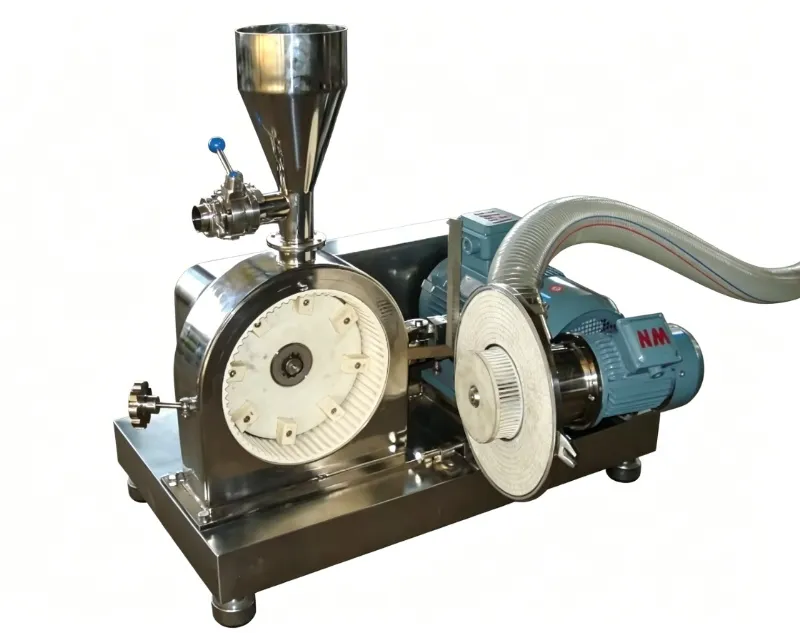
Mechanical mills (air classifier mills, pin mills) rely on a high-speed rotating rotor (hammers, blades, pins) to generate mechanical impact force. This causes the material to collide, shear, and grind against the stator and chamber walls, reducing particle size. The equipment controls the output particle size through a classifier. Some high-end models use ceramic linings to reduce contamination. Relying on mechanical kinetic energy to complete the grinding process, they have a simple structure and high production capacity.
III. Performance Comparison of the Two Systems in Lithium Cobalt Oxide Grinding
Grinding Precision and Particle Size Control
Jet mills, through particle self-grinding and precise classification, can achieve ultrafine grinding with a D50 of 1-10μm. The particle size distribution is narrow (Span ≤ 1.2), with no over-grinding or coarse particle entrainment. The particles have high sphericity and smooth surfaces, perfectly matching the forming requirements of high-end lithium cobalt oxide electrodes.
Mechanical mills are limited by their mechanical structure. The lower limit of grinding is approximately D50 = 8-15μm, with a wide particle size distribution (Span ≥ 1.8). They are prone to fine powder agglomeration and coarse particle residue, making it difficult to meet the stringent particle size requirements of high-end lithium battery materials.
Purity and Contamination Control
Lithium cobalt oxide is extremely sensitive to metallic impurities. Impurities such as iron and chromium can trigger battery self-discharge and thermal runaway risks.
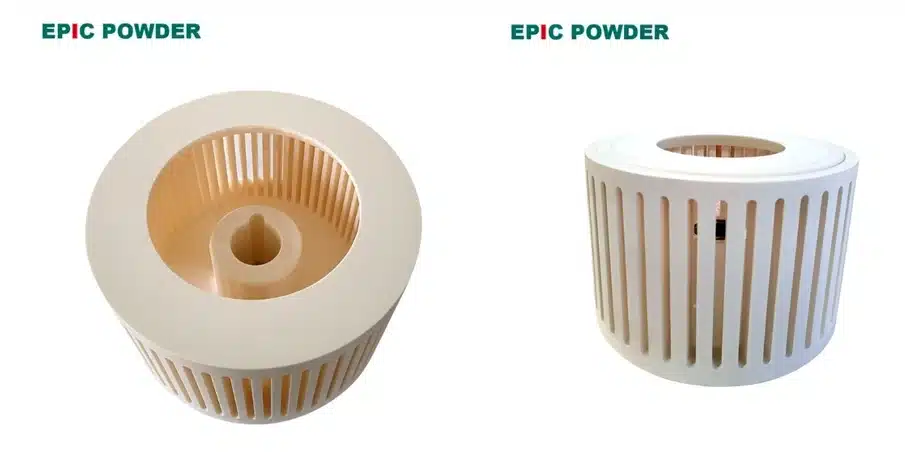
Air jet mills have no moving parts in contact with the material. The grinding chamber is lined with ceramic and tungsten carbide, eliminating metal wear throughout the process. Iron impurities can be controlled below 10 ppm, achieving a purity ≥99.9%.
Mechanical mills involve high-speed friction between the rotor and hammers and the material. Even with ceramic protection, trace amounts of metal wear still exist, and impurity content can easily exceed 30 ppm, failing to meet high-end lithium cobalt oxide production standards.
Temperature Control and Material Stability
Lithium cobalt oxide is prone to oxygen release and oxidation at high temperatures, damaging its layered crystal structure.
Air jet mills utilize adiabatic expansion cooling, maintaining a grinding chamber temperature ≤50℃ and operating at low temperatures throughout the process. This perfectly protects the material’s crystal structure and electrochemical properties. Coupled with a closed-loop nitrogen circulation system, the oxygen content is ≤100ppm, completely eliminating the risk of oxidation and explosion.
Mechanical mills rely on mechanical friction for power. The grinding chamber temperature easily reaches 80-120℃, which can easily lead to pyrolysis of lithium cobalt oxide and a decrease in surface activity. An additional cooling system is required, increasing process complexity.
Production Capacity and Energy Costs
Jet mills:
- Capacity: 200–1000 kg/h
- High energy consumption (800–1200 kWh per ton)
- High equipment investment
- High product yield ≥99%
Mechanical grinding mills:
- Capacity: 500–1500 kg/h
- Low energy consumption (300–500 kWh per ton)
- Lower equipment cost
- Overall yield only 85%–90% due to secondary classification and impurity removal
Process Adaptability and Safety & Environmental Protection
The jet pulverizer features a fully negative pressure, sealed design, eliminating dust leakage. Equipped with a nitrogen circulation system, it is compatible with the flammable and explosive characteristics of lithium cobalt oxide. It meets the GMP clean production standards of the lithium battery industry and can be seamlessly integrated into automated production lines.
Mechanical pulverizers have weaker sealing performance, resulting in a higher risk of dust leakage. Mechanical impacts can easily generate sparks, requiring stringent safety protection measures and failing to meet the safety production regulations of the lithium battery industry.
Summary Table
| Comparison Dimension | Jet Mill (Fluidized/Disc Type) | Mechanical Impact Mill |
|---|---|---|
| Grinding Principle | Supersonic particle self-collision | High-speed rotor impact & shear |
| Iron contamination risk | Extremely low (full ceramic design possible) | Medium (wear risk of cutting tools) |
| Particle morphology | Rounded, no micro-cracks | Sharp fracture surfaces, micro-stress cracks |
| Temperature control | Near ambient (gas expansion cooling) | High heat generation, requires cooling jacket |
| Fine powder (D10) control | More difficult, higher ultrafine fraction | Better control, less over-grinding |
| Energy consumption | Very high (air compressor required) | Lower energy consumption |
| Investment cost | High auxiliary system cost | Compact and lower initial investment |
IV. Conclusion on the Selection of Lithium Cobalt Oxide Ultrafine Grinding Equipment
Through comprehensive analysis, we can see that “air jet mills” and “mechanical mills” are not absolute substitutes for each other in the ultrafine grinding of lithium cobalt oxide. The choice depends on your target product positioning and production stage.
When to Choose an Air Jet Mill?
If producing:
- High-voltage LiCoO₂ (≥4.45V)
- Submicron or fine D50 ≤ 8 μm cathode materials
- High-end consumer battery supply chains
- R&D or high-precision applications
Then a jet mill is the preferred choice.
Its advantages in zero iron contamination, particle shape preservation, and elimination of coarse particles are fundamental to ensuring high battery safety and long cycle life.
When to Choose a Mechanical Crusher?
If producing:
- Conventional voltage LiCoO₂
- Coarse D50 ≥ 12 μm pre-crushing stage materials
- Cost-sensitive, large-scale production
Then a mechanical grinding mill (with full ceramic rotor and lining) is more cost-effective. It achieves high throughput with low energy consumption.
Industry FAQ
Q1: How to solve excessive BET surface area after jet mill lithium cobalt oxide?
Jet milling may produce excessive ultrafine particles, increasing BET surface area, which can absorb too much electrolyte during battery filling.
Solutions:
- Optimize classification parameters: reduce grinding pressure and increase classifier speed to minimize over-grinding
- Secondary classification: install a high-precision air classifier after the mill to remove particles <1–2 μm
- Particle shaping: use a dedicated shaping machine to gently polish particles and reduce surface fines
Q2: What should be considered in full ceramic modification of mechanical mills to avoid iron contamination?
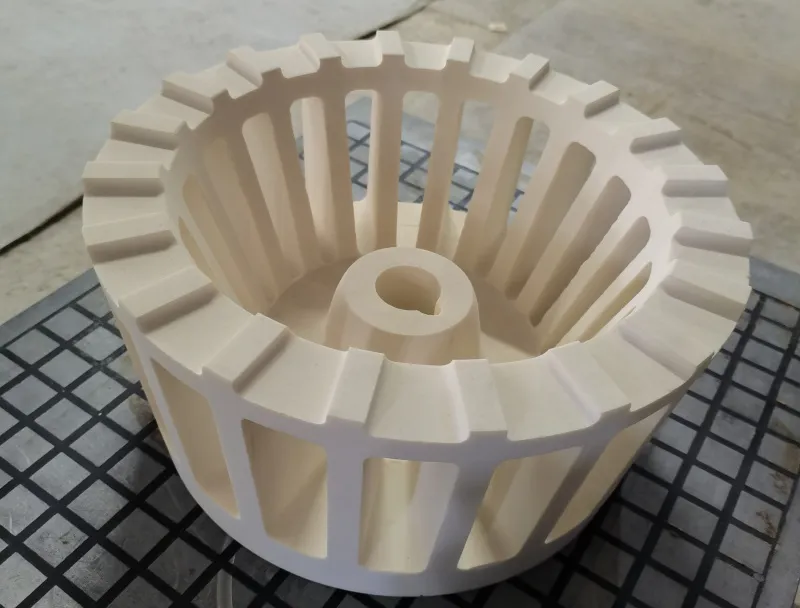
Key dead zones include:
- Dynamic shaft seal: use air purge or labyrinth seals with positive pressure gas isolation
- Rotor blade fastening bolts: cover with ceramic caps or non-metal coatings
- Feeding/discharge pipelines: use full ceramic or UHMW-PE lined pipes
- Inline iron removal: install magnetic separators before and after grinding to form double protection

“Thanks for reading. I hope my article helps. Please leave a comment down below. You may also contact Zelda online customer representative for any further inquiries.”
— Posted by Emily Chen