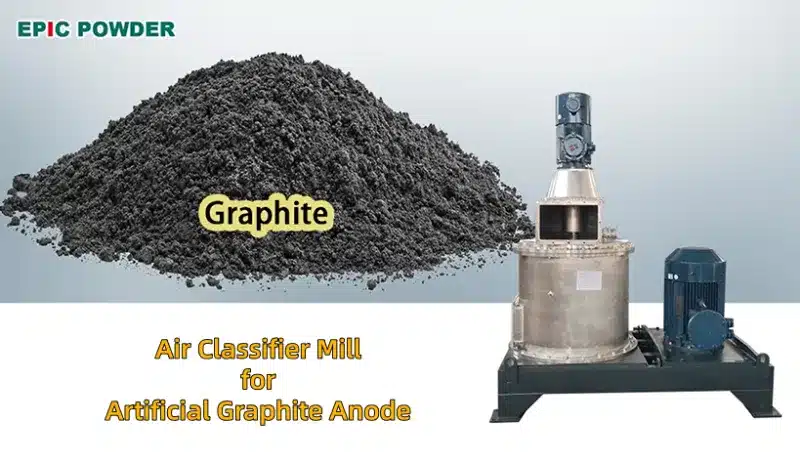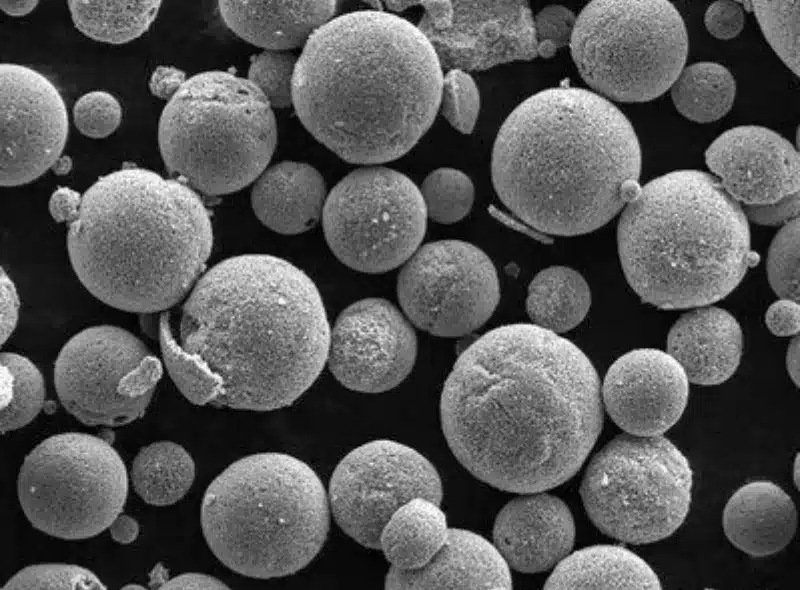
In this era of rapid growth in new energy vehicles and energy storage, lithium batteries serve as the absolute core. Spherical graphite—the “black gold” supporting half of the lithium battery anode market—is currently the mainstream choice for industrialization. Without it, high energy density and long cycle life for power batteries would be completely out of the question.
Today, we will break down the key questions: Why is spherical graphite irreplaceable? What makes the spheronization process so challenging? And how does it dictate core battery performance?
I. Why Can’t Lithium Batteries Do Without Spherical Graphite?
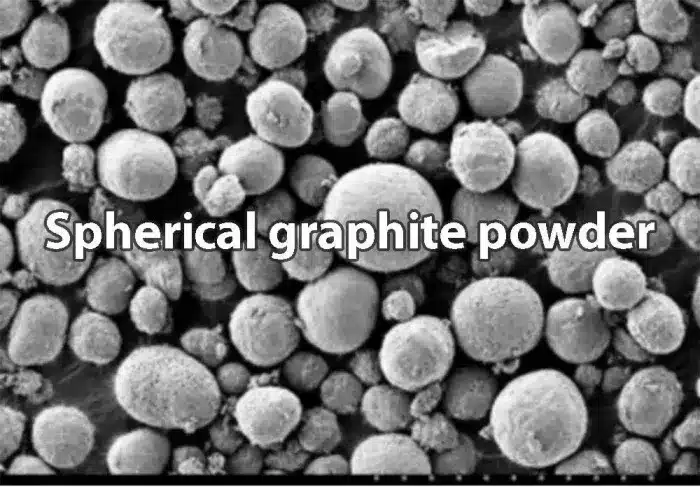
Among the technical routes for lithium battery anode materials, spherical graphite—produced by reshaping and spheronizing natural flake graphite—is the top choice for mid-to-high-end power batteries, energy storage, and consumer electronics. Compared to plain flake graphite and synthetic graphite, its advantages make it an all-around top performer.
1. Boosted Compaction Density Directly Upgrades Range
Natural flake graphite consists of flat flakes that leave substantial gaps when stacked, resulting in a compaction density of only 1.2–1.4g/cm³.
After spheronization, the particles become rounded with blunted edges, boosting compaction density to 1.65–1.75g/cm³. This allows the battery to store more active material in the same volume, directly raising energy density and helping electric vehicles break through range bottlenecks.
2. Controllable Specific Surface Area Balances Safety and Efficiency
The specific surface area of spherical graphite can be precisely controlled between 3–6m²/g.
- Preventing side reactions: If the specific surface area is too high, it leads to excessive side reactions with the electrolyte and reduces initial coulombic efficiency.
- Ensuring ion transport: If it is too low, lithium-ion migration becomes obstructed, degrading rate performance.
This precise control achieves an ideal balance between battery safety and charge-discharge efficiency.
3. Stable Structure Maximizes Cycle Life
Spherical particles feature isotropic properties. During charge and discharge, lithium ions intercalate and deintercalate more uniformly. This buffers the 10–13% volume expansion of graphite, reducing the risk of electrode cracking and lithium dendrite formation.
High-quality spherical graphite achieves an initial coulombic efficiency of ≥93% and retains over 85% capacity after 2,000 cycles, serving as a core guarantee for long-life batteries.
4. The Optimal Industrial Solution Balancing Cost and Performance
Compared to synthetic graphite, spherical graphite has 30–40% lower raw material costs, 25% lower energy consumption, and reduced carbon emissions.
Compared to un-spheronized natural graphite, it achieves a massive leap in rate performance (capacity ratio at 1C/0.1C ≥91%) and low-temperature discharge capability (retaining 83–87% capacity at -20℃). It is the most cost-effective choice for commercial deployment.
II. Spherical Graphite: A Precise Transformation from Flakes to Spheres
Spherical graphite is not a naturally occurring mineral. Instead, it is a high-end material created through atomic-level restructuring. Natural flake graphite undergoes 12 precise processes—including crushing, shaping, classification, purification, and coating—to reshape irregular flakes into smooth spheres with particle sizes between 12–18μm. Every single step presents steep technical barriers.
Spheronization Technical Routes
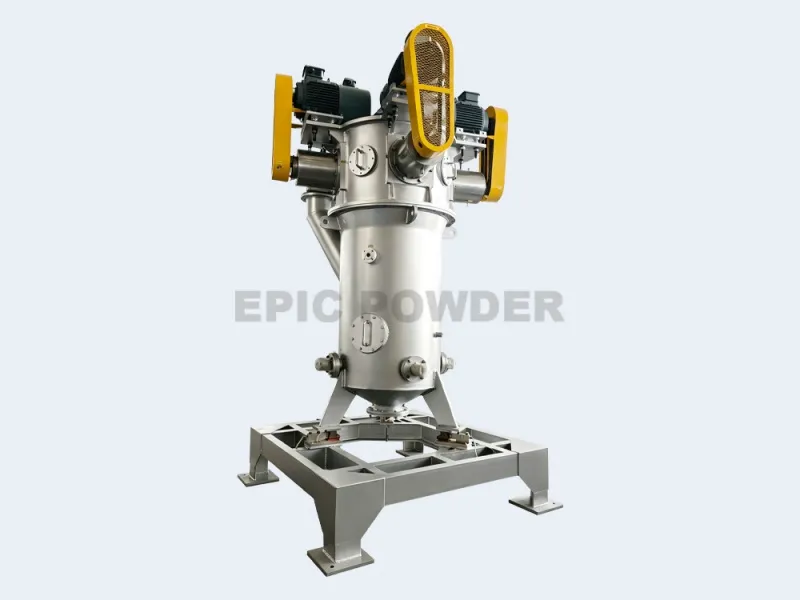
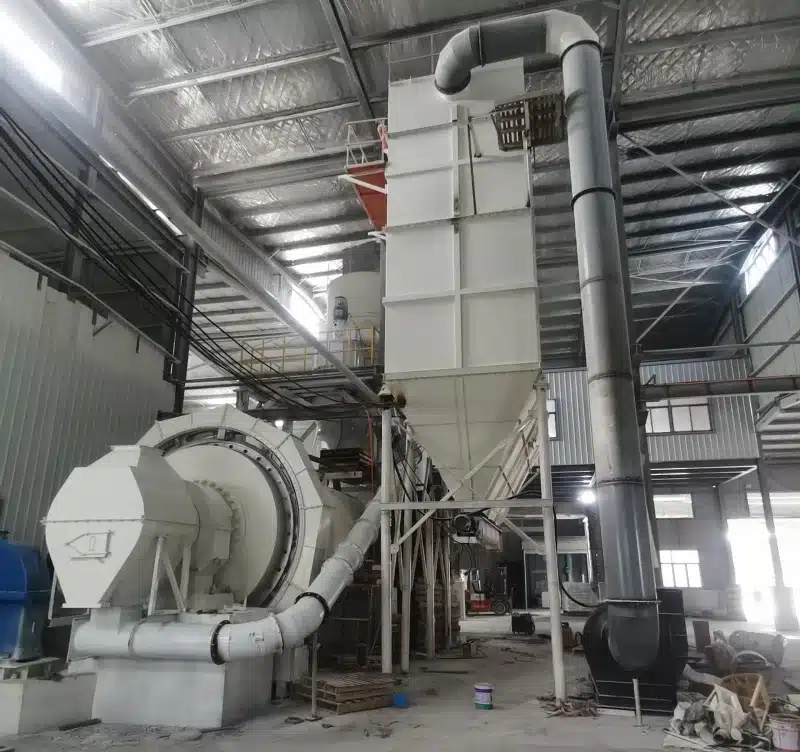
Currently, dry spheronization mainly follows two paths: air jet milling and mechanical impact grinding.
- Airflow Vortex Spheronization: High-pressure airflow collides particles against each other to self-grind. This yields excellent sphericity and easily achieves tap densities above 1.1 . However, it produces significant fine powder, leading to lower yields and high energy consumption during classification.
- Mechanical Impact Grinding: Hammer heads roll and curl the flakes, offering higher yield and lower costs. However, sphericity is slightly lower, sometimes leaving sharp edges that require secondary shaping downstream.
Neither route is inherently superior; selection depends on raw material traits and battery manufacturer specs. Mature suppliers like Liugong Graphite have established production setups for these products.
Regardless of the route chosen, downstream precision classification and strong magnetic iron removal are non-negotiable lifeblood steps:
- Classifier precision directly determines product yield.
- Magnetic separators must be arranged in at least two stages in series, and magnetic rods require frequent cleaning.
- Incomplete iron removal leads to excessive magnetic impurities, which causes severe self-discharge issues. High-gradient electromagnetic separators should be deployed to pass materials through multiple cleaning cycles.
How to Fine-Tune the Line for Stable Indicators
Producing stable spherical graphite requires rigorous on-site control. Neglecting key parameters will cause severe batch-to-batch inconsistencies:
- Classifier Speed: Setting the speed too high creates excessive fine powder and plummets yields. Setting it too low causes incomplete spheronization, resulting in an overly coarse D50 that creates scratches during downstream slurry coating. For a target D50 around 17μm, match the speed to 2200-2600 rpm linked dynamically with feeding rates.
- Feed Particle Size: The input flake graphite cannot be too fine. If the ratio of mesh size -200 exceeds 30%, the material pulverizes easily during spheronization, sharply dropping yields. Feed size should ideally be 100 mesh to retain structural toughness.
- Tap Density & Specific Surface Area (BET): Sample every two hours post-spheronization. A BET above 5 m2/g indicates unremoved fine powder, which degrades initial coulombic efficiency. A BET below 2m2/g hampers rate performance. The optimal target range should remain steady between 2.8 and 4.0 m2/g.
- Equipment Wear: Iron introduced through mechanical wear is fatal to anodes. The inner linings of spheronization chambers and classification wheels should be built with ceramic or wear-resistant coatings. Operators must log parameters continuously and adjust immediately whenever fluctuations occur.
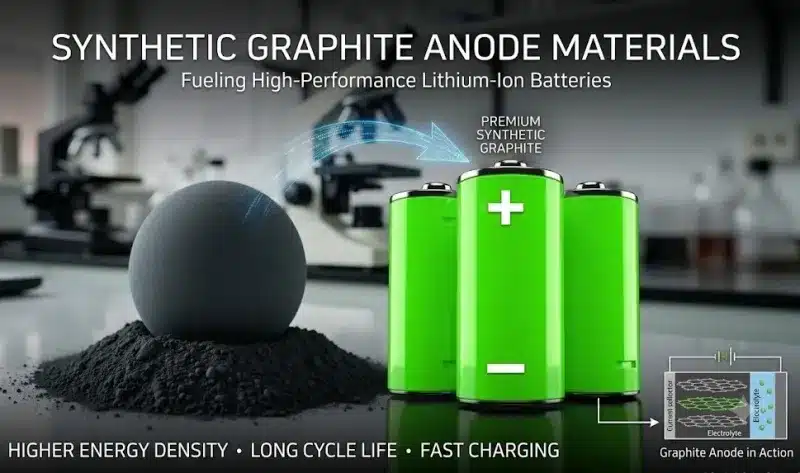
III. Spherical Graphite: The Invisible Foundation of the Lithium Battery Industry
In 2026, the global lithium battery anode market exceeded RMB 100 billion. Driven by performance and cost advantages, spherical graphite holds a core share in high-end anodes.
From fast charging and long range in power batteries, to tens of thousands of cycles in energy storage, to low-temperature stability in consumer electronics—every parameter of spherical graphite helps define the boundaries of lithium battery performance. Without spherical graphite, the modern lithium-ion industry could never have achieved such massive scale.

“Thanks for reading. I hope my article helps. Please leave a comment down below. You may also contact Zelda online customer representative for any further inquiries.”
— Posted by Emily Chen