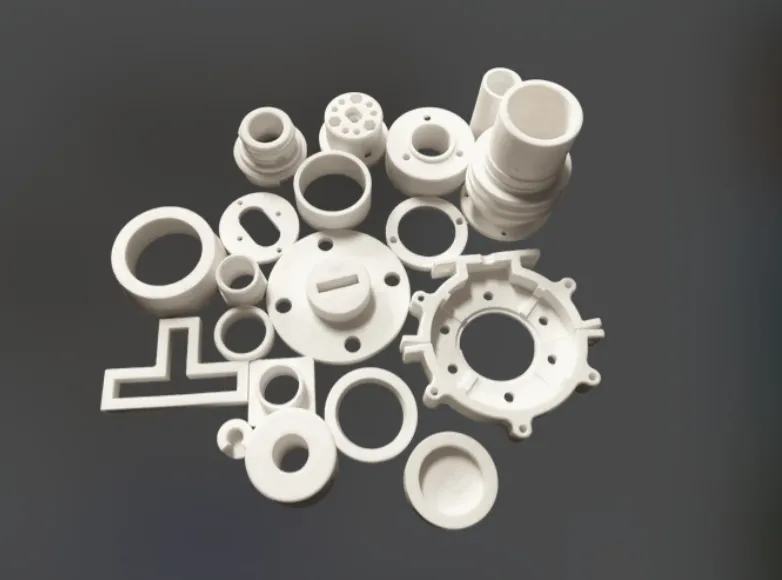
Aluminum nitride (AlN) is an inorganic non-metallic material with a variety of excellent properties. It possesses high thermal conductivity, low dielectric constant, and a coefficient of thermal expansion comparable to silicon. It also exhibits excellent mechanical properties. Therefore, aluminum nitride has become an indispensable high-end electronic packaging and substrate material in fields such as large-scale integrated circuits, 5G communications, high-power LEDs, and IGBT modules.
However, the industrial preparation of high-quality aluminum nitride powder has long faced significant technical barriers. Aluminum nitride is a compound with strong covalent bonding and high hardness (Mohs hardness 7–8). It is also highly prone to hydrolysis reactions with moisture in the air. After the synthesis process is completed, the raw powder generally cannot be directly used in subsequent ceramic processes such as tape casting and sintering. It must undergo precise grinding and classification.
On this path to industrialization, high-efficiency grinding equipment is far from a simple “supporting role.” Rather, it is the core key that determines product purity, particle size distribution, particle morphology, and surface properties. This article will delve into the key applications, core challenges, and technical solutions of high-efficiency grinding equipment in the industrial-scale preparation of aluminum nitride powder.
Strict Requirements of AlN Powder Properties in Industrial Production
To understand the importance of grinding equipment, it is first necessary to clarify the four core indicators required by high-end applications of aluminum nitride powders:
Ultrafine Particle Size and Narrow Size Distribution
To improve the sintering activity of ceramic substrates and reduce sintering temperature (typically >1800°C), the average particle size (D50) is usually required to be controlled within 1.0–3.0 μm, or even at the nanoscale. At the same time, the particle size distribution must be extremely narrow (single-peaked symmetric distribution) to ensure uniform forming density.
High Purity (Low Impurity Content)
Metal impurities (such as Fe, Ni, Cr, etc.) can severely degrade the electrical insulation properties of ceramics. Meanwhile, free carbon and non-metallic impurities can hinder phonon transport, leading to a drastic reduction in thermal conductivity.
Low Oxygen Content
Oxygen is the most critical impurity in the aluminum nitride crystal lattice. Lattice oxygen forms aluminum vacancies, causing phonon scattering and significantly reducing thermal conductivity. Industrial requirements stipulate that the total oxygen content in high-end powders must be controlled below 1.0 wt%.
Good Particle Morphology and Dispersibility
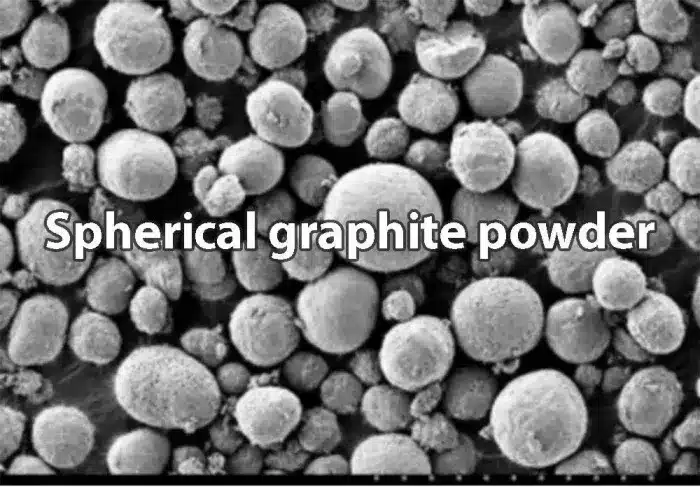
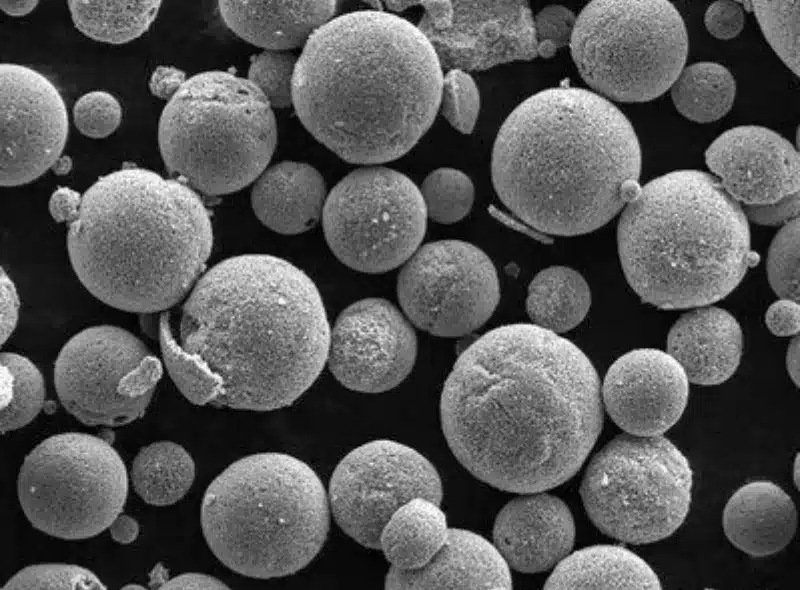
Near-spherical particle morphology helps increase solid loading in tape-casting slurries, reduce slurry viscosity, and improve green sheet quality.
However, the primary aluminum nitride products obtained directly from synthesis furnaces (such as carbothermal reduction or direct nitridation processes) are usually severely agglomerated coarse particles or blocky materials. They must be “reconstructed” using grinding equipment.
Typical High-Efficiency Grinding Equipment and Their Application Characteristics
Precursor Mixing Before the Reaction
Taking the mainstream carbothermal reduction method as an example, high-purity alumina (Al₂O₃) powder and high-purity carbon sources (such as carbon black) must be uniformly mixed to an extremely high degree.
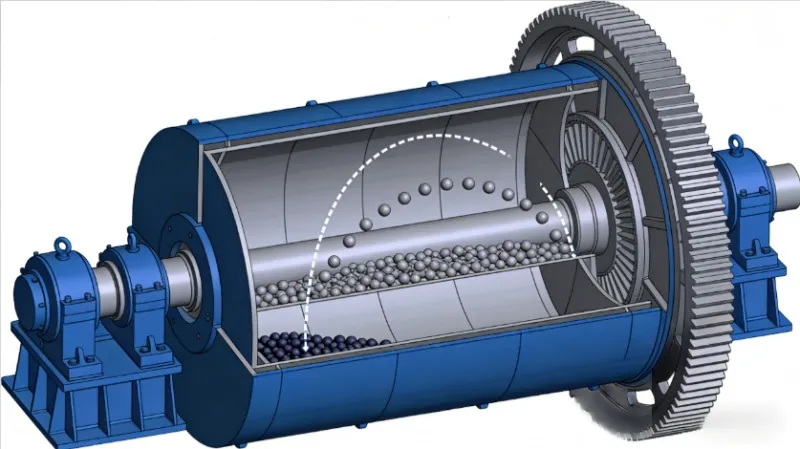
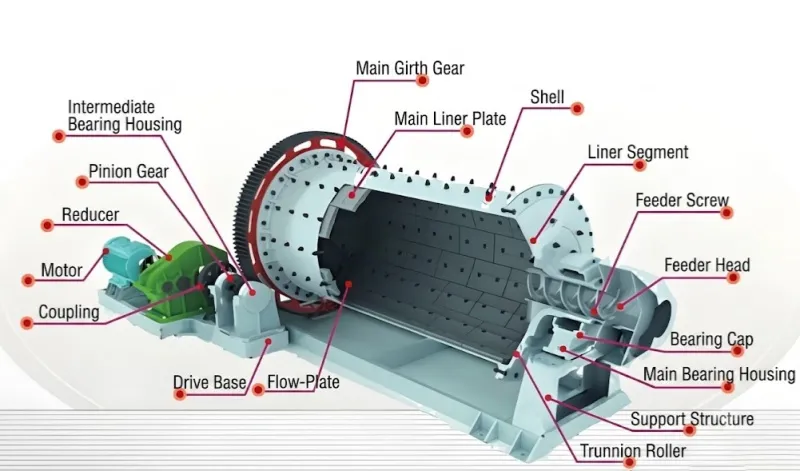
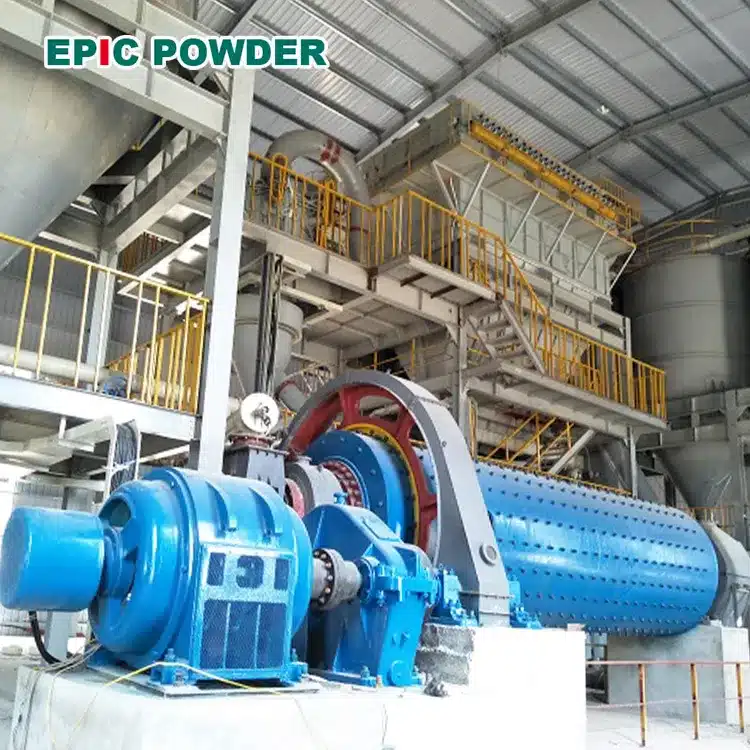
Key application: In this stage, planetary ball mills or high-energy rolling ball mills are commonly used. The grinding equipment uses intense impact and shear forces. This not only achieves uniform dispersion of the two phases at the microscale, but also activates the surface lattice of alumina through a “mechanical alloying” effect. This lowers the starting temperature of the subsequent high-temperature nitriding reaction and shortens the reaction time.
De-agglomeration and Ultrafine Refining After Synthesis (Air Jet Mill/High-Energy Ball Mill)
Whether the bulk material obtained by direct nitriding or the loose porous agglomerates obtained by carbothermal reduction, post-processing is required.
Physical Grinding: Using mechanical force to break millimeter-sized agglomerates down to the micron-sized.
Morphology Modification: During the grinding process, sharp edges of particles are eliminated using grinding media or inter-particle collisions. This makes the particles more rounded, improving powder flowability.
Precise Grading and Particle Size Control
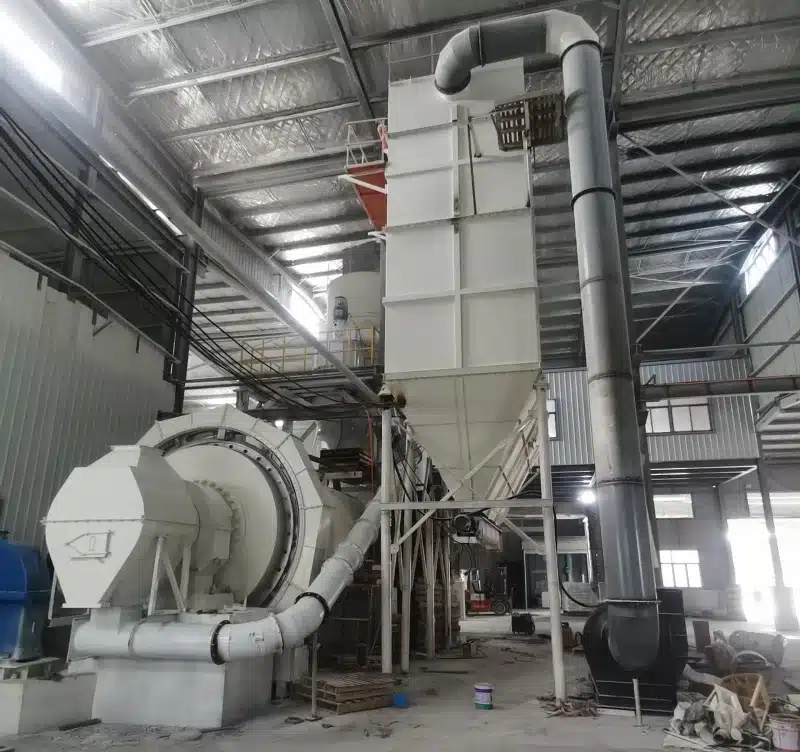
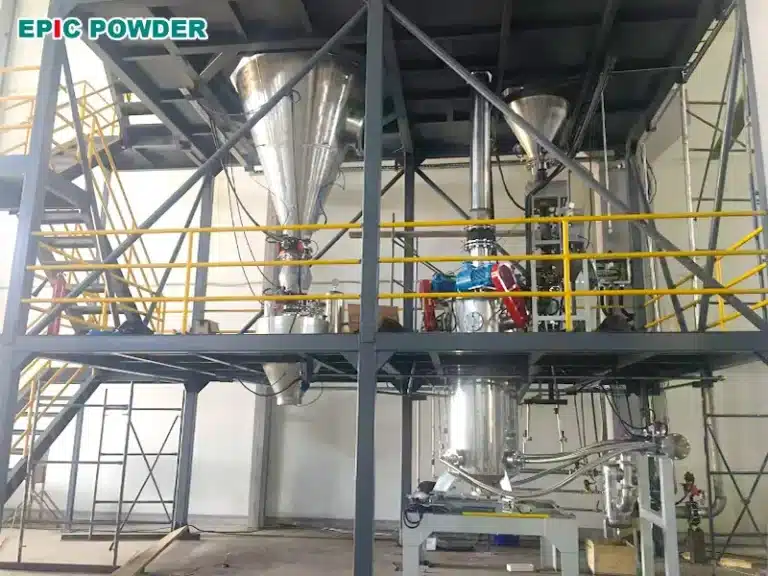
High-end aluminum nitride powders require extremely high particle size consistency. Coarse particles and ultrafine powders must be removed to avoid affecting sintering and molding performance. High-efficiency grinding equipment is often paired with a high-precision air classifier. This forms a “grinding-grading-closed-loop” system, achieving precise online particle size control.
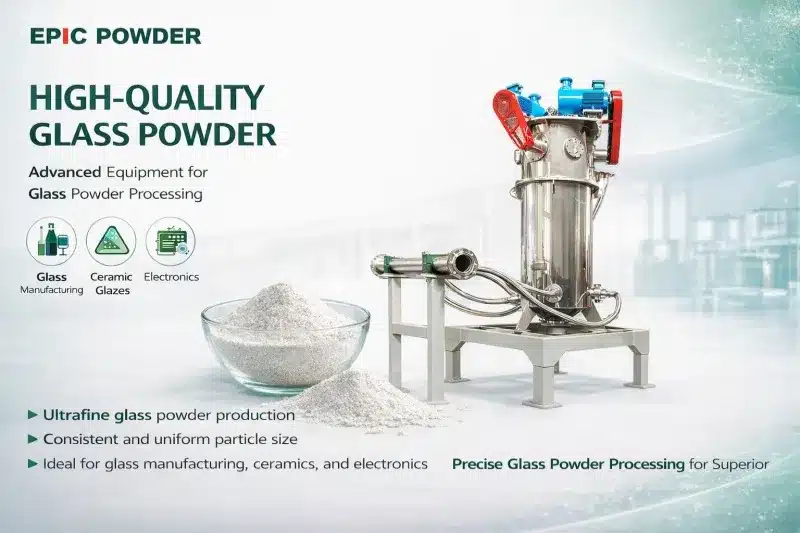
The air classifier, operated under inert gas protection, achieves precise separation of particles by adjusting classifier wheel speed and airflow. The classification accuracy can reach ±0.1 μm, allowing particle size distribution to be tightly controlled within the target range. This eliminates coarse particle residue and ultrafine agglomeration.
This equipment is suitable for fully enclosed, dust-free operation, avoiding powder moisture absorption and oxidation, while achieving zero material loss. In industrial production, the grinding-classification linkage system can monitor particle size parameters in real time and automatically adjust equipment operating parameters. This ensures consistency in particle size, specific surface area, and dispersibility across different batches of powder. It solves the problem of large batch-to-batch performance fluctuations in traditional processes, meeting the large-scale supply needs of high-end customers.
Key Process Control Factors
Aluminum nitride powder is extremely sensitive to impurities, making process control during grinding crucial.
On one hand, the equipment interior must utilize highly wear-resistant, low-contamination materials, such as ceramic linings or special coatings, to prevent the introduction of impurities like iron and nickel, which could affect thermal conductivity.
On the other hand, the system typically needs to operate under inert gas protection or a slightly positive pressure environment to suppress oxidation reactions and reduce the risk of alumina formation on the AlN surface.
Furthermore, proper control of energy input is also essential. Excessive grinding energy can lead to increased lattice defects, affecting the material’s thermal conductivity channels. Insufficient energy, on the other hand, makes it difficult to achieve the required particle size for sintering.
Why must aluminum nitride powder rely on high-precision grinding equipment instead of ordinary ball milling?
The reason AlN powders cannot rely on conventional ball milling lies mainly in their “high purity sensitivity” and “structure–property dependence.”
Conventional ball milling equipment typically suffers from media contamination, wide particle size distribution, and coarse energy control. In AlN systems, even trace amounts of iron impurities can form grain boundary defects during sintering, significantly reducing thermal conductivity. In addition, conventional ball milling tends to produce broad particle size distributions, leading to non-uniform packing and increased porosity in sintered bodies.
In contrast, high-efficiency grinding equipment uses closed-loop classification control and low-contamination design.
This helps maintain particle size concentration while minimizing the risk of metal contamination. Therefore, in high-end AlN applications, high-precision grinding is not a matter of “efficiency improvement.” Instead, it is a matter of “material performance assurance.”
How can oxidation of aluminum nitride powder during grinding be prevented to avoid performance degradation?
Oxidation of AlN powders mainly occurs due to high-energy contact during grinding and exposure to air, resulting in the formation of a thin Al₂O₃ layer on the surface, which reduces thermal conductivity.
This issue is typically addressed from three aspects:
First, regarding atmosphere control, a nitrogen or argon protection system is employed to maintain a low-oxygen or oxygen-free environment during the grinding process. This suppresses oxidation reactions at the source.
Second, in terms of equipment design, a fully sealed circulation system is adopted to reduce air ingress while maintaining a micro-positive pressure operating condition.
Third, in process optimization, local overheating is reduced and impact energy is controlled to minimize high-energy reactive surface regions.
Through these comprehensive measures, oxygen content can be maintained at an extremely low level while ensuring grinding efficiency. This ensures the performance stability of aluminum nitride powder in high-thermal-conductivity applications.
Conclusion
High-efficiency grinding equipment is not merely a “physical size reduction” step in aluminum nitride powder processing. It is a critical technological bridge that determines whether AlN powders can successfully achieve industrialization and commercialization.
Through fully ceramic anti-contamination design, high-purity nitrogen closed-loop circulation control, and advanced fluid dynamic classification structures, high-efficiency grinding equipment effectively overcomes the industrial challenges of AlN materials. These challenges include high hardness, hydrolysis sensitivity, and extremely strict purity requirements.
With continuous technological advancement, the deep integration of grinding equipment with surface modification processes and intelligent control systems will further accelerate the development of China’s aluminum nitride industry chain. This development will move toward higher quality and larger-scale production.

“Thanks for reading. I hope my article helps. Please leave a comment down below. You may also contact Zelda online customer representative for any further inquiries.”
— Posted by Emily Chen