

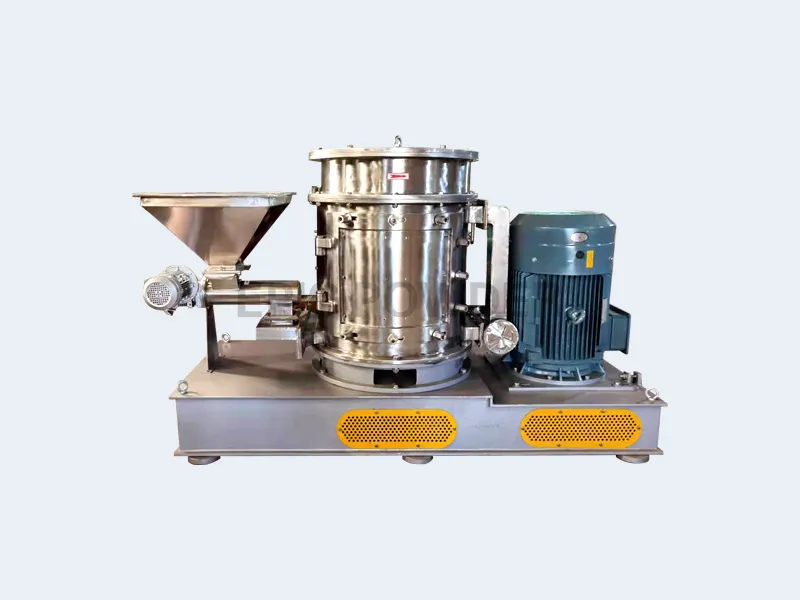





















Air Jet Mill Grinding Project for Coconut Shell Carbon at a Domestic New Material Enterprise
Project Background With the rapid development of new energy materials, conductive composites, and functional carbon materials, the demand for coconut shell carbon powder has been rising year by year. This demand is particularly strong in fields such as battery anode materials, conductive coatings, composites, and eco-friendly adsorbents. However, the production of high-quality coconut shell carbon
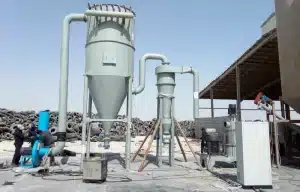
Epic Powder Air Classifier Mill Helps Indian Carbon Black Customers Achieve Ultrafine Grinding with D97 ≤ 10μm
Carbon black, as a high-performance reinforcing agent and pigment, is widely used in the tire, rubber products, plastics, and high-end coatings industries. This is due to its extremely strong adhesion, tendency to agglomerate, and lightweight, porous physical properties. When it comes to ultra-fine grinding at the micron or even submicron level, technical challenges such as

High-performance Silica Surface Modification Project
Project Background The project was conducted for a leading domestic Chemical New Material Research Institute, focusing on the high-end application of Silica Surface Modification. The primary goal was to improve the dispersibility of silica in rubber/plastic matrices and achieve high-capacity continuous production. Industry Challenges As a reinforcing filler, silica is rich in silanol groups (-OH)
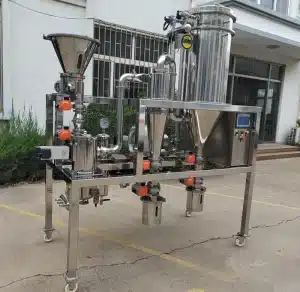
US Client Utilizes MQW03 Lab Jet Mill for Ultrafine Grinding of Dental Glass Ceramics
In the field of dental restoration, the quality of dental ceramic powders (such as lithium-based glass ceramics and zirconia) directly determines the strength, translucency, and biocompatibility of the final prosthesis. Recently, Epic Powder provided a professional laboratory-scale solution for a US-based client, successfully addressing the challenges of precision and purity in the ultrafine grinding of
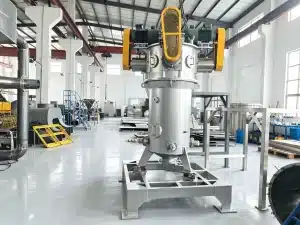
Jet Mill Achieves D50 2.5μm Ultrafine Talc for Coating Industry
A Taiwanese talc processor needed to upgrade their talc jet milling capability. Coating manufacturers were demanding finer talc—specifically in the 2–3 μm range—to improve gloss, barrier properties, and sedimentation resistance in high-performance paints and primers. The existing equipment could not produce a consistent particle size distribution. The company turned to Epic Powder for a solution. The goal was clear:
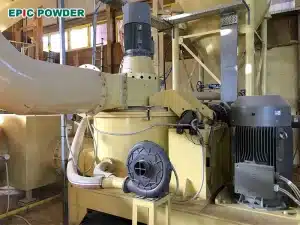
Greek Calcium Carbonate Producer Increases Output with Epic Powder’s Air Classifier Mill
A well-established mineral processing company in Greece was facing growing pressure from its industrial buyers. The paints and sealants manufacturers they supplied needed a finer and more reliable calcium carbonate powder. Unfortunately, their existing air classifier mill grinding line could not produce a consistent particle size, which led to frequent customer complaints and wasted batches.