In industrial sectors such as mining, building materials, chemicals, lithium batteries, and ceramics, there is an essential, core grinding machine: the ball mill. Whether involved in mineral processing, cement production, new energy powder refinement, or raw material blending, ball mills play a critical role in crushing, refining, and homogenizing materials.
Today, let’s take a closer look at what a ball mill actually is.
What Is a Ball Mill?
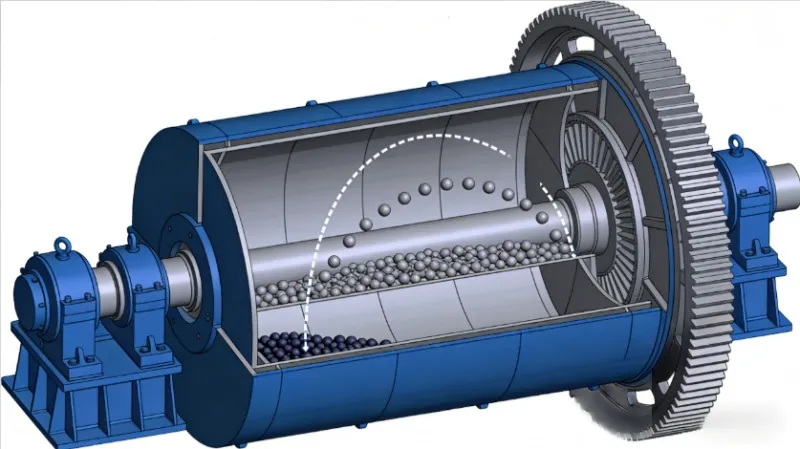
A ball mill is a horizontal rotating grinding device. It relies on the impact, compression, friction, and shearing action of grinding media inside its cylinder (such as steel balls, steel cylpebs, or ceramic balls) to grind bulk or granular materials into fine powders, while simultaneously performing mixing and homogenization tasks.
It adapts to both dry and wet grinding processes, capable of handling operating conditions ranging from coarse ore grinding to nano-scale powder refinement. Thanks to its high throughput, strong stability, and broad adaptability, it has become the most widely applied equipment in industrial grinding.
How Does a Ball Mill Work?
Many people find technical explanations confusing, but the operating logic of a ball mill is actually very straightforward:
- Power Transmission: The motor and reducer supply power, driving the horizontal cylinder to rotate at a uniform speed.
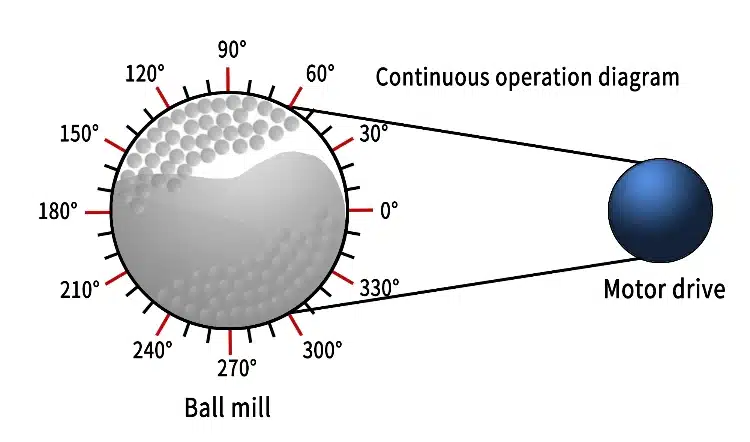
- Media Lifting: As the cylinder rotates, friction carries the internal grinding media and materials upward along the cylinder wall.
- Crushing & Grinding: Once the media reaches a certain height, gravity and centrifugal force cause it to fall freely, slide, and roll downward.
- Discharge of Finished Product: After repeated impacts, crushing, and fine grinding, the material meets the required particle size standards and is discharged through the inlet/outlet device, completing the grinding operation.
In summary: The cylinder rotates, the balls tumble, materials break on impact, and fine powder exits. The combination of three forces—impact, compression, and friction—transforms large raw particles into ultra-fine powders.
Main Classifications of Ball Mills
Ball mills come in many types, each suited for drastically different working conditions. The main industry classifications are outlined below:
1. By Processing Method
- Dry Ball Mill: Operates without water; materials are ground dry. Commonly used for cement, dry mineral powders, and refractories. Generates significant dust and requires an accompanying dust collection system.
- Wet Ball Mill: Grinds with added water or chemical agents, producing a slurry discharge. Offers higher grinding efficiency, no dust, and a more uniform particle size. Widely used in mineral processing, lithium battery materials, ceramic slurries, and chemical processing.
2. By Cylinder Structure
- Short-Cylinder Ball Mill: Features a smaller length-to-diameter ratio. Typically used for coarse grinding with large processing capacity and coarser output.
- Long-Cylinder Ball Mill: Has a longer body, allowing materials to be ground over a longer duration for fine or ultra-fine output. Some feature internal compartment plates for multi-stage graded grinding to achieve higher precision.
- Conical Ball Mill: Features a conical discharge end that automatically classifies media by size—coarser, heavier media gather at the inlet end, while finer media shift toward the outlet end for more precise grinding.
3. By Functional Application
- Industrial Tumbler Ball Mill: Large-scale machinery suited for mass production in mining and building materials, with capacities ranging from tens to hundreds of tons per hour.
- Planetary Ball Mill: Used for high-precision, small-batch laboratory grinding. The jars rotate on their own axes while revolving on a central axis, reaching high speeds that can grind powders down to the nanometer level. Ideal for ceramics, new materials, and R&D.
- High-Energy Ball Mill: Features high rotational speeds and strong impact forces, used for mechanical alloying, nanomaterial preparation, and refining high-hardness materials.
4. By Grinding Media
Classified into Steel Ball Mills, Steel Cylpeb Mills, Ceramic Ball Mills, Quartz Ball Mills, etc. The media material directly determines wear resistance, material purity, and grinding precision.
Core Structural Components
An industrial ball mill relies on several crucial components—each impacting overall efficiency and operational lifespan:
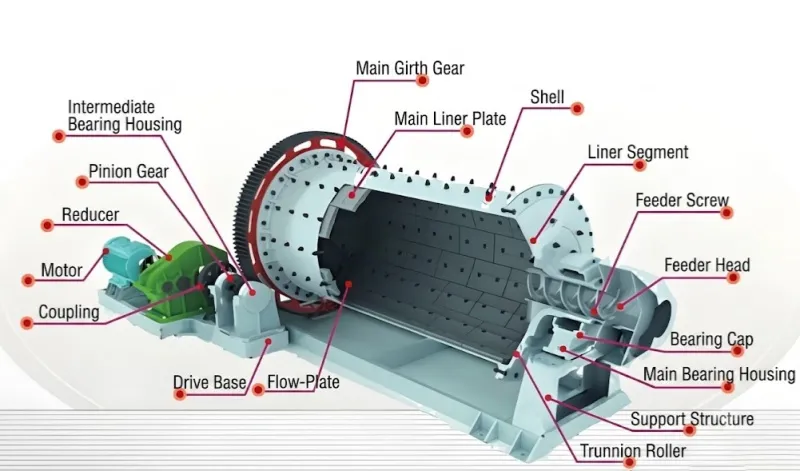
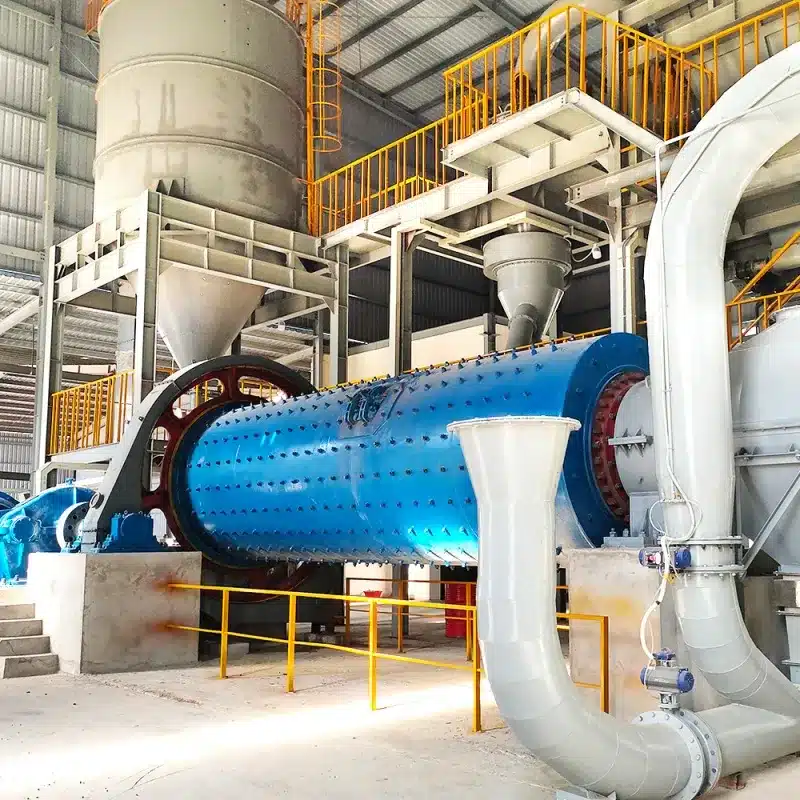
- Rotating Cylinder: The main body made of high-strength, wear- and pressure-resistant steel plate; it serves as the primary grinding chamber.
- Wear-Resistant Liners: Internal protective fittings that shield the cylinder from wear and impact. Available in corrugated or flat designs, they also enhance the lifting action of the media.
- Grinding Media: Steel balls, steel cylpebs, or ceramic balls selected according to material hardness and required precision.
- Drive System: Includes the motor, reducer, gears, and drive shaft, providing stable mechanical power.
- Inlet and Outlet Devices: Control material feeding speeds and finished product discharge, ensuring continuous operation.
- Main Bearings: Support the rotating cylinder and bear the full weight of the machine, determining operational stability.
- Lubrication and Cooling Systems: Reduce component wear and regulate operating temperatures to prevent overheating failures.
Key Considerations for Model Selection
Choosing the wrong model leads to low efficiency, high energy consumption, and sub-standard finished products. Keep these 6 core selection criteria in mind:
- Evaluate Material Characteristics:Consider material hardness, moisture content, and viscosity. Choose steel media for hard ores, ceramic media for high-purity or contamination-sensitive materials, and wet grinding for sticky materials.
- Determine Particle Size Requirements:Opt for short-cylinder, large-media mills for coarse grinding; select long-cylinder, multi-compartment, or planetary mills for fine or ultra-fine grinding.
- Assess Production Capacity Needs:Choose small laboratory ball mills for small-scale experiments and R&D; opt for large industrial tumbler mills for factory-scale mass production.
- Identify Process Requirements:Select wet ball mills for dust-free, high-precision environments; choose dry ball mills for dry powders, refractories, and cement raw materials.
- Consider Energy Consumption & Wear Resistance:Prioritize energy-efficient models. Select high-wear-resistant materials for liners and media to minimize long-term replacement costs.
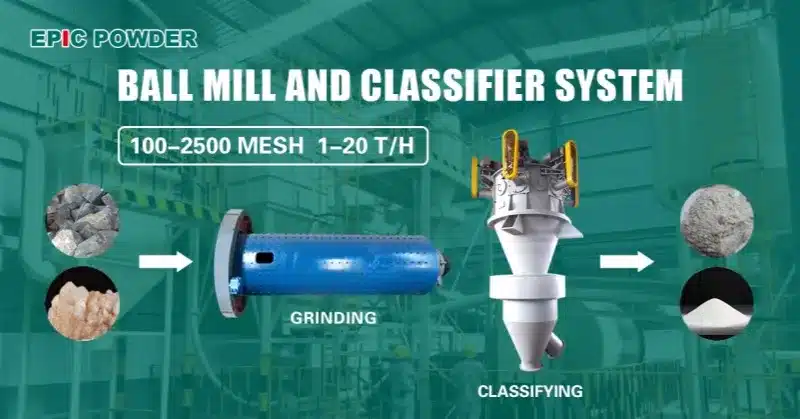
- Plan for Auxiliary Equipment:Pair dry systems with dust collectors, and pair wet systems with classification and filtration equipment to build a complete production line.
Common Faults and Solutions
| Fault | Possible Causes | Solutions |
| Abnormal noise / excessive vibration | Loose liners, improper steel ball sizing ratio, worn bearings, un-balanced cylinder. | Tighten liner bolts; re-balance media ball sizes; replace worn bearings; re-calibrate equipment level. |
| Uneven or oversized output particle size | Insufficient grinding time, severely worn/shrunken media, feeding too fast, clogged compartment plates. | Reduce feed rate; replace worn grinding media; clear clogged compartment plates; extend grinding time as needed. |
| Overheating / high operating temperatures | Lack of lubrication, oil-starved bearings, worn drive components, prolonged overload operation. | Add recommended lubricants promptly; inspect the cooling system; avoid long-term overload; replace worn drive parts. |
| Drop in output / spike in energy use | Worn media, worn slipping liners, abnormal material moisture, material build-up inside. | Replenish steel balls; replace wear-resistant liners; adjust material moisture; regularly clean out internal build-up. |
| Powder or slurry leaks | Aging seals, worn inlet/outlet ports, damaged cylinder welds. | Replace sealing gaskets; repair worn areas; reinforce equipment seal protection. |
Essential Daily Maintenance Tips
As heavy-duty, continuous-duty machinery, ball mills require proactive care: 30% depends on operation, 70% depends on maintenance. Proper maintenance drastically reduces failure rates and extends service life:
- Daily Inspections: Check daily for unusual noise, vibration, high temperatures, and seal integrity to catch minor issues early.
- Periodic Lubrication: Regularly inject specialized lubricants into drive components like bearings, reducers, and gears to prevent dry friction.
- Media Management: Routinely inspect steel ball and liner wear; replenish or replace them promptly to maintain grinding efficiency.
- Clear Residue Build-up: Clean out leftover material in the cylinder after shutdown to prevent caking and internal corrosion.
- Standardized Operation: Never start the machine loaded or run it under overload. Strictly control feed rate and material input size.
- Seasonal Servicing: Perform comprehensive overhaul teardowns periodically to replace aging seals, swap worn parts, and recalibrate drive precision.
Summary
While a ball mill may appear straightforward on the surface, it is a highly sophisticated core machine packed with technical nuances. Every aspect—from its working principle and classification to selection and ongoing maintenance—directly impacts the efficiency, operating costs, and product quality of an entire production line.

“Thanks for reading. I hope my article helps. Please leave a comment down below. You may also contact Zelda online customer representative for any further inquiries.”
— Posted by Emily Chen