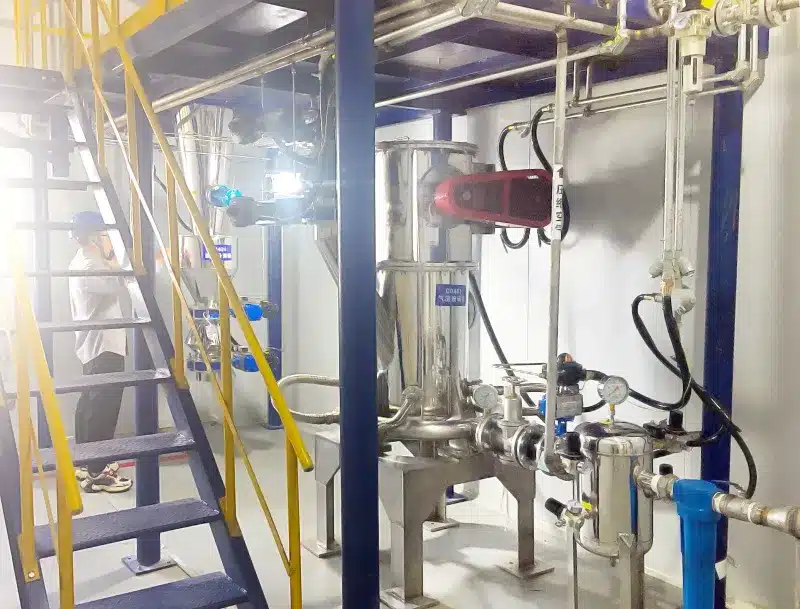
EPIC Fluidized Bed Jet Mill: Customize Your D97<3 micron Ultra-Fine Grinding Solution

Expert in Lithium Battery Materials, Pharmaceutical Micronization and Chemicals Industry.

Fineness D97 1-5μm

0 Contamination

24/7 continuous production

Spiral Jet Mill
Spiral Jet Mill

Micronizer Jet Mill or Spiral Jet Mill

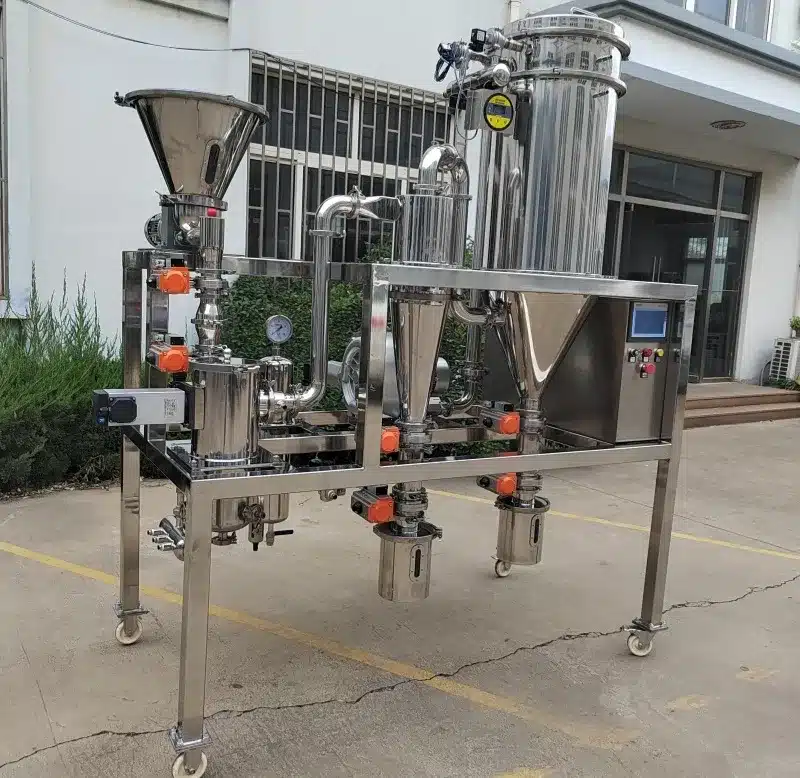
This is a spiral jet mill, which is also called micronizer jet mill, in which nozzles are arranged around the grinding chamber, causing the grinding gas to diffuse in a spiral. Particles are pulverized through mutual collision. The EPIC Powder Jet Mill product line includes a spiral jet mill, primarily used for high-quality raw materials such as antibiotics, API, amoxicillin, or fine chemicals. Because this mill perfectly meets the production requirements of pharmaceuticals.

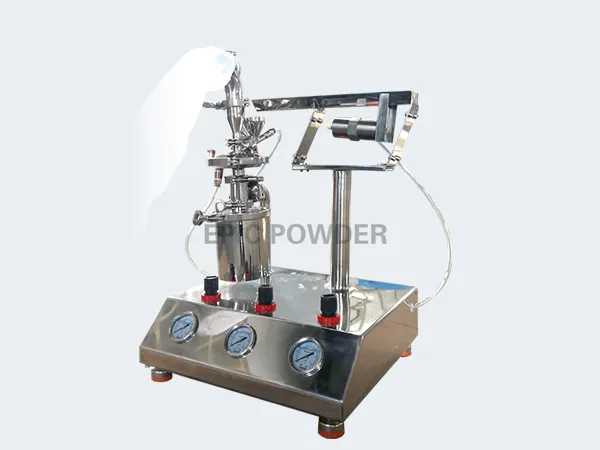
Most customers choose our lab jet mill for their business. It can get D50 15 micron powder.

Fluidized Bed Jet Mill

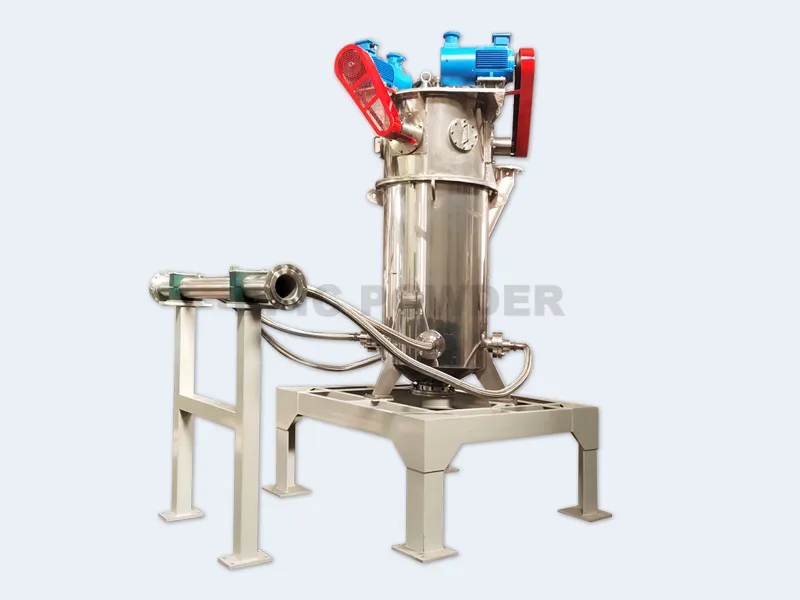
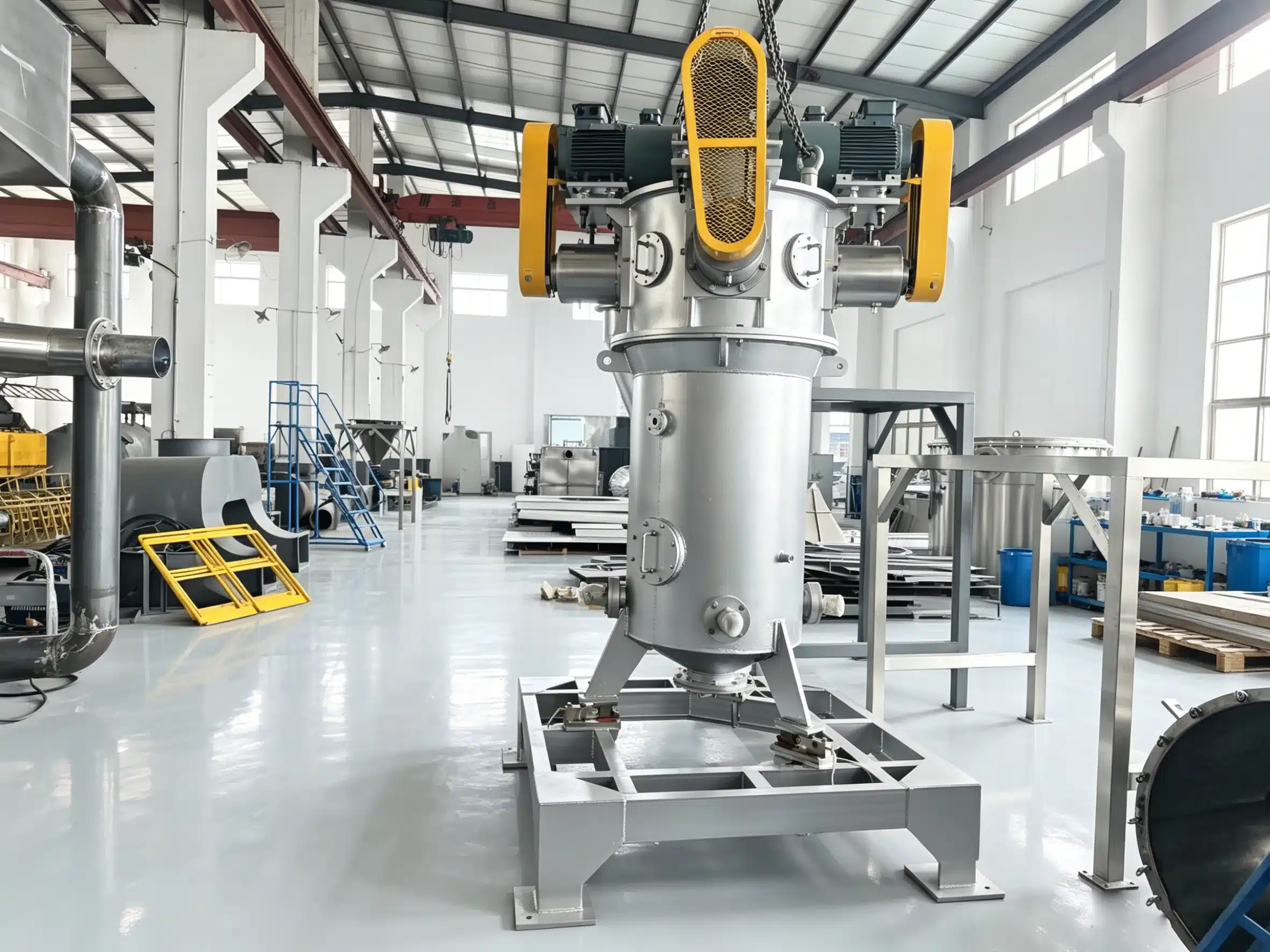
Fluidized bed jet mills are also a common type of jet mill. It also called Opposed jet mill. Gas forms a fluidized bed in the grinding chamber, where particles are accelerated and repeatedly collide with the gas flow, eventually being crushed. A classifying wheel removes excessively large particles and returns them to the fluidized bed. Sufficiently fine particles are separated from the grinding gas by a classifier. Fluidized bed jet mills are suitable for grinding materials such as talc, glass, ceramics, lithium iron phosphate, and petroleum coke.

EPIC Jet Mill Machines - Top 5 Micronizer for 1-30μm Powder (2024 OEM Supplier)

How Fluidized Bed Opposed Jet Mill Works? | EPIC Micronizer Expert

Jet mill layout diagram

How to choose suitable Jet Mill or Micronizer

Micronizer Jet Mill for Pharmaceutical grade micronization
Jet Mill Pulverizier for Lithium battery material grinding
High-efficiency fluidized bed jet mill for Cosmetic
Pesticide Ultrafine Jet Mill Processing

Fluidized Bed Jet Mill VS. Spiral Jet Mill: Which Jet Mill Is Right for You?

Feature Spiral Jet Mill Fluidized Bed Opposed Jet Mill
Grinding Principle High-speed gas jets are introduced tangentially/spirally through peripheral nozzles. Material is ground by mutual high-speed collision within a forced vortex pattern. Multiple nozzles (typically 2 or more) are directed opposingly. Material is first suspended in a fluidized bed at the bottom, then accelerated by gas jets to collide in the central grinding zone.
Classification Method Static Air Classification. Separation relies on the balance between centrifugal force (from the vortex) and centripetal force (from the drag of the gas stream). Dynamic Mechanical Deflector-Wheel Classifier. A high-speed rotating wheel precisely controls the maximum particle size leaving the mill.
Ultimate Fineness Relatively fine, typically D97 ranging from 5 to 20 micron. Extremely fine, typically D97 ranging from 1 to 5 micron. More capable of achieving sub-micron levels.
Particle Size Distribution (PSD) Relatively broad. Fineness is sensitive to feed rate (higher feed rate leads to coarser output). Very narrow and steep. High product uniformity, providing a significant advantage for applications requiring tight specification control. Fineness is controlled by classifier speed, ensuring better stability.
Throughput / Capacity Relatively low. Capacity significantly decreases when targeting extremely fine products due to the limitations of vortex classification efficiency. Relatively higher. The fluidized bed design allows for high-density feeding and efficient energy utilization, resulting in higher throughput for ultra-fine products.
Energy Efficiency Relatively lower efficiency, especially when producing extremely fine powders. Relatively higher efficiency for ultra-fine grinding, offering better energy utilization in the sub-micron range.
Ease of Cleaning Simpler structure, easier to disassemble and clean. Highly suitable for multi-product, small-batch operations in pharmaceuticals and fine chemicals. Structure is more complex (including the fluidized bed and classifier wheel), making cleaning slightly more involved. Better suited for single-product, high-volume production.
Applicable Materials Generally lower hardness materials; suitable for high-value, heat-sensitive materials such as pharmaceuticals, fine chemicals, dyes, and pigments. Suitable for a wider range of materials, including high-hardness, abrasive materials such as minerals, ceramics, battery materials, and graphite.

Project Cases

Silica Surface Modification

High-performance Silica Surface Modification Project

Project Background The project was conducted for a leading domestic ...
Read More →
Lab Jet Mill for Ultrafine Grinding of Dental Glass Ceramics
Non-metallic minerals

US Client Utilizes MQW03 Lab Jet Mill for Ultrafine Grinding of Dental Glass Ceramics

In the field of dental restoration, the quality of dental ...
Read More →
talc-jet-milling
Non-metallic minerals

Jet Mill Achieves D50 2.5μm Ultrafine Talc for Coating Industry

A Taiwanese talc processor needed to upgrade their talc jet milling capability. ...
Read More →
calcium-carbonate-air-classifier-mill-
air classifier mill

Greek Calcium Carbonate Producer Increases Output with Epic Powder’s Air Classifier Mill

A well-established mineral processing company in Greece was facing growing ...
Read More →
quartz-sand-air-classifier
airclassifier

MBS-3 Air Classifier Delivers Stable D97 75μm Quartz Sand at 6 t/h

A major quartz sand processor in Southeast Asia, supplying high-quality ...
Read More →
Graphite-Anode-Pin-Mill
Battery materials

Graphite Anode Powder Grinding Pin Mill Project in Korean

A leading battery material supplier in South Korea was seeking ...
Read More →

Jet Mill Price Guide 2025 (Download Free PDF)

Get Your Jet Mill Price in 24 Hours:

Sed ut perspiciatis, unde omnis iste natus error sit voluptatem accusantium doloremque.

    Please prove you are human by selecting the truck

    Factory Address:

    NO. 369, Road S209, Huanxiu , Qingdao City, China

    E-mail:

    Tel:

    Website: