No campo do processamento industrial de pós, a moagem ultrafina é um processo fundamental que determina o valor agregado de um produto. Diante das três principais tecnologias—Moinhos Classificadores de Ar (Série MJW), Moinhos de jato, e Sistema de produção de moinho de bolas e classificador de ar—muitas empresas têm dificuldade em escolher o moinho de moagem adequado às suas necessidades específicas.
Cada equipamento possui seu próprio princípio de funcionamento, limites de desempenho e aplicabilidade econômica. A escolha do equipamento errado pode levar à baixa eficiência de produção, alto consumo de energia e qualidade do produto que não atende aos padrões da indústria. Este artigo oferece uma análise aprofundada sob as perspectivas de princípios de funcionamento, vantagens técnicas, cenários de aplicação e comparações econômicas para ajudá-lo a fazer uma escolha criteriosa.
I. Princípios básicos de funcionamento das três principais tecnologias
1. Moinho Classificador de Ar (Moinho Mecânico Ultrafino Série MJW)
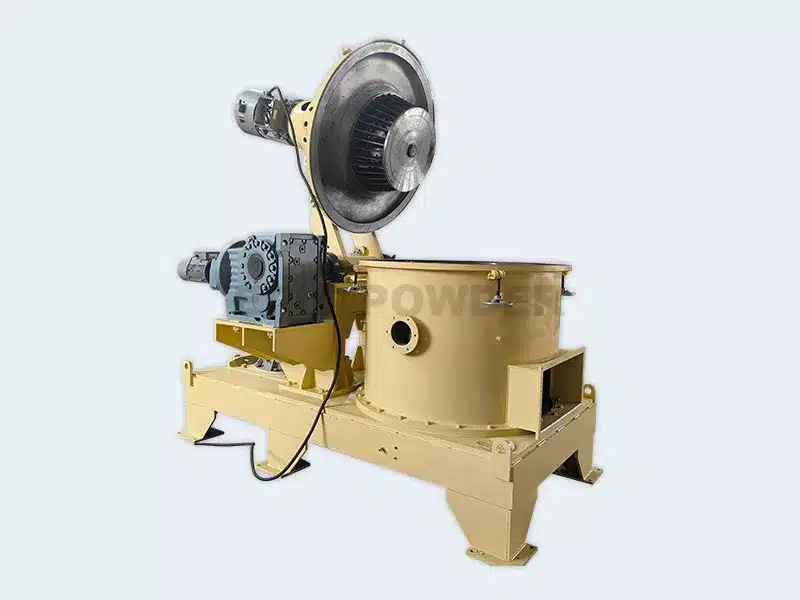
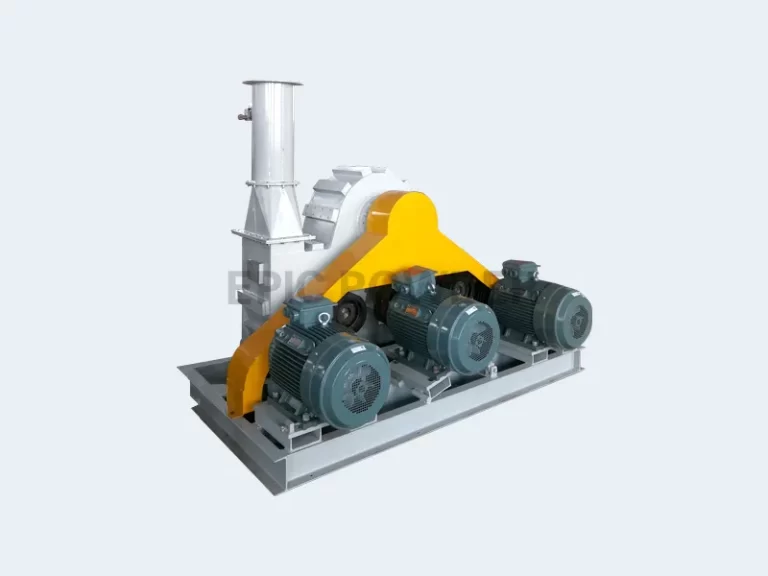
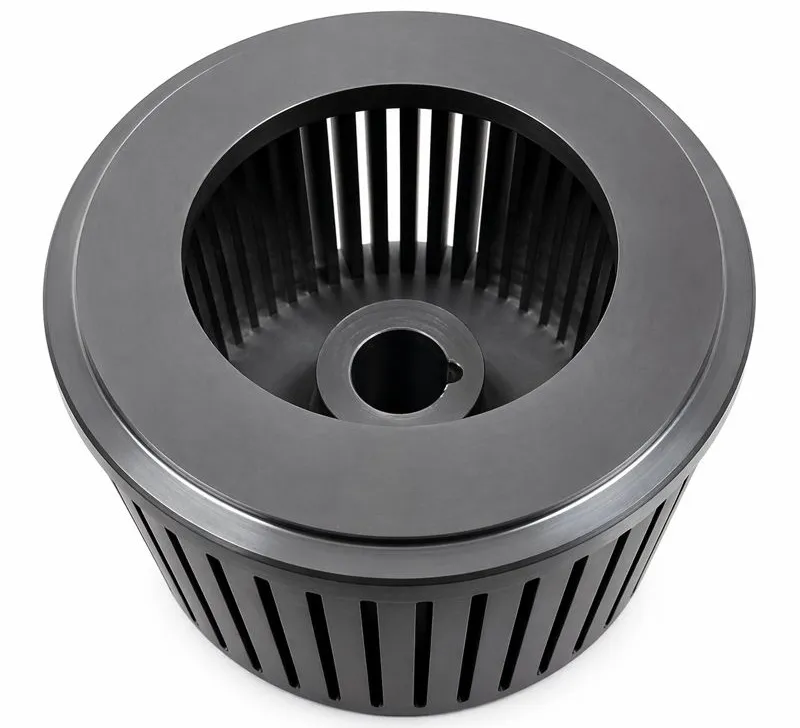
O moinho classificador de ar (ACM) é um moinho de moagem de impacto mecânico de alta velocidade, composto por um rotor giratório de alta velocidade (martelos, lâminas ou pinos) e um revestimento do estator.
- Mecanismo: O material entra na câmara de moagem através de um sistema de alimentação e é submetido a intenso impacto, cisalhamento e fricção provenientes do rotor de alta velocidade. O material moído é transportado por um fluxo de ar até uma roda classificadora integrada. O pó fino qualificado passa pela roda, enquanto as partículas grossas retornam à zona de moagem para posterior redução.
- Característica principal: Moagem e classificação integradas em um sistema compacto.
2. Moinho de jato (Moinho de jato de leito fluidizado)
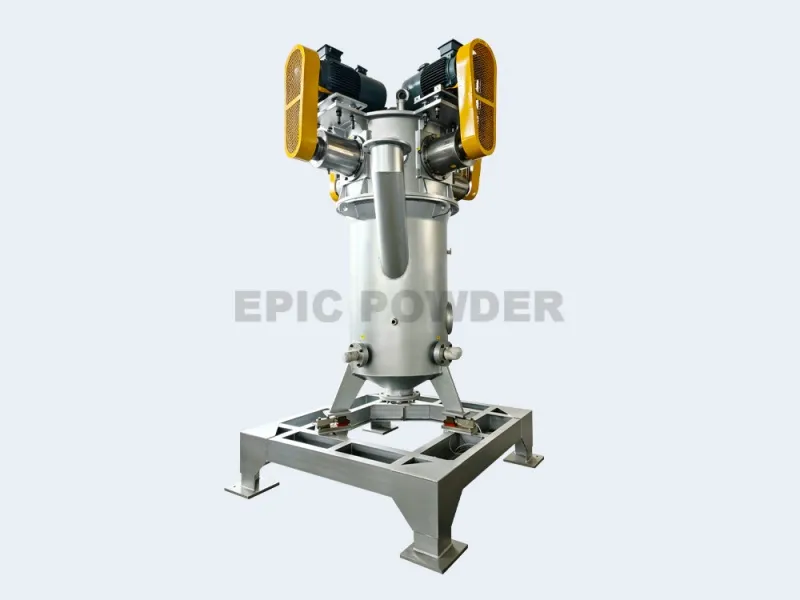
O moinho a jato utiliza ar comprimido de alta velocidade (ou gás inerte) como meio de propulsão, conseguindo moagem ultrafina por meio da colisão "material sobre material".
- Mecanismo: O gás comprimido é acelerado através de bicos Laval especialmente dispostos, transformando-se em jatos supersônicos (atingindo 300–500 m/s). As partículas do material colidem, friccionam-se e sofrem cisalhamento umas contra as outras na interseção desses jatos. Como não depende de meios de impacto mecânico, o material essencialmente se "automoe" no ar.
- Característica principal: Moagem a baixa temperatura, sem acúmulo de calor e com altíssima pureza do produto.
3. Linha de Produção de Classificação em Moinho de Bolas
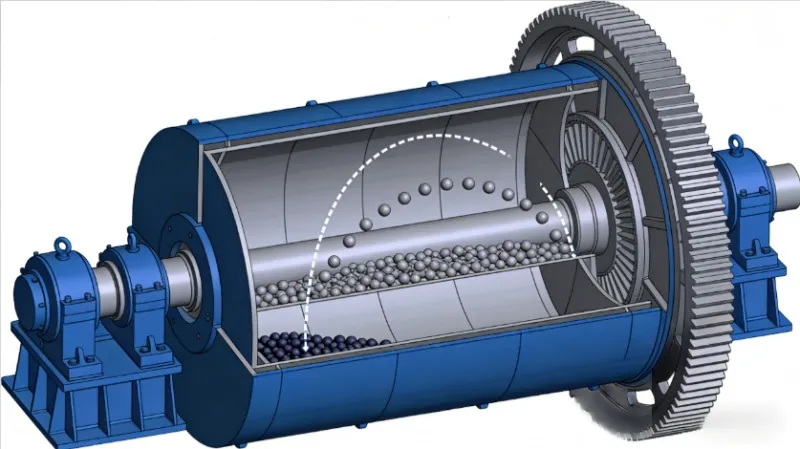
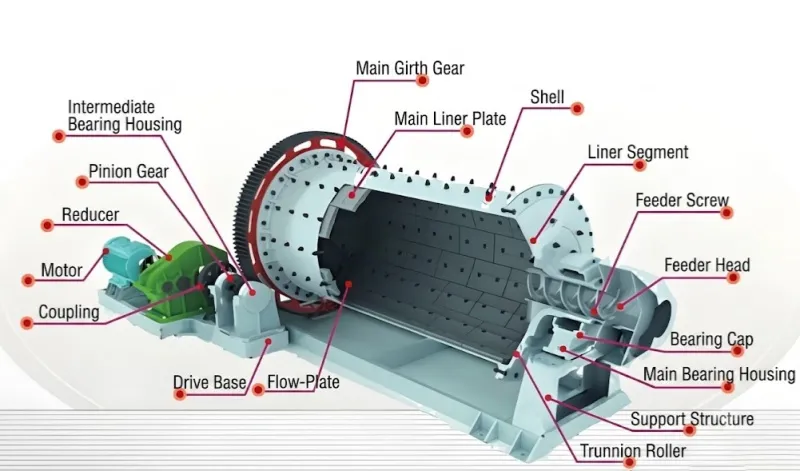
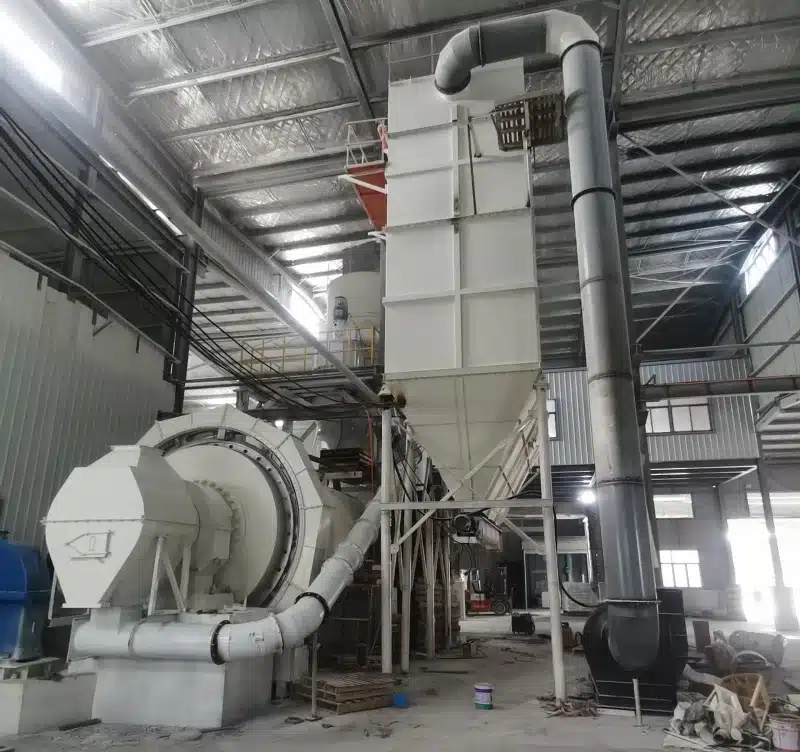
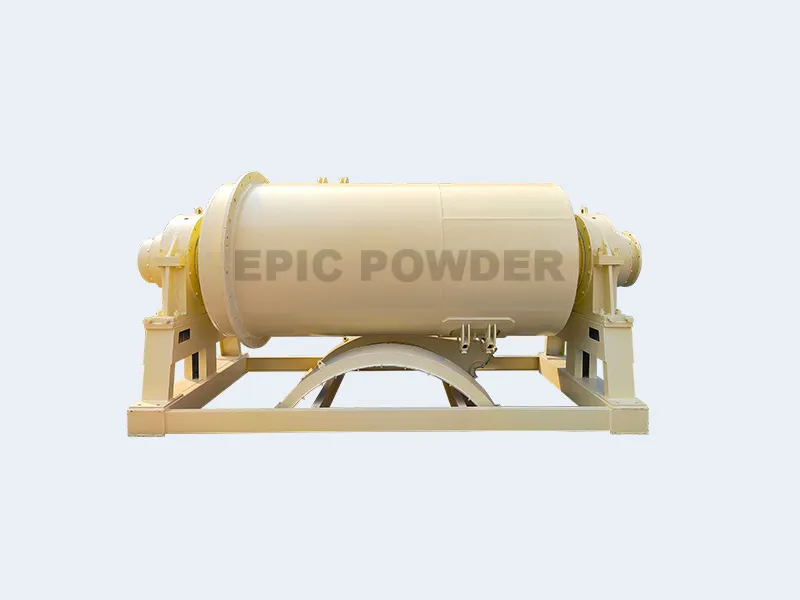
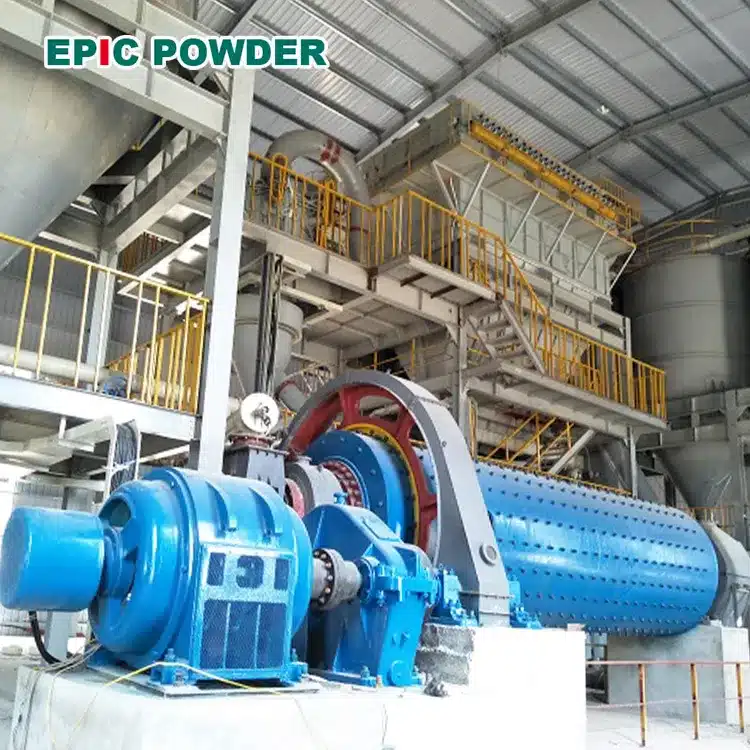
O moinho de bolas é um moinho de moagem consagrado pelo tempo e altamente estável, normalmente usado em um sistema de circuito fechado com um classificador de ar horizontal ou vertical.
- Mecanismo: Dentro de um cilindro rotativo, meios de moagem (esferas de aço, esferas de cerâmica ou grânulos de alumina) são levantados e, em seguida, soltos. O material é esmagado e moído pelo impacto e atrito entre os meios de moagem.
- Característica principal: Grande capacidade de processamento em uma única máquina, capaz de operação contínua a longo prazo com uma distribuição de tamanho de partículas altamente estável.
II. Comparação das dimensões de seleção do núcleo
Para tomar uma decisão informada, avaliamos esses sistemas com base em cinco indicadores principais:
1. Minúcia Alvo
- Moinho a jato: Domina a faixa de D50: 1 ~ 10 μm. Atinge facilmente níveis submicrométricos. Para produtos que requerem um D97 entre 3 ~ 5 μm, o Jet Mill é a principal escolha.
- Moinho Classificador de Ar (ACM): Normalmente, é adequado para D97 entre 10 e 150 μm. Embora algumas fresadoras mecânicas de alto desempenho possam atingir D97: 8 μm, o consumo de energia e o desgaste aumentam significativamente nesse nível.
- Linha de moinhos de bolas: Excelente em D97: 5 ~ 45 μm. Ao utilizar classificadores multiestágios em série, é possível produzir minerais industriais de alta qualidade com uma distribuição granulométrica muito estreita.
2. Dureza do Material
- Dureza de Mohs < 3,5 (Materiais macios): Como talco, caulim, grafite, carbonato de cálcio, alimentos e medicamentos. ACM Oferece a melhor relação custo-benefício aqui.
- Dureza de Mohs 3,5 – 7 (Materiais de dureza média/alta): Materiais como quartzo, feldspato, areia de zircão e cerâmica fina são altamente abrasivos. Um moinho de jato (com revestimento protetor) ou um Linha de moinho de bolas (com revestimento de alumina) é mais apropriado.
- Dureza de Mohs > 7 (Materiais extremamente duros): Os moinhos de jato ou moinhos de bolas com configuração específica são as opções preferenciais.
3. Pureza e Controle de Temperatura
- Materiais sensíveis ao calor: Tais como intermediários farmacêuticos, certos ingredientes alimentares (ex.: Matcha) e pesticidas. Moinho de jato Utiliza o efeito Joule-Thomson (resfriamento pela expansão do gás), mantendo a temperatura da câmara constante, o que a torna a única opção confiável para produtos sensíveis ao calor.
- Materiais de alta pureza: Tais como materiais para cátodo/ânodo de baterias de lítio e pós de grau eletrônico. Moinho de jato É ideal porque não tem contato mecânico e pode ser facilmente revestido com cerâmica pura (alumina, carbeto de silício ou poliuretano) para evitar contaminação por metal.
- Minerais industriais gerais: Para produtos como GCC de grau papel, linhas de moinho de bolas ou ACMs com revestimentos não metálicos podem atender aos requisitos de pureza.
4. Escala e Capacidade de Produção
- Pequena escala/Laboratório: Os moinhos a jato e os pequenos ACMs são altamente flexíveis.
- Escala média a grande: Os ACMs normalmente oferecem capacidades que variam de algumas centenas de quilogramas a algumas toneladas por hora.
- Escala ultragrande (produção anual > 10.000 toneladas): O Linha de classificação de moinho de bolas Possui uma vantagem incomparável. Os moinhos de bolas podem ser ampliados significativamente e são a primeira escolha para operações de mineração em grande escala devido à sua extrema estabilidade.
5. Consumo de energia e economia
- Consumo específico de energia: Linha de moinho de bolas < ACM < Moinho de jato.
- Moinhos de jato Possuem o maior consumo de energia porque a eficiência de conversão de energia (eletricidade em pressão atmosférica e, em seguida, em energia cinética) é relativamente baixa.
- Moinhos de bolas Apresentam custos operacionais mais baixos, consistindo principalmente em eletricidade e desgaste dos meios de moagem.
III. Recomendações específicas para cada setor
1. Indústria de Materiais para Baterias de Lítio
Os materiais catódicos (LFP, NCM) e os materiais anódicos (grafite artificial, carbono duro) são extremamente sensíveis a impurezas metálicas (Fe, Cu, Zn, etc.) e requerem tamanho de partícula uniforme.
- Recomendação: Jato de água (Proteção totalmente em cerâmica). Proporciona excelente desaglomeração, garantindo ao mesmo tempo mínima absorção de metal. Para alguns grafites modificados, o Série MJW ACM Também são utilizados designs específicos antidesgaste.

2. Indústria Alimentícia e Farmacêutica
Exemplos incluem matcha, eritritol e várias proteínas vegetais.
- Recomendação:
- Matcha: O ACM é preferido, pois seu controle de temperatura preserva a cor verde vibrante.
- Proteínas vegetais (soja, ervilha): O ACM é frequentemente usado para fracionamento a seco para aumentar o rendimento proteico, mantendo a integridade dos nutrientes.
- Produtos farmacêuticos sensíveis ao calor: o moinho de jato é o padrão.
3. Minerais industriais (GCC, quartzo, talco, etc.)
- Recomendação:
- Para produções anuais de dezenas de milhares de toneladas (ex.: enchimento para fabricação de papel): Moinho de bolas + Classificador vertical multirrotor.
- Para partículas de tamanho pequeno e distribuição estreita (ex.: cargas plásticas): Moinhos de jato Proporciona um substrato melhor para modificação da superfície.
4. Materiais Perigosos (Enxofre, Pólvora Explosiva)
- Recomendação: Deve usar um Sistema de proteção com gás inerte (nitrogênio/CO2). Ambos Moinhos de jato e ACMs Podem ser configurados como sistemas de circuito fechado para garantir segurança à prova de explosão.
IV. Matriz de Decisão de Seleção
| Recurso | Moinho Classificador de Ar (MJW) | Moinho de jato | Moinho de bolas |
| Materiais adequados | Dureza macia/média, sensibilidade geral ao calor. | Duro, de alta pureza e altamente sensível ao calor. | Dureza média/alta, escala grande |
| Finura (D97) | 8 ~ 150 μm | 2 ~ 45 μm | 5 ~ 74 μm |
| PSD | Estreito | Extremamente estreito | Uniforme e estável |
| Risco de contaminação | Médio (requer forro) | Extremamente baixo | Baixo (mídia/revestimento cerâmico) |
| Consumo de energia | Médio | Alto | Baixo |
| Capacidade da unidade | 0,2 – 15 t/h | 0,3 – 10 t/h | 1 – 20 t/h |
| Custo do investimento | Baixo | Médio | Alto (Intensivo em infraestrutura) |
V. Conclusão
Não existe um equipamento "melhor", apenas o "mais adequado" às suas necessidades específicas.
- Para extrema finura e pureza., especialmente para materiais de alto valor ou sensíveis ao calor, escolha o moinho de jato.
- Para a melhor relação custo-benefício e flexibilidade. Para materiais de dureza baixa a média, o moinho classificador a ar é o equipamento "faz-tudo" da produção industrial.
- Para garantir escala e estabilidade. No processamento de minerais industriais duros, a Linha de Classificação com Moinho de Bolas é o melhor investimento a longo prazo.
Antes de tomar uma decisão final, Pó épico Recomendamos fortemente a realização de testes laboratoriais. Ao comparar as curvas reais de Distribuição do Tamanho de Partículas (PSD), imagens de Microscopia Eletrônica de Varredura (MEV) e dados de custo por tonelada, você pode garantir que seu investimento trará o máximo retorno.

“Obrigado pela leitura. Espero que meu artigo tenha ajudado. Deixe um comentário abaixo. Você também pode entrar em contato com o suporte online da Zelda para quaisquer outras dúvidas.”
— Publicado por Emily Chen