Dans le domaine du traitement industriel des poudres, le broyage ultrafin est un procédé essentiel qui détermine la valeur ajoutée d'un produit. Face aux trois principales technologies…Broyeurs à classificateur d'air (Série MJW), Broyeurs à jet, et Système de production de broyeur à boulets et de classificateur à air— De nombreuses entreprises ont du mal à choisir le broyeur qui correspond à leurs besoins spécifiques.
Chaque équipement possède son propre principe de fonctionnement, ses limites de performance et sa rentabilité. Choisir un équipement inadapté peut entraîner une faible productivité, une consommation d'énergie élevée et une qualité de produit non conforme aux normes industrielles. Cet article propose une analyse approfondie des principes de fonctionnement, des avantages techniques, des scénarios d'application et des comparaisons économiques afin de vous aider à faire un choix éclairé.
I. Principes de fonctionnement fondamentaux des trois principales technologies
1. Broyeur à classification pneumatique (broyeur mécanique ultrafin série MJW)
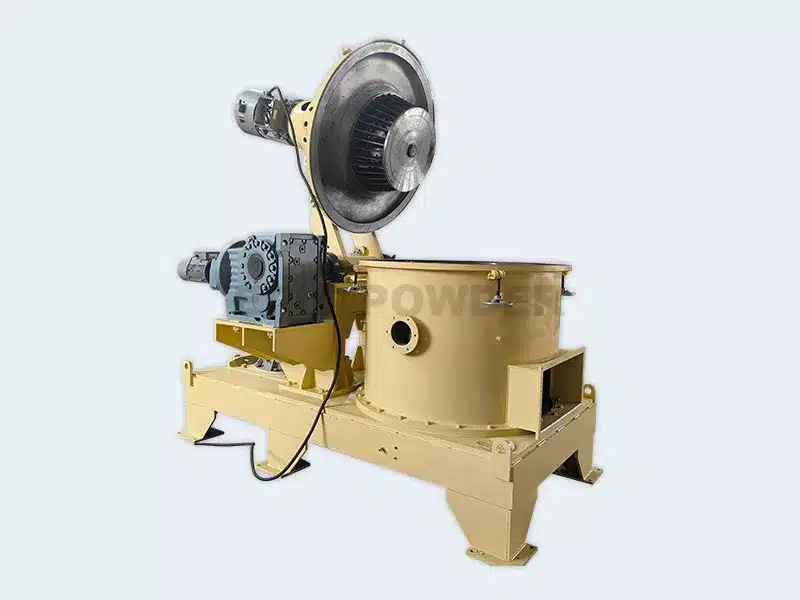
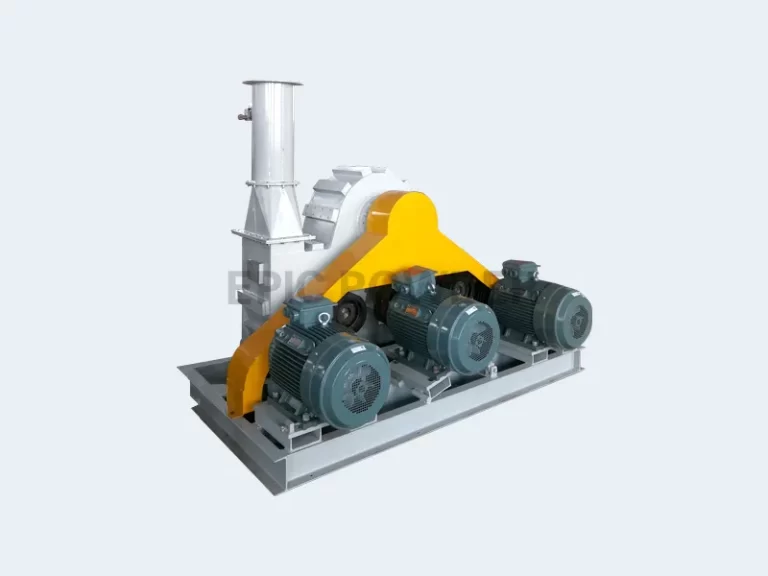
Le broyeur à classification d'air (ACM) est un broyeur à impact mécanique à grande vitesse composé d'un rotor rotatif à grande vitesse (marteaux, lames ou broches) et d'une chemise de stator.
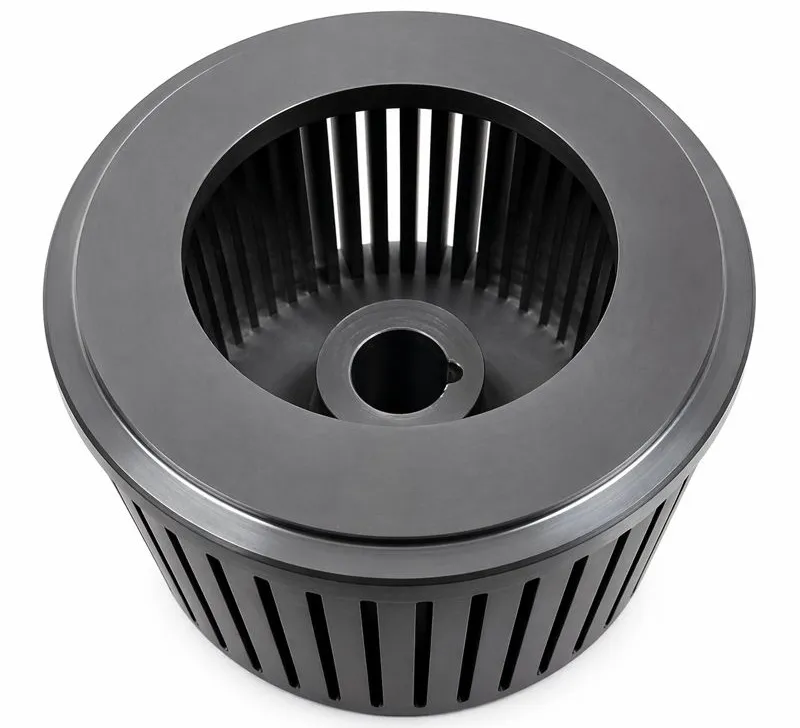
- Mécanisme: La matière est introduite dans la chambre de broyage par un système d'alimentation et soumise à des chocs, un cisaillement et un frottement intenses dus au rotor à grande vitesse. La matière broyée est transportée par un flux d'air vers une roue de classification intégrée. La poudre fine, conforme aux normes, traverse la roue, tandis que les particules grossières sont renvoyées dans la zone de broyage pour une réduction supplémentaire.
- Caractéristique principale : Broyage et classification intégrés dans un système compact.
2. Broyeur à jet (broyeur à jet à lit fluidisé)
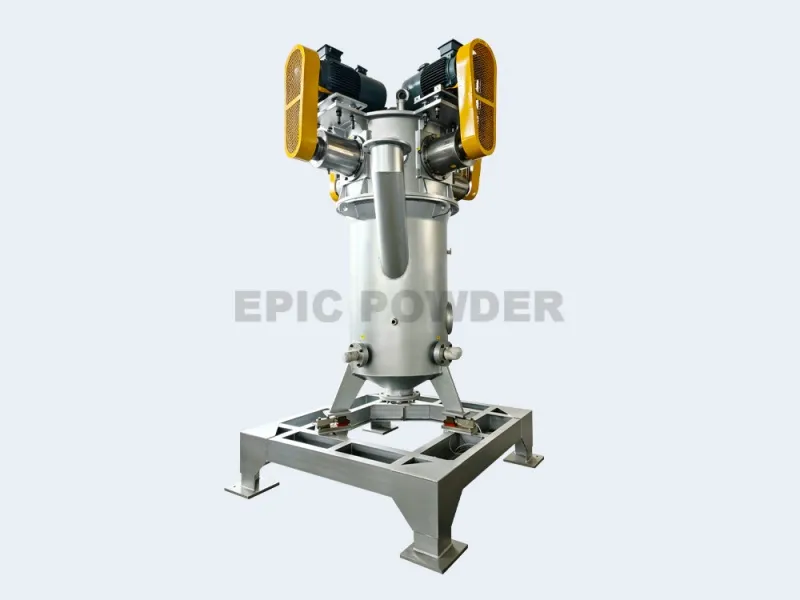
Le broyeur à jet utilise de l'air comprimé à grande vitesse (ou un gaz inerte) comme milieu moteur, réalisant un broyage ultrafin grâce à la collision “ matériau sur matériau ”.
- Mécanisme: Le gaz comprimé est accéléré par des tuyères de Laval spécialement agencées pour former des jets supersoniques (atteignant 300 à 500 m/s). À l'intersection de ces jets, les particules de matériau entrent en collision, se frottent et se cisaillent les unes contre les autres. N'ayant pas recours à un milieu d'impact mécanique, le matériau s'auto-broie en quelque sorte dans l'air.
- Caractéristique principale : Broyage à basse température sans accumulation de chaleur et pureté du produit extrêmement élevée.
3. Ligne de production de classification par broyeur à boulets
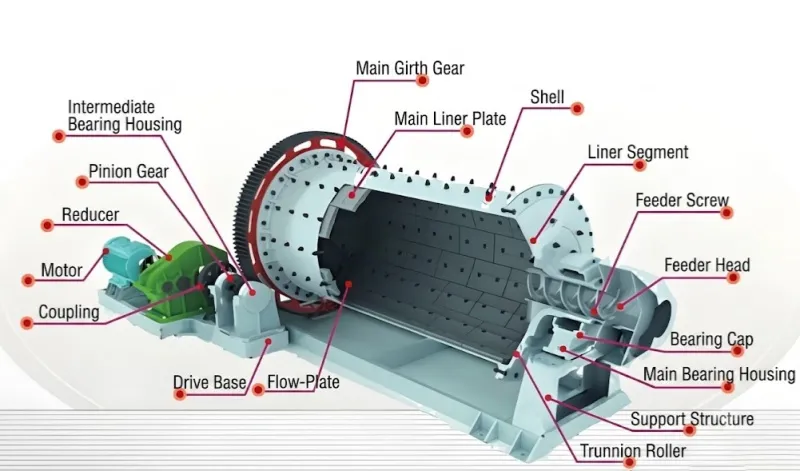
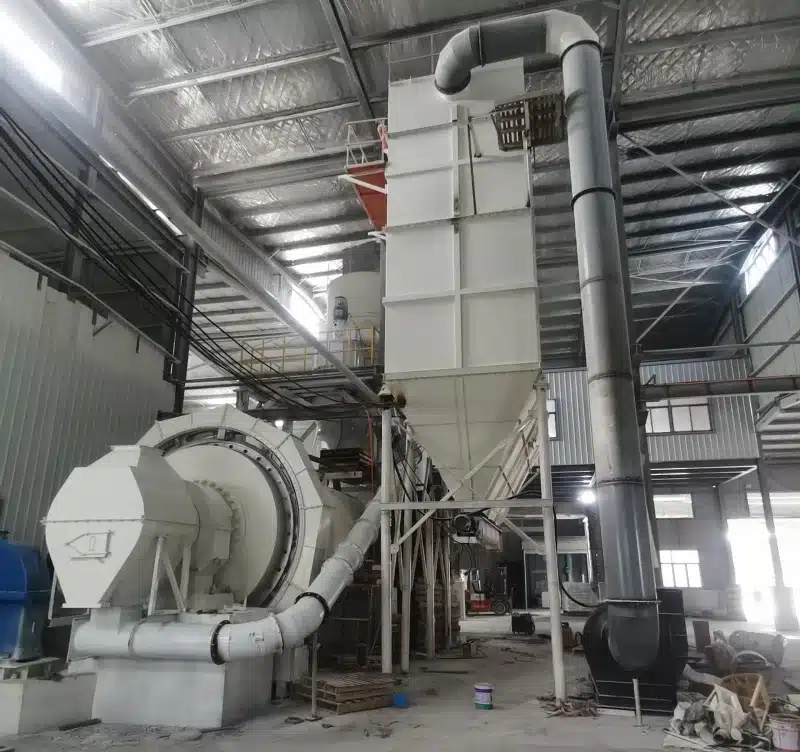
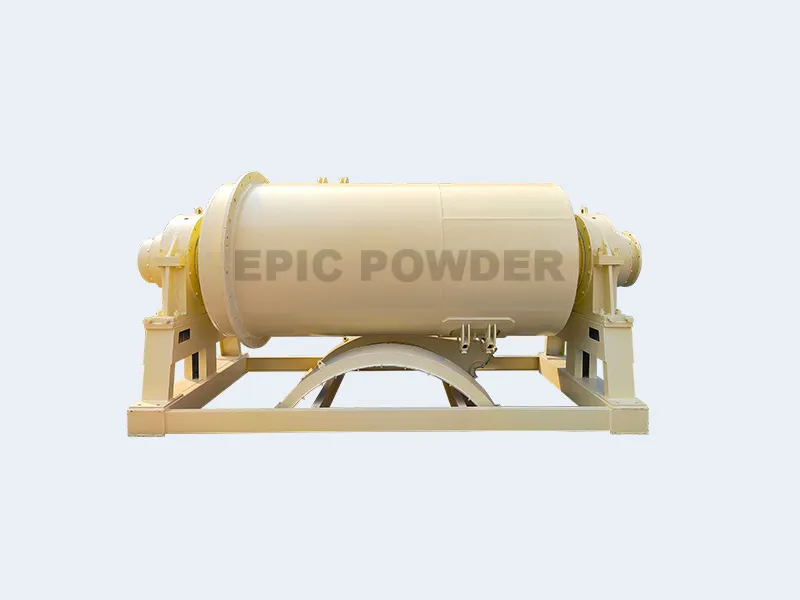
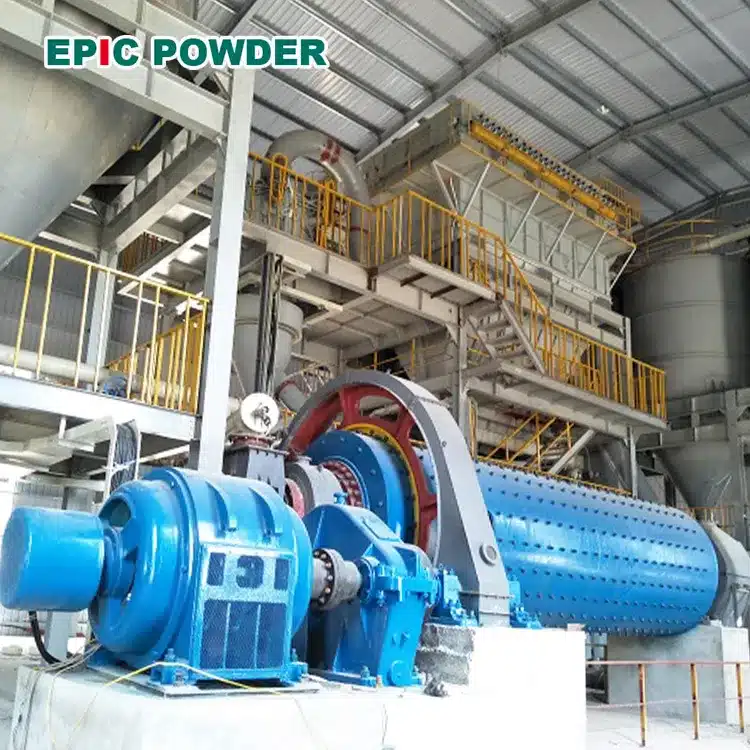
Le broyeur à boulets est un broyeur éprouvé et très stable, généralement utilisé dans un système en circuit fermé avec un classificateur d'air horizontal ou vertical.
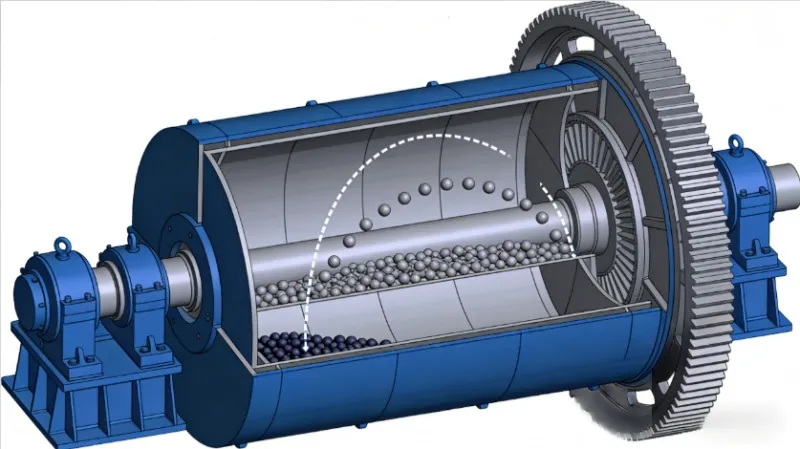
- Mécanisme: À l'intérieur d'un cylindre rotatif, des billes de broyage (billes d'acier, billes de céramique ou billes d'alumine) sont soulevées puis relâchées. Le matériau est broyé et concassé par impact et frottement entre les billes.
- Caractéristique principale : Capacité de production massive sur une seule machine, capable d'un fonctionnement continu à long terme avec une distribution granulométrique très stable.
II. Comparaison des dimensions de sélection des noyaux
Pour prendre une décision éclairée, nous évaluons ces systèmes sur la base de cinq indicateurs clés :
1. Finesse cible
- Jet Mill : Elle excelle dans la plage de D50 : 1 à 10 µm et atteint aisément des valeurs inférieures au micron. Pour les produits nécessitant un D97 compris entre 3 et 5 µm, la machine Jet Mill est la solution de choix.
- Broyeur à classificateur d'air (ACM) : Convient généralement pour des valeurs de D97 comprises entre 10 et 150 μm. Bien que certaines broyeuses mécaniques hautes performances puissent atteindre D97 : 8 μm, la consommation d’énergie et l’usure augmentent considérablement à ce niveau.
- Ligne de broyeurs à boulets : Excellentes performances à D97 : 5 à 45 µm. Grâce à l’utilisation de classificateurs multi-étapes en série, il est possible de produire des minéraux industriels haut de gamme avec une distribution granulométrique très étroite.
2. Dureté du matériau
- Dureté Mohs < 3,5 (Matériaux tendres) : Comme le talc, le kaolin, le graphite, le carbonate de calcium, les aliments et les médicaments. ACM offre ici le meilleur rapport qualité-prix.
- Dureté Mohs 3,5 – 7 (Matériaux moyennement durs/durs) : Comme le quartz, le feldspath, le sable de zircon et les céramiques fines. Ces matériaux sont très abrasifs. Un broyeur à jet (avec revêtement protecteur) ou un Ligne de broyeur à boulets (avec un revêtement en alumine) est plus approprié.
- Dureté Mohs > 7 (Matériaux extrêmement durs) : Les broyeurs à jet ou les broyeurs à boulets spécialement configurés sont les options privilégiées.
3. Contrôle de la pureté et de la température
- Matériaux thermosensibles : Par exemple, des intermédiaires pharmaceutiques, certains ingrédients alimentaires (comme le matcha) et des pesticides. Broyeur à jet Utilisant l'effet Joule-Thomson (refroidissement par détente du gaz), il maintient la température de la chambre constante, ce qui en fait le seul choix fiable pour les produits thermosensibles.
- Matériaux de haute pureté : Par exemple, les matériaux de cathode/anode pour batteries au lithium et les poudres de qualité électronique. Broyeur à jet est idéal car il n'y a pas de contact mécanique et il peut être facilement équipé de revêtements entièrement en céramique (alumine, carbure de silicium ou polyuréthane) pour éviter toute contamination métallique.
- Minéraux industriels généraux : Pour des produits comme le GCC de qualité papier, les lignes de broyage à boulets ou les ACM avec revêtements non métalliques peuvent répondre aux exigences de pureté.
4. Échelle et capacité de production
- Petite échelle/Laboratoire : Les broyeurs à jet et les petits ACM sont extrêmement flexibles.
- Moyenne à grande échelle : Les ACM offrent généralement des capacités allant de plusieurs centaines de kilogrammes à quelques tonnes par heure.
- Très grande échelle (production annuelle > 10 000 tonnes) : Le Ligne de classification par broyeur à boulets Le broyeur à boulets présente un avantage sans égal. Sa capacité d'adaptation à grande échelle en fait le choix privilégié pour les opérations minières à grande échelle grâce à son extrême stabilité.
5. Consommation d'énergie et économie
- Consommation énergétique spécifique : Ligne de broyeur à boulets < ACM < Broyeur à jet.
- Broyeurs à jet ont la consommation d'énergie la plus élevée car l'efficacité de conversion de l'énergie (électricité en pression de l'air en énergie cinétique) est relativement faible.
- Broyeurs à boulets présentent des coûts d'exploitation plus faibles, principalement constitués de dépenses en électricité et en usure des médias de broyage.
III. Recommandations spécifiques à l'industrie
1. Industrie des matériaux pour batteries au lithium
Les matériaux de cathode (LFP, NCM) et les matériaux d'anode (graphite artificiel, carbone dur) sont extrêmement sensibles à impuretés métalliques (Fe, Cu, Zn, etc.) et nécessitent une granulométrie uniforme.
- Recommandation: Jet Mill (Protection céramique intégrale). Il assure une excellente désagglomération tout en minimisant l'absorption de métaux. Pour certains graphites modifiés, Série MJW ACM Des modèles spécifiques anti-usure sont également utilisés.

2. Industrie alimentaire et pharmaceutique
On peut citer comme exemples le matcha, l'érythritol et diverses protéines végétales.
- Recommandation:
- Matcha : ACM est préféré car son contrôle de la température préserve la couleur verte éclatante.
- Protéines végétales (soja, pois) : L'ACM est souvent utilisée pour le fractionnement à sec afin d'augmenter le rendement en protéines tout en préservant l'intégrité des nutriments.
- Produits pharmaceutiques thermosensibles : le broyeur à jet est la norme.
3. Minéraux industriels (GCC, quartz, talc, etc.)
- Recommandation:
- Pour des productions annuelles de plusieurs dizaines de milliers de tonnes (par exemple, matière première pour la fabrication de papier) : Broyeur à boulets + classificateur vertical multirotor.
- Pour les particules de petite taille et à distribution étroite (par exemple, les charges plastiques) : Broyeurs à jet fournir un meilleur substrat pour la modification de surface.
4. Matières dangereuses (soufre, poudres explosives)
- Recommandation: Doit utiliser un Système de protection par gaz inerte (azote/CO2). Les deux Broyeurs à jet et ACM peuvent être configurés en systèmes en boucle fermée pour garantir une sécurité antidéflagrante.
IV. Matrice de décision de sélection
| Fonctionnalité | Broyeur à classificateur d'air (MJW) | Broyeur à jet | Broyeur à boulets |
| Matériaux appropriés | Dureté molle/moyenne, sensibilité générale à la chaleur | Dur, de haute pureté, très sensible à la chaleur | Dureté moyenne/élevée, grande échelle |
| Finesse (D97) | 8 à 150 μm | 2 ~ 45 μm | 5 ~ 74 μm |
| PSD | Étroit | Extrêmement étroit | Uniforme et stable |
| Risque de contamination | Moyen (nécessite une doublure) | Extrêmement bas | Faible (média/revêtement céramique) |
| Consommation d'énergie | Moyen | Haut | Faible |
| Capacité unitaire | 0,2 – 15 t/h | 0,3 – 10 t/h | 1 à 20 t/h |
| Coût d'investissement | Faible | Moyen | Élevé (Infrastructures intensives) |
V. Conclusion
Il n'existe pas de “ meilleur ” équipement, seulement celui qui est “ le plus adapté ” à vos besoins spécifiques.
- Pour une finesse et une pureté extrêmes, notamment pour les matériaux de grande valeur ou thermosensibles, choisissez le broyeur à jet.
- Pour un rapport qualité-prix optimal et une grande flexibilité Pour les matériaux de dureté faible à moyenne, le broyeur à classification pneumatique est l'outil polyvalent de la production industrielle.
- Pour des raisons d'échelle et de stabilité Pour le traitement des minéraux industriels durs, la ligne de classification par broyeur à boulets représente le meilleur investissement à long terme.
Avant de prendre une décision finale, Poudre épique Nous recommandons fortement les analyses en laboratoire. En comparant les courbes de distribution granulométrique (PSD), les images au microscope électronique à balayage (MEB) et les données de coût par tonne, vous pouvez garantir un retour sur investissement maximal.

“ Merci de votre lecture. J’espère que cet article vous sera utile. N’hésitez pas à laisser un commentaire ci-dessous. Pour toute question, vous pouvez également contacter le service client en ligne de Zelda. ”
— Publié par Emily Chen