In the field of industrial powder processing, ultrafine grinding is a core process that determines the added value of a product. Faced with the three mainstream technologies—Air Classifier Mills (MJW Series), Jet Mills, and Ball Mill And Air Classifier Production System—many companies find it difficult to make the right selection their specific grinding mill requirements.
Each piece of equipment has its own unique working principle, performance limits, and economic applicability. Choosing the wrong equipment can lead to low production efficiency, high energy consumption, and product quality that fails to meet industry standards. This article provides an in-depth analysis from the perspectives of working principles, technical advantages, application scenarios, and economic comparisons to help you make a scientific choice.
I. Core Working Principles of the Three Major Technologies
1. Air Classifier Mill (MJW Series Mechanical Ultra-fine Grinder)
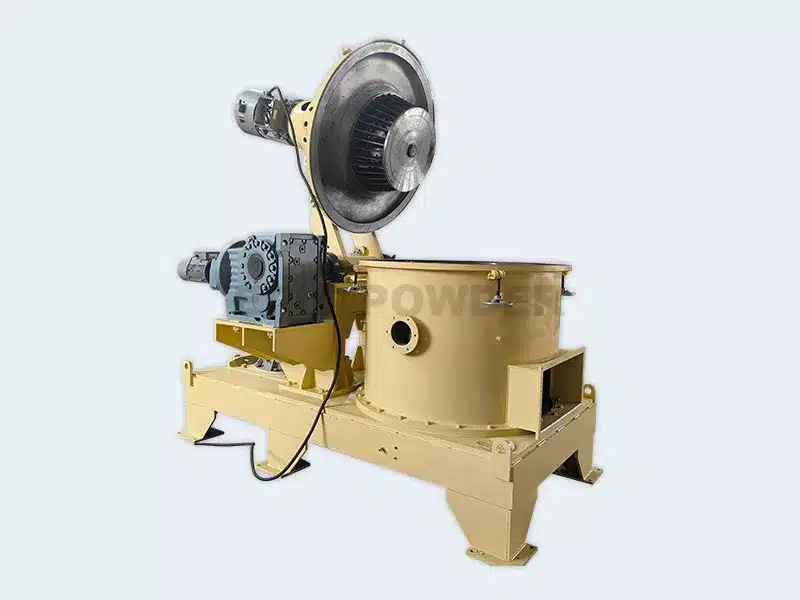
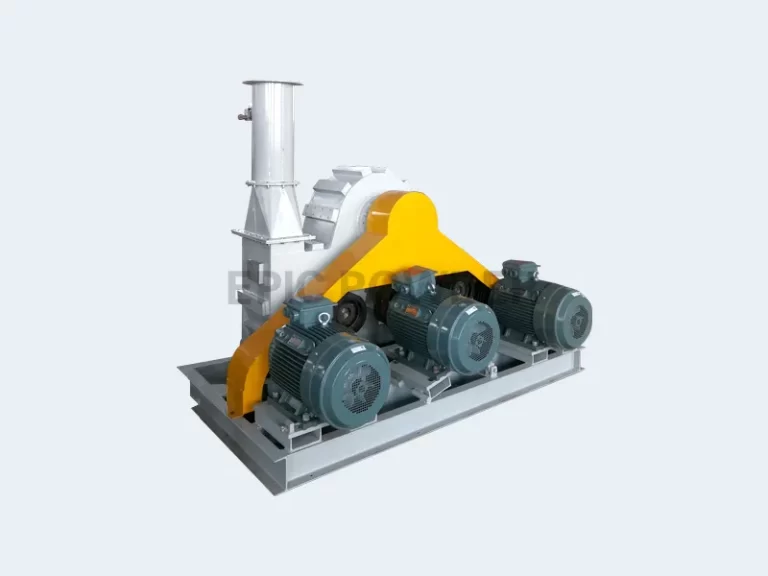
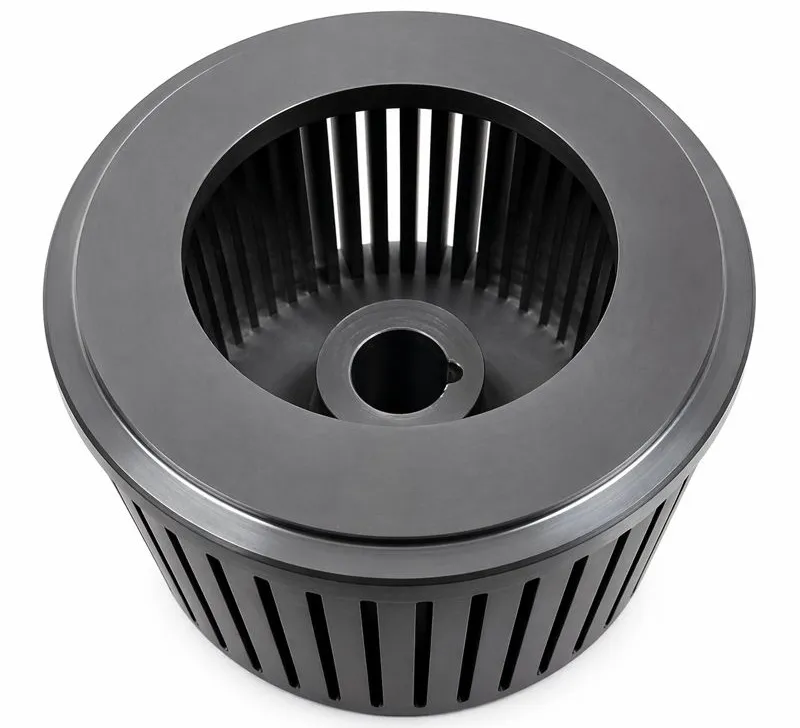
The Air Classifier Mill (ACM) is a high-speed mechanical impact grinding mill consisting of a high-speed rotating rotor (hammers, blades, or pins) and a stator liner.
- Mechanism: Material enters the grinding chamber via a feeding system and is subjected to intense impact, shear, and friction from the high-speed rotor. The ground material is carried by airflow to an integrated classifier wheel. Qualified fine powder passes through the wheel, while coarse particles are returned to the grinding zone for further reduction.
- Key Feature: Integrated grinding and classifying in one compact system.
2. Jet Mill (Fluidized Bed Jet Mill)
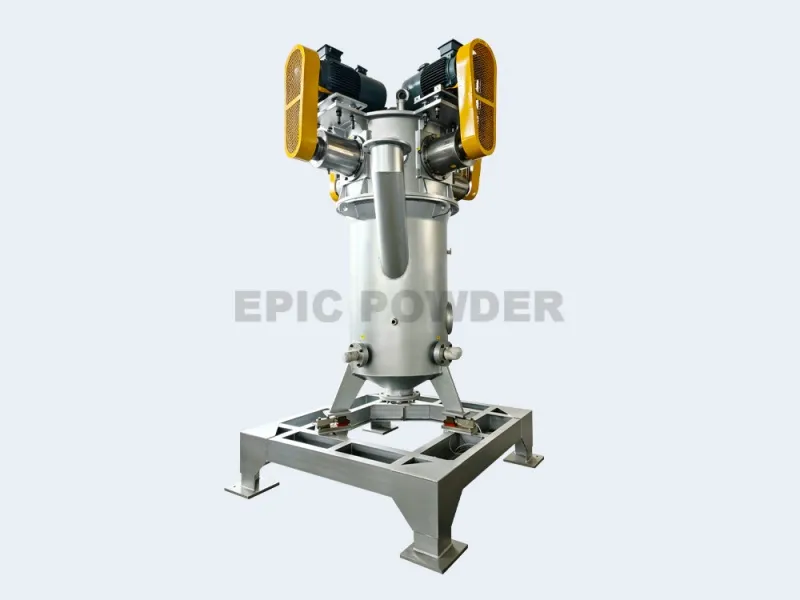
The Jet Mill utilizes high-speed compressed air (or inert gas) as the power medium, achieving ultrafine grinding through “material-on-material” collision.
- Mechanism: Compressed gas is accelerated through specially arranged Laval nozzles into supersonic streams (reaching 300–500 m/s). Material particles collide, rub, and shear against each other at the intersection of these jets. Since it does not rely on mechanical impact media, the material is essentially “self-grinding” in the air.
- Key Feature: Low-temperature grinding with no heat buildup and extremely high product purity.
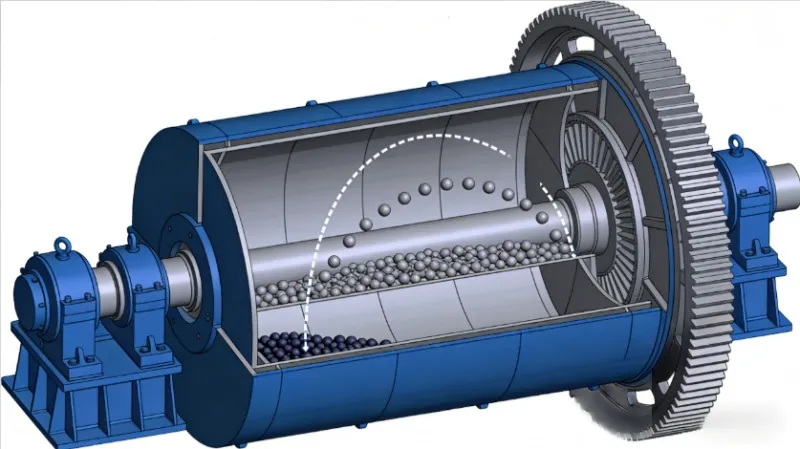
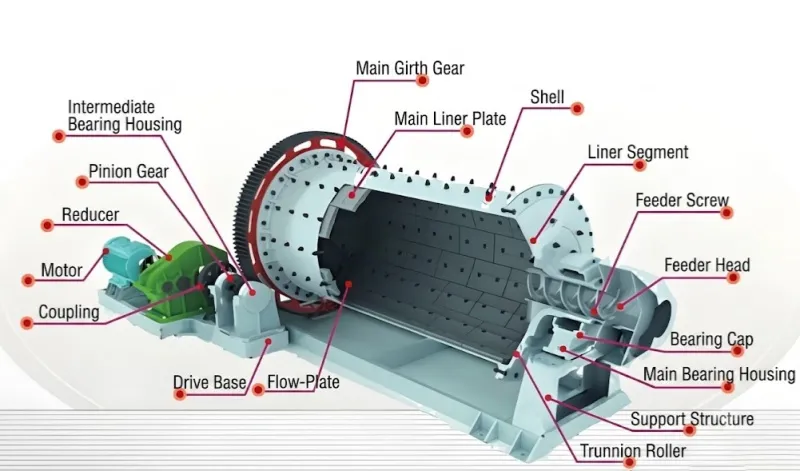
3. Ball Mill Classifying Production Line
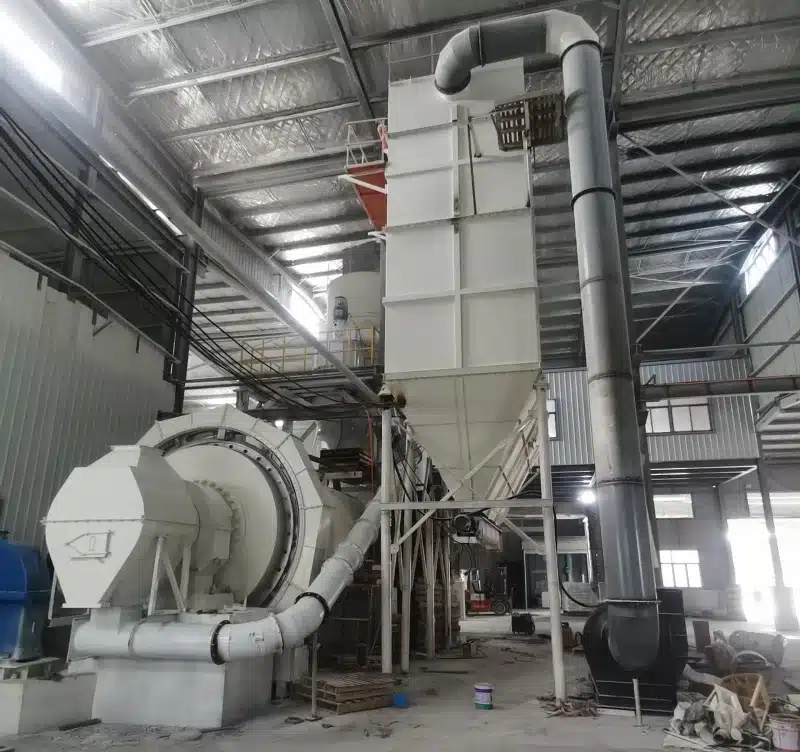
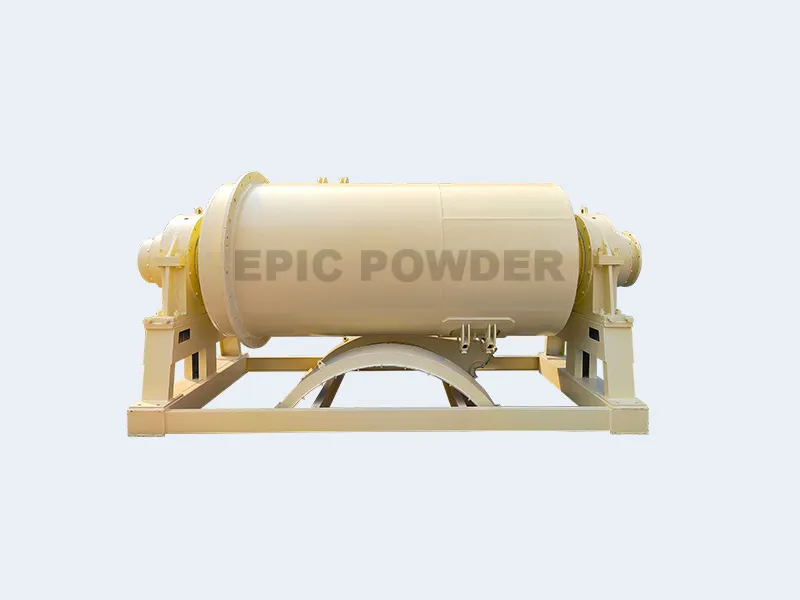
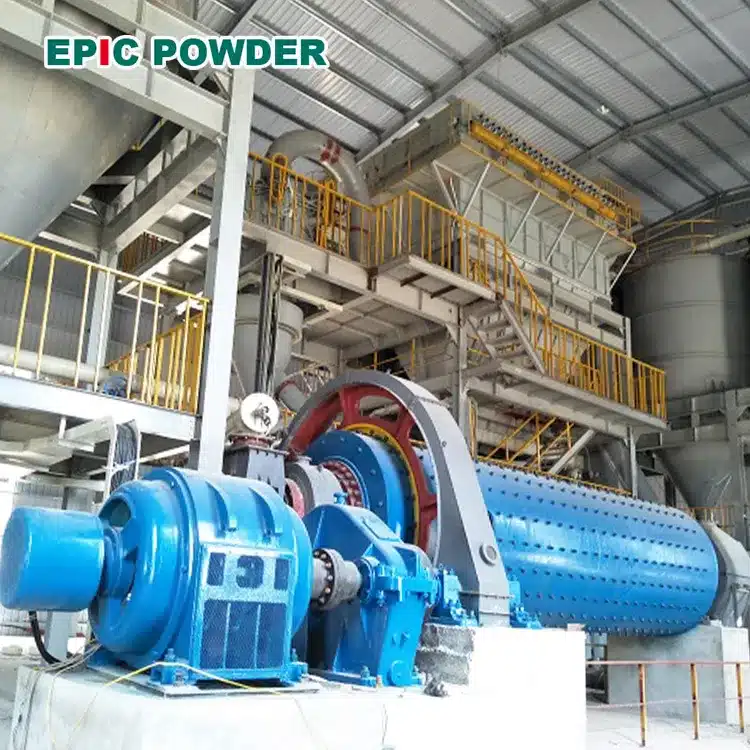
The Ball Mill is a time-tested and highly stable grinding mill, typically used in a closed-circuit system with a horizontal or vertical air classifier.
- Mechanism: Inside a rotating cylinder, grinding media (steel balls, ceramic balls, or alumina beads) are lifted and then dropped. The material is crushed and ground by the impact and attrition between the media.
- Key Feature: Massive single-machine capacity, capable of long-term continuous operation with a highly stable particle size distribution.
II. Comparison of Core Selection Dimensions
To make an informed decision, we evaluate these systems based on five key indicators:
1. Target Fineness
- Jet Mill: Dominates the range of D50: 1 ~ 10 μm. It easily reaches sub-micron levels. For products requiring a D97 between 3 ~ 5 μm, the Jet Mill is the primary choice.
- Air Classifier Mill (ACM): Typically suitable for D97 between 10 ~ 150 μm. While some high-performance mechanical mills can reach D97: 8 μm, energy consumption and wear increase significantly at this level.
- Ball Mill Line: Excels at D97: 5 ~ 45 μm. By using multi-stage classifiers in series, it can produce high-end industrial minerals with a very narrow particle size distribution.
2. Material Hardness
- Mohs Hardness < 3.5 (Soft Materials): Such as talc, kaolin, graphite, calcium carbonate, food, and medicine. The ACM offers the best price-performance ratio here.
- Mohs Hardness 3.5 – 7 (Medium/Hard Materials): Such as quartz, feldspar, zircon sand, and fine ceramics. These materials are highly abrasive. A Jet Mill (with protective lining) or a Ball Mill Line (with alumina lining) is more appropriate.
- Mohs Hardness > 7 (Extremely Hard Materials): Jet Mills or specifically configured Ball Mills are the preferred options.
3. Purity and Temperature Control
- Heat-Sensitive Materials: Such as pharmaceutical intermediates, certain food ingredients (e.g., Matcha), and pesticides. The Jet Mill utilizes the Joule-Thomson effect (cooling upon gas expansion), keeping the chamber temperature constant, making it the only reliable choice for heat-sensitive goods.
- High-Purity Materials: Such as lithium battery cathode/anode materials and electronic-grade powders. The Jet Mill is ideal because it has no mechanical contact and can be easily fitted with full ceramic linings (Alumina, Silicon Carbide, or Polyurethane) to prevent metal contamination.
- General Industrial Minerals: For products like paper-grade GCC, Ball Mill Lines or ACMs with non-metallic linings can meet purity requirements.
4. Production Scale and Capacity
- Small Scale/Laboratory: Jet Mills and small ACMs are highly flexible.
- Medium to Large Scale: ACMs typically offer capacities from several hundred kilograms to a few tons per hour.
- Ultra-Large Scale (Annual output > 10,000 tons): The Ball Mill Classifying Line has an unparalleled advantage. Ball mills can be scaled up significantly and are the first choice for large-scale mining operations due to their extreme stability.
5. Energy Consumption and Economy
- Specific Energy Consumption: Ball Mill Line < ACM < Jet Mill.
- Jet Mills have the highest energy consumption because the energy conversion efficiency (electricity to air pressure to kinetic energy) is relatively low.
- Ball Mills have lower operating costs, primarily consisting of electricity and grinding media wear.
III. Industry-Specific Recommendations
1. Lithium Battery Material Industry
Cathode materials (LFP, NCM) and anode materials (artificial graphite, hard carbon) are extremely sensitive to metallic impurities (Fe, Cu, Zn, etc.) and require uniform particle size.
- Recommendation: Jet Mill (Full Ceramic Protection). It provides excellent deagglomeration while ensuring minimal metal pickup. For some modified graphite, the MJW Series ACM with specific anti-wear designs is also used.

2. Food and Pharmaceutical Industry
Examples include Matcha, erythritol, and various plant proteins.
- Recommendation:
- Matcha: ACM is preferred as its temperature control preserves the vibrant green color.
- Plant Proteins (Soy, Pea): ACM is often used for dry fractionation to increase protein yield while maintaining nutrient integrity.
- Heat-Sensitive Pharmaceuticals: Jet Mill is the standard.
3. Industrial Minerals (GCC, Quartz, Talc, etc.)
- Recommendation:
- For annual outputs of tens of thousands of tons (e.g., paper-grade filler): Ball Mill + Vertical Multi-Rotor Classifier.
- For small particle size and narrow distribution (e.g., plastic fillers): Jet Mills provide a better substrate for surface modification.
4. Hazardous Materials (Sulfur, Explosive Powders)
- Recommendation: Must use an Inert Gas Protection System (Nitrogen/CO2). Both Jet Mills and ACMs can be configured as closed-loop systems to ensure explosion-proof safety.
IV. Selection Decision Matrix
| Feature | Air Classifier Mill (MJW) | Jet Mill | Ball Mill |
| Suitable Materials | Soft/Med hardness, general heat sensitivity | Hard, high purity, highly heat-sensitive | Med/High hardness, large scale |
| Fineness (D97) | 8 ~ 150 μm | 2 ~ 45 μm | 5 ~ 74 μm |
| PSD | Narrow | Extremely Narrow | Uniform & Stable |
| Contamination Risk | Medium (requires lining) | Extremely Low | Low (ceramic media/lining) |
| Energy Consumption | Medium | High | Low |
| Unit Capacity | 0.2 – 15 t/h | 0.3 – 10 t/h | 1 – 20 t/h |
| Investment Cost | Low | Medium | High (Infrastructure intensive) |
V. Conclusion
There is no “best” equipment, only the “most suitable” one for your specific needs.
- For extreme fineness and purity, especially for high-value or heat-sensitive materials, choose the Jet Mill.
- For the best price-performance ratio and flexibility with low-to-medium hardness materials, the Air Classifier Mill is the “all-rounder” of industrial production.
- For scale and stability in processing hard industrial minerals, the Ball Mill Classifying Line is the best long-term investment.
Before making a final decision, Epic Powder strongly recommend Lab Testing. By comparing actual Particle Size Distribution (PSD) curves, Scanning Electron Microscope (SEM) images, and cost-per-ton data, you can ensure your investment yields the maximum return.

“Thanks for reading. I hope my article helps. Please leave a comment down below. You may also contact Zelda online customer representative for any further inquiries.”
— Posted by Emily Chen