Dans les hautes densités énergétiques systèmes de batteries lithium-ion, Les matériaux de cathode ternaires (NCM/NCA) sont devenus un choix privilégié pour les batteries de puissance grâce à leur capacité élevée et à leurs avantages structurels modulables. Cependant, on oublie souvent que les performances de ces matériaux ne dépendent pas uniquement de leur composition chimique. Elles sont en effet fortement influencées par la qualité de l'ingénierie des poudres, et notamment par la structure des particules obtenue par broyage et classification.
Autrement dit, les matériaux ternaires ne sont pas simplement “ synthétisés et finalisés ” — ils sont véritablement “ mis en forme au sein du système de broyage ”.”
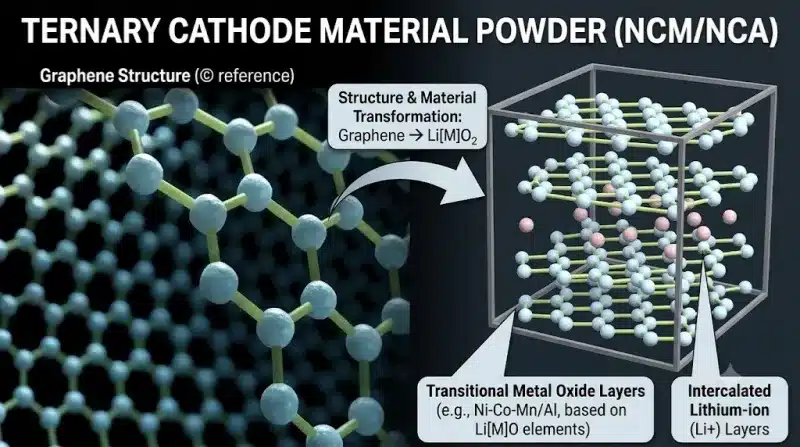
1. Mécanisme complet de préparation d'un matériau de cathode ternaire par méthode à l'état solide à haute température
Les matériaux ternaires industriels courants sont généralement préparés selon un procédé en quatre étapes : synthèse par coprécipitation d’un précurseur → mélange de poudres avec du lithium → calcination à l’état solide à haute température → broyage et classification après traitement. Le mécanisme chimique principal comprend deux étapes : la précipitation en phase liquide et la transformation à l’état solide à haute température.
(1) Mécanisme de co-précipitation du précurseur
En utilisant des solutions mixtes de sulfate de nickel, de cobalt et de manganèse comme sources de métaux, de l'hydroxyde de sodium comme agent précipitant et de l'eau ammoniacale comme agent complexant, une réaction de coprécipitation se produit dans des conditions de pH, de température et d'agitation contrôlées :
xNi²⁺ + yCo²⁺ + (1 − x − y)Mn²⁺ + 2OH⁻ = NiₓCoᵧMn₁₋ₓ₋ᵧ(OH)₂↓
Les ions métalliques sont libérés lentement par complexation avec l'ammoniac, et les hydroxydes précipitent uniformément pour former des particules précurseurs secondaires sphériques. La taille, la sphéricité et l'homogénéité élémentaire microscopique des cristaux primaires de ces particules déterminent l'intégrité finale du cristal de cathode.
Si les particules précurseurs sont grossières ou fortement agglomérées, et qu'une ségrégation élémentaire se produit, des défauts tels que le mélange lithium-nickel et une déficience locale en lithium se formeront après la calcination, réduisant considérablement la capacité et la durée de vie du cycle.
(2) Mécanisme d'activation à l'état solide du broyage du précurseur et du mélange de lithium
Après lavage et séchage, le précurseur est mélangé avec des sources de lithium (Li₂CO₃ pour le NCM à faible teneur en nickel, LiOH·H₂O pour le NCM811/NCA à haute teneur en nickel) à un rapport molaire de lithium de 1,02 à 1,08. Un équipement de broyage est utilisé pour réaliser l'activation mécanique et le mélange.
Les forces de cisaillement et d'impact générées lors du broyage brisent les agglomérats de précurseur, réduisent la taille des particules et augmentent la surface spécifique. Simultanément, les sels de lithium se déposent uniformément sur la surface du précurseur, raccourcissant ainsi la distance de diffusion des ions lithium lors de la réaction à haute température et abaissant l'énergie d'activation des réactions à l'état solide.
Les effets mécanochimiques peuvent rompre les couches de passivation de surface des particules, permettant un contact uniforme entre Li⁺, Ni²⁺, Co³⁺ et Mn⁴⁺ à l'échelle micrométrique, fournissant ainsi une interface de réaction uniforme pour la croissance cristalline en couches.
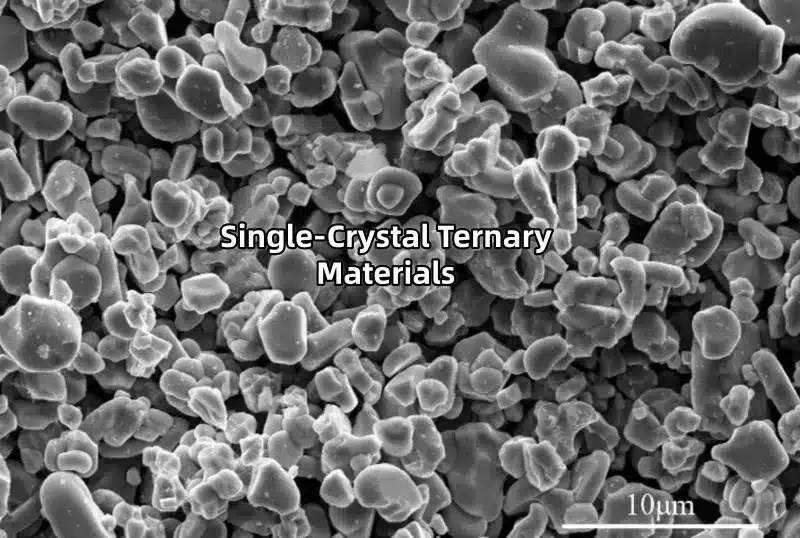
(3) Mécanisme de calcination à haute température et de transformation cristalline
La poudre mélangée entre dans un four à rouleaux et subit un processus en trois étapes : chauffage, maintien et refroidissement, achevant ainsi la reconstruction par oxydation à l’état solide :
NiₓCoᵧMn₁₋ₓ₋ᵧ(OH)₂ + LiOH/Li₂CO₃ → LiNiₓCoᵧMn₁₋ₓ₋ᵧO₂ + H₂O/CO₂↑ (haute température, atmosphère d'oxygène)
Lors de la phase de chauffage, les hydroxydes se déshydratent et se décomposent, tandis que les sels de lithium fondent et pénètrent dans les espaces interstitiels du réseau précurseur. Pendant la phase de maintien, la diffusion ionique et la reconstruction cristalline en couches se produisent, formant une structure lamellaire hexagonale bien ordonnée de type α-NaFeO₂. Lors du refroidissement, l'ordre cristallin s'améliore encore et les cristaux primaires s'agglomèrent pour former des blocs calcinés durs.
À l'intérieur des blocs calcinés, les monocristaux primaires sont étroitement liés, formant une masse frittée macroscopique. Ces derniers doivent être brisés et remodelés par broyage en plusieurs étapes avant de pouvoir être utilisés comme matériaux de revêtement d'électrodes.
(4) Post-calcination Affûtage et Modification Mécanisme
Les matériaux calcinés présentent une forte agglomération, une distribution granulométrique étendue et une alcalinité résiduelle de surface irrégulière. Le concassage grossier permet de briser les gros agrégats, tandis que le broyage par jet ultrafin désagrège délicatement les particules sans contact avec les billes de broyage, préservant ainsi l'intégrité monocristalline.
Le système de classification contrôle précisément le D50 entre 1,5 et 3 μm, permettant d'obtenir une distribution granulométrique étroite qui assure un équilibre optimal entre densité apparente élevée et efficacité de transport des ions lithium. Parallèlement, un procédé d'élimination magnétique élimine les impuretés métalliques introduites lors du broyage, prévenant ainsi les risques de micro-court-circuit à l'intérieur des batteries.
2. Principes de fonctionnement et valeur ajoutée des équipements de broyage à chaque étape de préparation
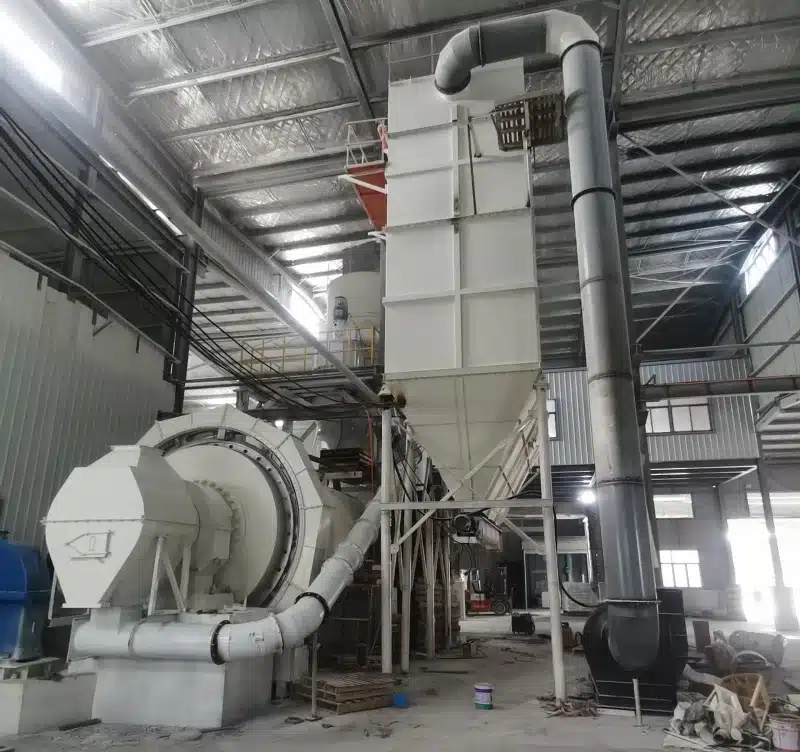
Le procédé complet de préparation ternaire comprend quatre opérations de broyage principales : broyage humide du précurseur, mélange à sec et broyage au lithium, concassage grossier du matériau calciné et broyage ultrafin final. Ces opérations correspondent à quatre types d’équipements essentiels qui constituent un système complet de contrôle des poudres.
(1) Broyeur à sable horizontal : Broyage ultrafin humide de précurseurs
Lors de l'étape de coprécipitation du précurseur, un broyeur horizontal à sable de zircone est utilisé. À l'intérieur de la chambre de broyage, des billes de zircone de 0,2 à 0,3 mm tournent à grande vitesse avec le disque d'agitation, générant un cisaillement et un impact à haute fréquence.
Le milieu liquide empêche l'agglomération secondaire, réduisant le diamètre moyen à 50 % (D50) du précurseur de 10 μm à 1–2 μm. Le broyage sur sable désagrège les agglomérats durs et élimine l'enrichissement local en éléments. Après séchage par atomisation, on obtient une poudre de précurseur présentant une sphéricité plus élevée et une distribution élémentaire plus homogène.
Comparé aux broyeurs à boulets, le broyeur à sable offre un fonctionnement continu, un débit plus élevé et une distribution granulométrique plus étroite, ce qui en fait un appareil standard pour l'homogénéisation des précurseurs humides.
(2) Broyeur à billes planétaire : Activation par mélange à sec en laboratoire / petits lots
Dans les lignes de R&D et à l'échelle pilote, on utilise des broyeurs planétaires à billes revêtus de zircone. La rotation et la révolution combinées génèrent des forces centrifuges jusqu'à 20 fois supérieures à la gravité. Les billes de broyage assurent un mélange et une fragmentation à haute énergie des poudres de précurseurs et de sels de lithium.
Le broyage à sec assure l'activation mécanique, améliorant la réactivité de surface et résolvant les problèmes de contact interfacial entre les sels de lithium et les précurseurs. Les revêtements entièrement céramiques empêchent la contamination par le fer et le chrome, ce qui rend ce procédé adapté aux matériaux NCA à haute teneur en nickel, extrêmement sensibles aux impuretés.
Cependant, en raison des limitations liées au fonctionnement par lots, il est principalement utilisé pour le développement en laboratoire et à l'échelle pilote plutôt que pour la production de masse.
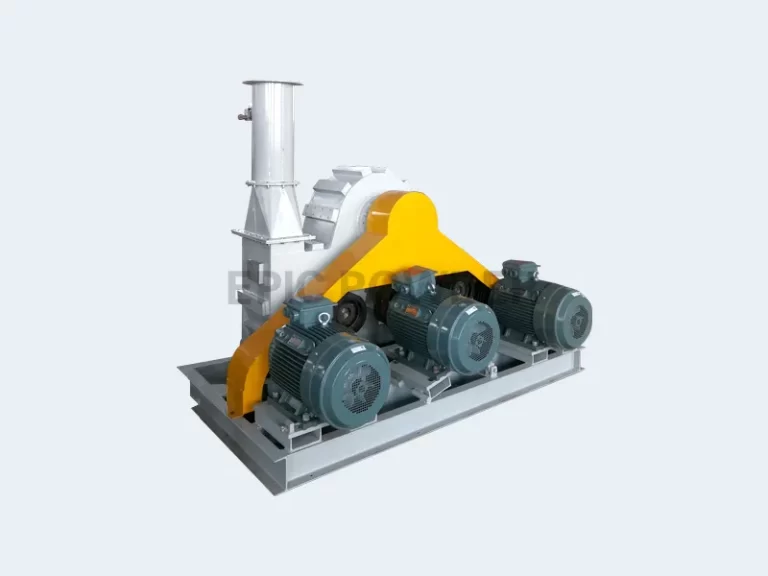
(3) Concasseurs à double rouleau / Broyeurs à cylindres annulaires: Concassage grossier de blocs calcinés
Le produit calciné se présente sous forme de blocs durs de l'ordre du centimètre. Des concasseurs à double rouleau revêtus de céramique sont utilisés pour le concassage primaire, réduisant la taille des matériaux à moins de 2 mm et brisant les gros agglomérats.
Les nouveaux broyeurs à anneaux utilisent des disques de broyage en zircone pour une désagglomération douce. Comparés aux concasseurs à mâchoires traditionnels, ils endommagent moins les monocristaux et réduisent l'introduction d'impuretés magnétiques grâce au 60%, résolvant ainsi les problèmes de fissuration et de production excessive de fines dans les matériaux monocristallins à haute teneur en nickel. On obtient ainsi une matière première de qualité pour le broyage par jet d'air ultrafin.
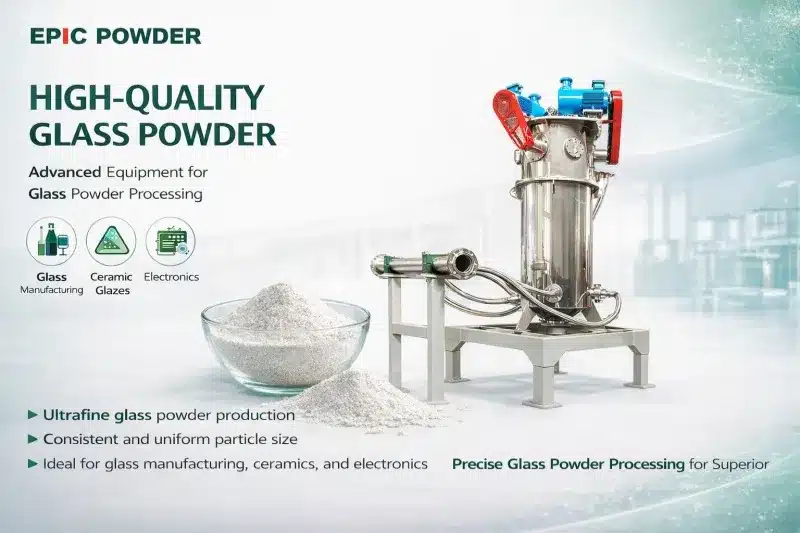
(4) Broyeur à jet à lit fluidisé: Broyage ultrafin final et Classification
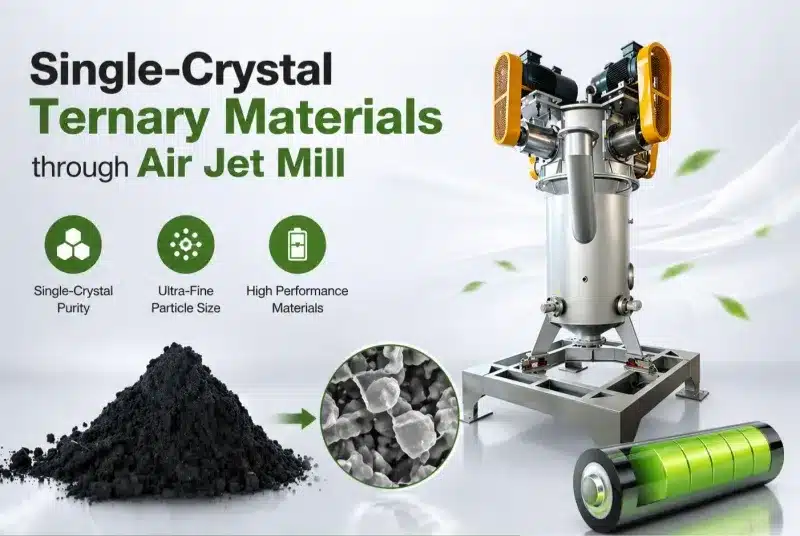
Il s'agit du principal équipement de broyage ultrafin pour la production industrielle. L'azote à haute pression (0,6–1,2 MPa) accélère les particules à travers des buses, provoquant des collisions entre particules sans contact direct avec le milieu de broyage.
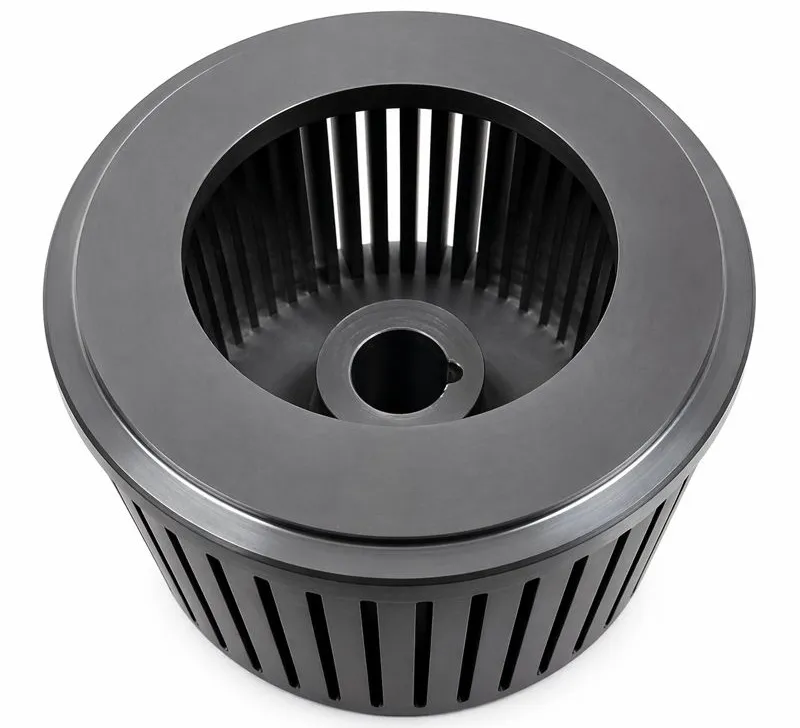
Ce procédé préserve au maximum la structure monocristalline stratifiée et évite la distorsion du réseau cristallin ainsi que le mélange lithium-nickel induits par le cisaillement du broyage à billes. Le classificateur à turbine intégré effectue un criblage en temps réel, contrôlant précisément le D50 et maintenant l'étendue (Span) inférieure à 1,2.
La poudre obtenue présente une densité apparente et une densité de compactage stables, ce qui la rend idéale pour le revêtement d'électrodes dans les batteries de puissance. Elle constitue l'élément clé de l'étape finale de traitement des matériaux de cathode ternaires.
3. Foire aux questions (FAQ)
Q1 : Pourquoi le matériau de cathode ternaire doit-il subir un broyage fin au lieu d'utiliser directement des produits calcinés ?
Les matériaux ternaires calcinés présentent généralement une forte agglomération secondaire et une distribution granulométrique hétérogène. Sans broyage, cela entraîne :
- Revêtement d'électrode non uniforme
- Points chauds de densité de courant localisés
- Fissuration structurelle pendant le cyclage
L’essence du broyage ne réside pas simplement dans la “ réduction de la taille ”, mais dans la reconstruction d’un système d’architecture particulaire utilisable, garantissant la cohérence électrochimique.
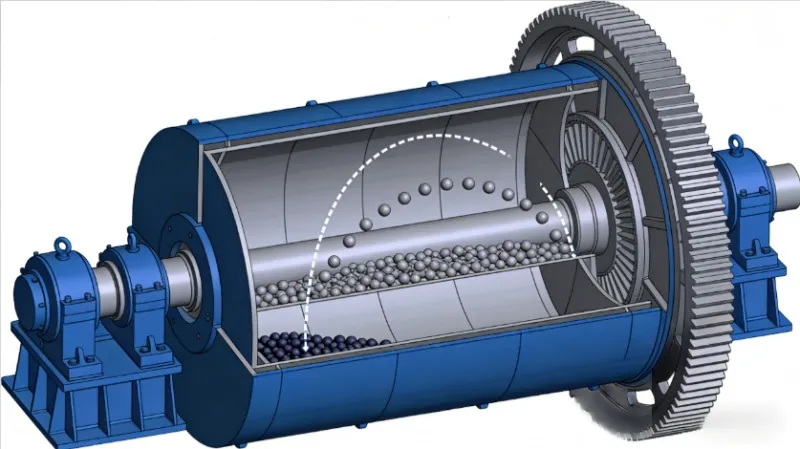
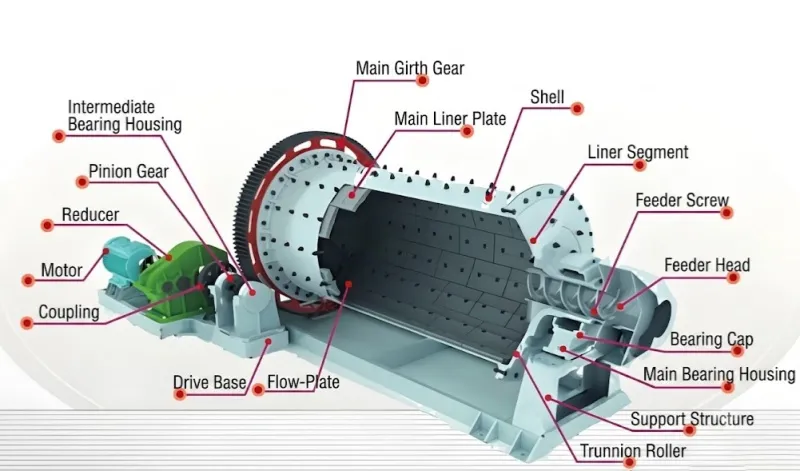
Q2 : Le fraisage par jet d'eau est-il toujours meilleur que broyage à boulets pour les matériaux ternaires ?
Pas nécessairement. Les deux sont complémentaires :
- Broyage à billes : convient au mélange, au prétraitement et à la désagglomération (faible coût)
- Broyage par jet d'air : convient pour une pureté élevée et un contrôle précis (hautes performances)
Les matériaux ternaires haut de gamme adoptent généralement un procédé combiné :
👉 “ Prétraitement par broyage à billes + broyage fin par jet + contrôle de classification ”
Un seul type d'équipement ne peut pas répondre simultanément aux exigences en matière de coût, de pureté et de contrôle de la taille des particules.
Conclusion
La compétition en matière de performances des matériaux de cathode ternaires ne se résume pas à une simple compétition de systèmes chimiques ; il s'agit fondamentalement d'une compétition en matière d'ingénierie des poudres et de capacités des équipements de broyage.
De la coprécipitation formant le précurseur, à la calcination construisant la structure cristalline, et enfin aux systèmes de broyage reconstruisant l'architecture des particules, l'ensemble du processus est une optimisation synergique multi-échelle allant de la chimie à la physique en passant par l'ingénierie des particules.
Celui qui maîtrise précisément le processus de broyage est le plus proche de la découverte des matériaux de batteries haute densité énergétique de nouvelle génération.

“ Merci de votre lecture. J’espère que cet article vous sera utile. N’hésitez pas à laisser un commentaire ci-dessous. Pour toute question, vous pouvez également contacter le service client en ligne de Zelda. ”
— Publié par Emily Chen