Applications commerciales de la barytine
La barytine est essentielle minéral non métallique matière première aux nombreuses applications industrielles.
Forage pétrolier et gazier
Une fois réduite en poudre fine, la barytine sert d'agent de pondération pour les boues de forage pétrolier. Elle augmente la densité de la boue afin de résister à la pression souterraine, d'empêcher l'effondrement du puits et d'empêcher les fluides de formation d'envahir le forage.
Matières premières de l'industrie chimique
La barytine est utilisée pour fabriquer divers produits chimiques à base de baryum, notamment l'oxyde de baryum, le carbonate de baryum, le chlorure de baryum, le nitrate de baryum, le sulfate de baryum précipité et l'hydroxyde de baryum.
- Sulfate de baryum pur : Le sulfate de baryum chimiquement pur sert de référence standard pour la mesure de la blancheur.
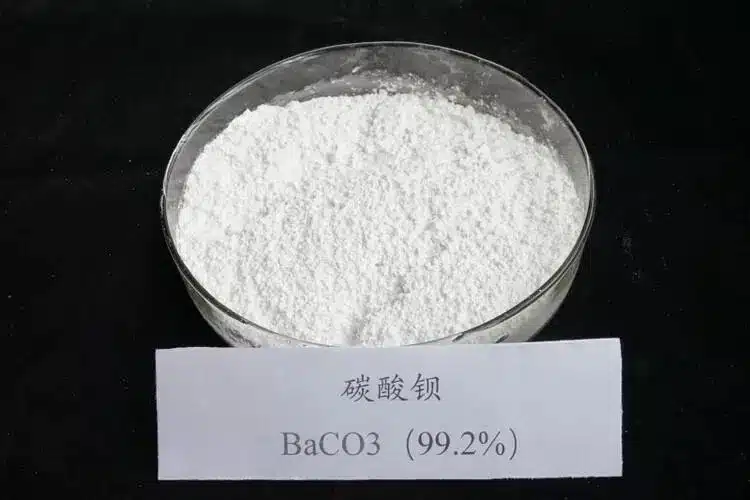
- Carbonate de baryum : Matériau essentiel pour le verre optique, il introduit de l'oxyde de baryum (BaO) dans le verre, augmentant ainsi son indice de réfraction et améliorant ses autres propriétés optiques. Il est également utilisé dans la formulation des émaux céramiques.
- Chlorure de baryum : Utilisé comme pesticide agricole.
- Nitrate de baryum : Utilisé dans les industries pyrotechnique (feux d'artifice) et verrière.
- Permanganate de baryum : Fonctionne comme un pigment vert.
Charges et pigments
- Pigment lithoponique : La barytine est un ingrédient clé dans la production du pigment lithopone.
- Charges industrielles : La poudre de barytine est largement utilisée comme charge dans les industries de la peinture, du papier, du caoutchouc et des plastiques. Mélangée à des huiles et appliquée sur des supports textiles, elle permet de fabriquer de la toile cirée.
Autres utilisations industrielles
- Pétrole et construction : Utilisé pour le raffinage du kérosène, la formulation de minéralisateurs pour ciment et la production de mortier et de béton de protection contre les radiations.
- Médecine: Sert d'agent de contraste pour l'imagerie du tube digestif.
- Autres produits : Utilisé dans les pesticides, le traitement du cuir et la fabrication de feux d'artifice.
- Extraction du baryum métallique : Le baryum métallique extrait est allié à des métaux comme l'aluminium, le magnésium, le plomb et le calcium pour la fabrication de roulements. Il est également utilisé comme absorbeur de rayonnement et liant dans les téléviseurs et les tubes électroniques.
Configuration de Broyage de barytine Lignes de production
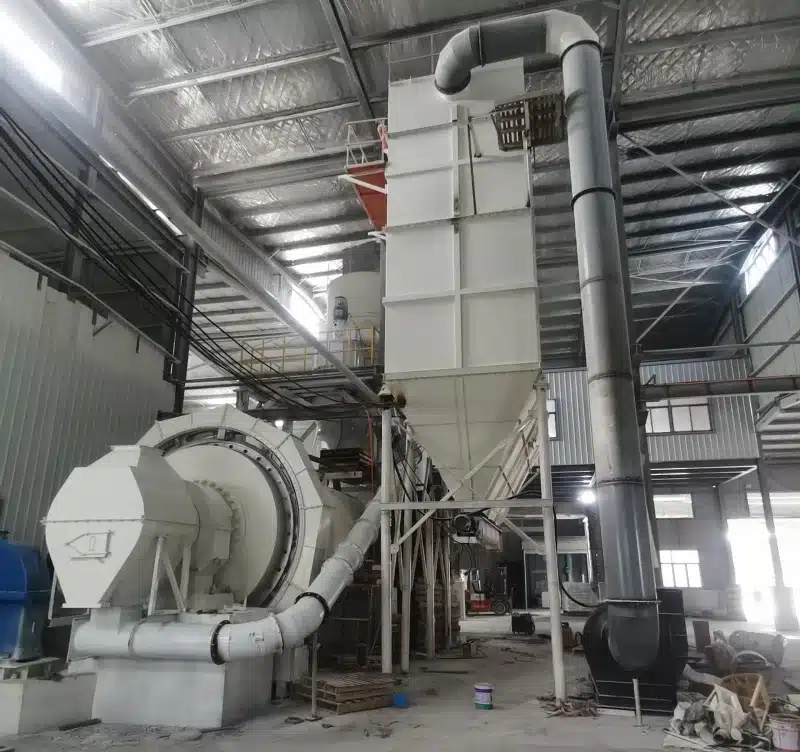
Le cœur d'une ligne de broyage de barytine réside dans le choix du matériel de broyage adapté à la finesse de poudre requise et à la capacité de production. Une ligne complète comprend quatre étapes principales : concassage, broyage, classification et collecte/conditionnement.
Flux de processus et configuration des équipements
| Étape du processus | Équipement de base | Fonction principale |
| Prétraitement des matières premières | Concasseur à mâchoires, concasseur à cône/concasseur à percussion, crible vibrant | Broie les gros minerais bruts en petites particules uniformes (généralement ≤ 20 mm) pour les préparer au broyage. |
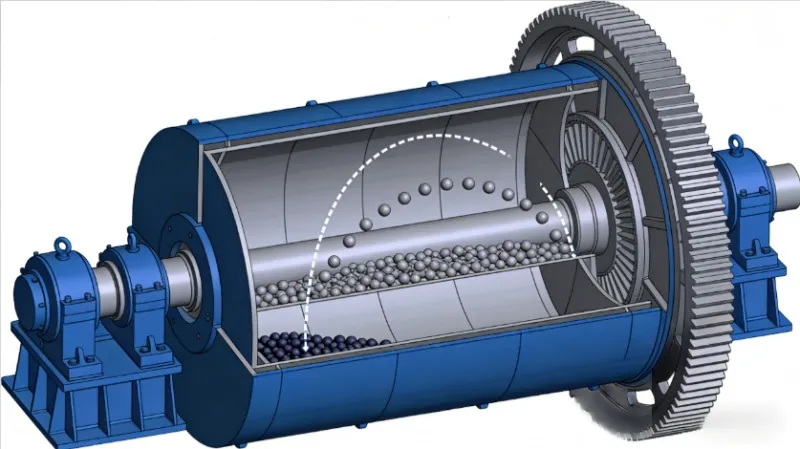
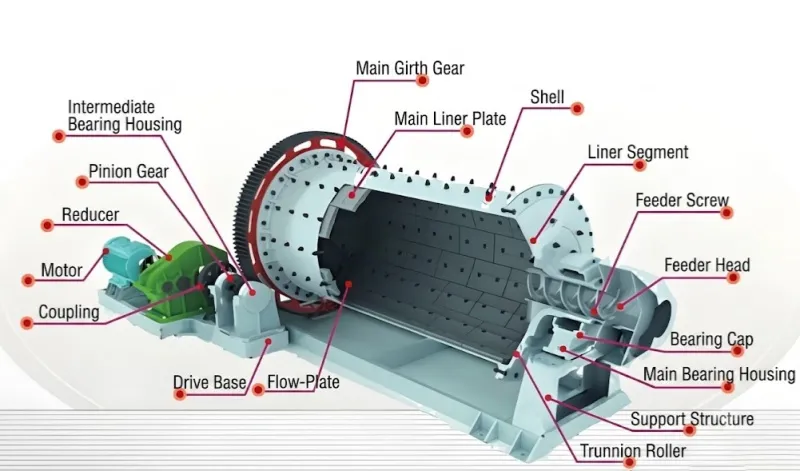
| Affûtage | broyeur Raymond, broyeur à rouleaux annulaires, broyeur vertical ultrafin, broyeur à boulets, etc. | L'étape principale. Elle broie le matériau concassé en une poudre de la finesse requise. |
| Classification | Séparateur d'air | Le tamis permet de séparer les produits finis répondant aux exigences de finesse. La poudre grossière est renvoyée au broyeur pour être rebroyée. |
| Collecte et emballage | Dépoussiéreur à impulsions, convoyeur à vis, machine d'emballage automatique | Collecte efficacement la poudre finie, purifie les gaz d'échappement, stocke et conditionne le produit final. |
Comparaison des équipements de broyage de barytine à noyau
Le broyeur est l'élément central de la chaîne de production. Le choix de l'équipement détermine directement la qualité du produit et les coûts d'exploitation.
| Type d'équipement | Finesse appropriée | Capacité typique | Avantages et scénarios d'application |
| Moulin Raymond | 80 – 800 mesh | 1 à 55 t/h | Économique et pratique : Technologie éprouvée nécessitant un faible investissement initial. Idéale pour une production de granulométrie moyenne et à moyenne échelle (ex. : matériaux de construction, charges standard). |
| Laminoir à anneaux / Broyeur à boulets | 325 – 2500 mesh (5 – 45μm) | 1 – 22 t/h | Spécialiste de l'ultrafinité : Produit une poudre de haute finesse en un seul passage. Les rouleaux et les anneaux de broyage sont en acier résistant à l'usure pour une durée de vie prolongée. Idéal pour les poudres ultrafines de haute qualité. |
| Broyeur vertical ultrafin | 3 – 45 μm | 1 à 40 t/h | Haute efficacité et économies d'énergie : Cette machine se caractérise par une grande capacité de production, une faible consommation d'énergie, un haut niveau d'automatisation et une distribution granulométrique homogène. Elle est idéale pour la production intensive à grande échelle de poudres ultrafines haut de gamme (par exemple, revêtements, plastiques, produits pharmaceutiques). |
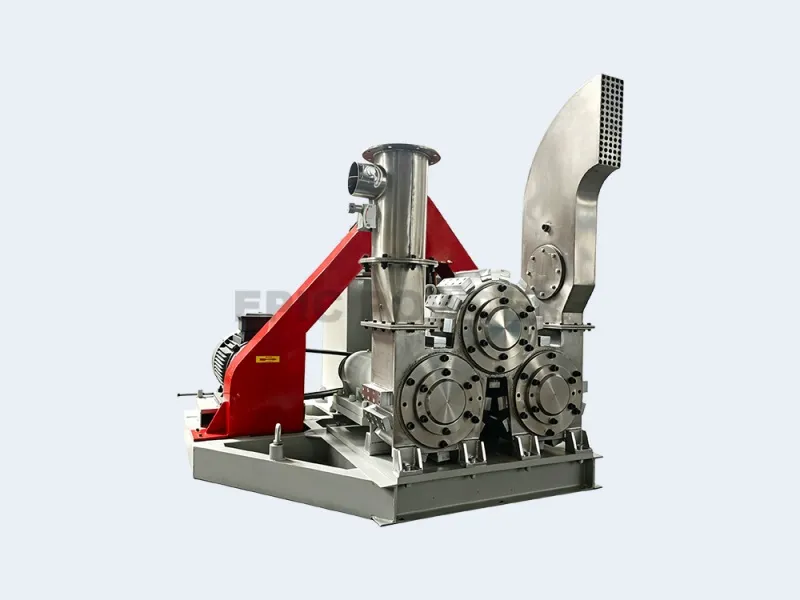
Facteurs clés pour le choix de l'équipement
- Exigences du marché cible
- Boues de forage et matériaux de remplissage divers (~200 mesh) : Un moulin Raymond standard suffit.
- Revêtements haut de gamme, plastiques et blindage contre les radiations (maille 1250+) : Choisissez un broyeur à rouleaux annulaires, un broyeur à boulets ou un broyeur vertical ultrafin.
- Considérations environnementales et énergétiques
- Les lignes de production modernes doivent être équipées de dépoussiéreurs à manches pulsées fonctionnant en dépression. Ceci empêche les fuites de poussière et garantit le respect des normes environnementales.
- Lors du choix d'un équipement, tenez compte de la consommation d'énergie et des coûts de maintenance (tels que la durée de vie des pièces d'usure).
- Caractéristiques des matières premières
- Teneur en humidité élevée (>5%) : Ajouter une étape de séchage après le broyage.
- Pureté et blancheur : Incorporer des étapes d'élimination du fer et de traitement des minéraux afin d'améliorer significativement la qualité du produit final.
Note: Une fois que vous avez déterminé la finesse cible, les exigences de production horaire et le budget d'investissement, les ingénieurs en équipement peuvent vous fournir un plan de configuration sur mesure.

“ Merci de votre lecture. J’espère que cet article vous sera utile. N’hésitez pas à laisser un commentaire ci-dessous. Pour toute question, vous pouvez également contacter le service client en ligne de Zelda. ”
— Publié par Emily Chen