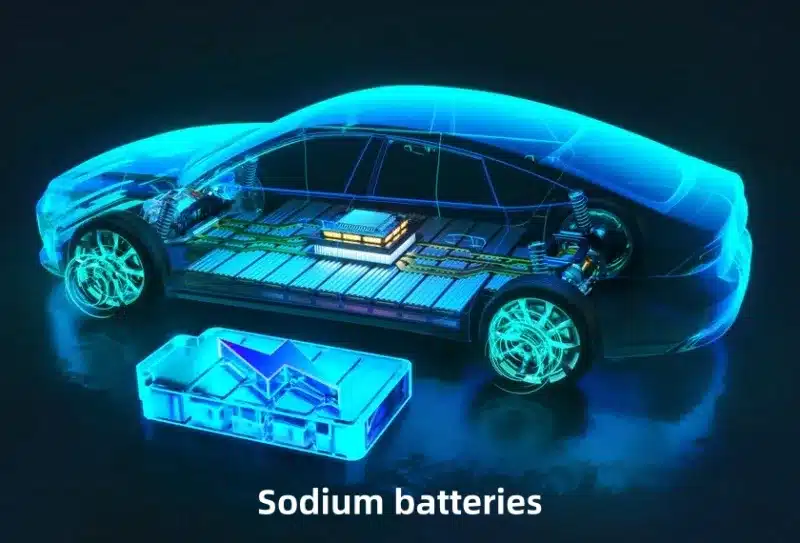
L'application généralisée de batteries lithium-ion La consommation mondiale de lithium s'est intensifiée, et le coût et la disponibilité des matières premières pourraient limiter son développement futur. Le sodium possède des propriétés physiques et chimiques similaires à celles du lithium et est abondant dans la nature. Grâce à leurs abondantes réserves de matières premières, leur faible coût, leur sécurité et leur respect de l'environnement, les batteries sodium-ion présentent de larges perspectives d'application dans les systèmes de stockage d'énergie à grande échelle et les véhicules électriques à basse vitesse.
Le phosphate de sodium et de vanadium est un nouveau type de batterie aqueuse sodium-ion. Son matériau de cathode est le phosphate de sodium et de vanadium (Na₃V₂(PO₄)₃), appartenant à la famille des matériaux de cathode à base de sodium. Son matériau d'anode est le titanate de sodium nanométrique (Na₂Ti₃O₇), et son électrolyte est aqueux. Le matériau de cathode des batteries au phosphate de sodium et de vanadium présente des propriétés chimiques stables, garantissant ainsi un fonctionnement stable et durable. Grâce aux progrès technologiques constants, les perspectives d'application de ces batteries sont de plus en plus prometteuses.
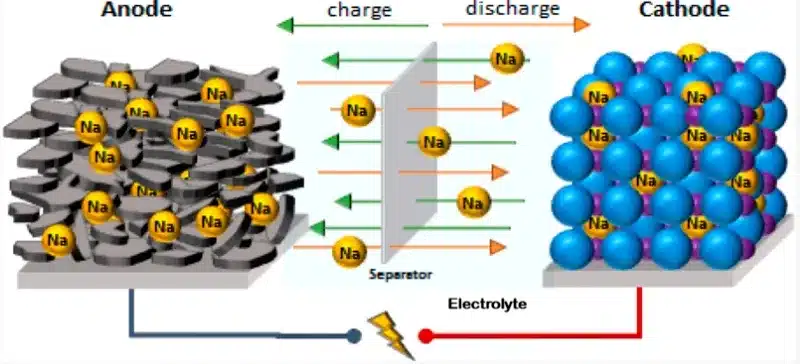
Caractéristiques des batteries sodium-vanadium-phosphate
Comparées aux batteries lithium-ion traditionnelles, les batteries sodium-vanadium-phosphate présentent les caractéristiques suivantes :
1. Excellente stabilité cyclique
Les batteries au phosphate de sodium-vanadium présentent une excellente stabilité cyclique et peuvent atteindre une longue durée de vie grâce à des cycles de charge-décharge prolongés.
2. Haute sécurité
Les batteries au phosphate de vanadium-sodium utilisent un électrolyte aqueux et ne contiennent aucun solvant organique ; elles offrent donc une sécurité supérieure et sont moins susceptibles de prendre feu ou d’exploser sous l’effet de températures élevées ou de chocs externes.
3. Coût inférieur
Le coût de production des batteries sodium-vanadium-phosphate est relativement faible, ce qui leur confère de bons avantages économiques et les rend intéressantes pour les applications à grande échelle.
Procédés de synthèse du phosphate de sodium et de vanadium
La technologie de synthèse du phosphate de sodium et de vanadium est devenue relativement mature et comprend principalement la méthode de réaction en solution, la méthode de réaction par échange d'ions et la méthode de synthèse chimique.
Parmi ces méthodes de préparation, les méthodes de réaction en solution et d'échange d'ions sont les plus couramment utilisées en production industrielle, en raison de leur simplicité de mise en œuvre et de leur faible coût. Bien que la synthèse chimique soit plus complexe, elle permet d'obtenir du phosphate de sodium et de vanadium d'une pureté supérieure, ce qui la rend particulièrement adaptée aux applications de matériaux de cathode au sodium haute performance.
Application de Broyeurs à jet dans la micronisation du phosphate de sodium et de vanadium
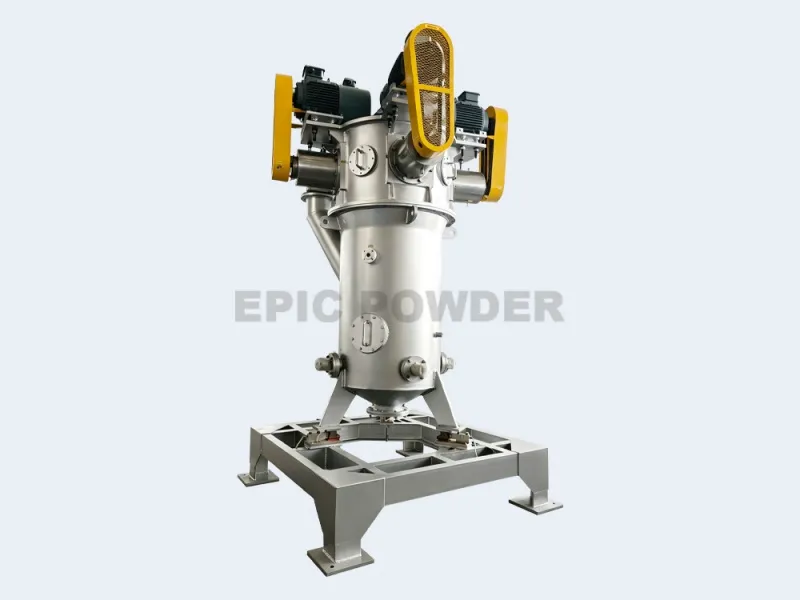
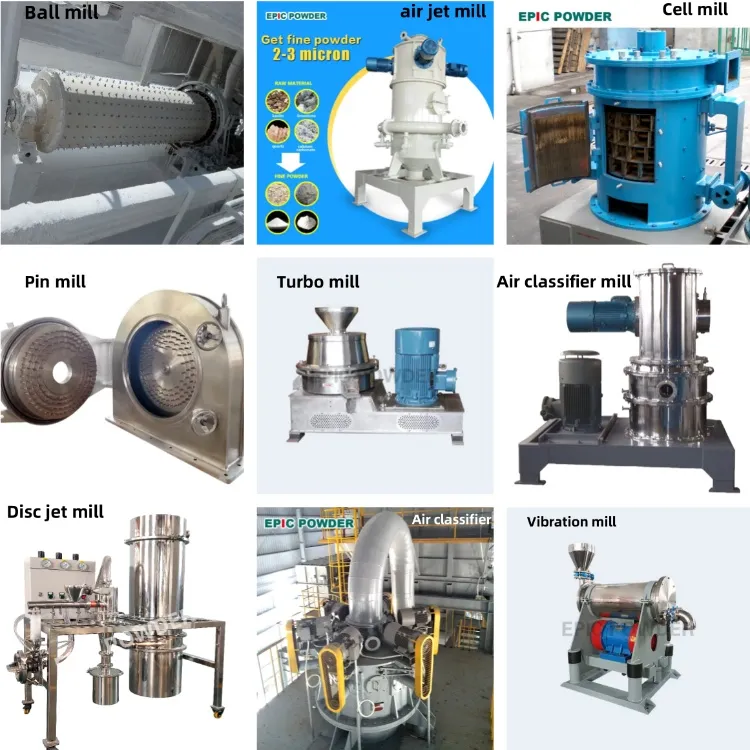
Les particules de phosphate de sodium et de vanadium synthétisées sont généralement relativement grosses et présentent une large distribution granulométrique, ce qui peut affecter significativement les performances de la batterie. Pour réduire la taille des particules et améliorer la réactivité de la poudre, un broyeur à jet peut être utilisé.
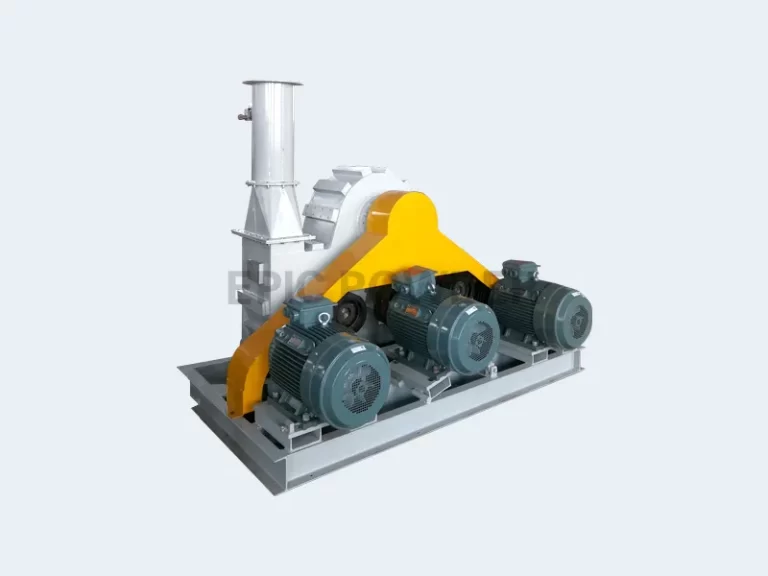
Le principe de fonctionnement du broyeur à jet est le suivant : le matériau pénètre tangentiellement dans la chambre de broyage sous l’effet de la force d’aspiration générée par le flux d’air à grande vitesse traversant la buse Venturi. Une fois dans la chambre, les particules sont accélérées par les buses réparties sur son pourtour. Elles atteignent alors environ 2,5 fois la vitesse du son. La micronisation se produit lorsque ces particules à grande vitesse entrent en collision.
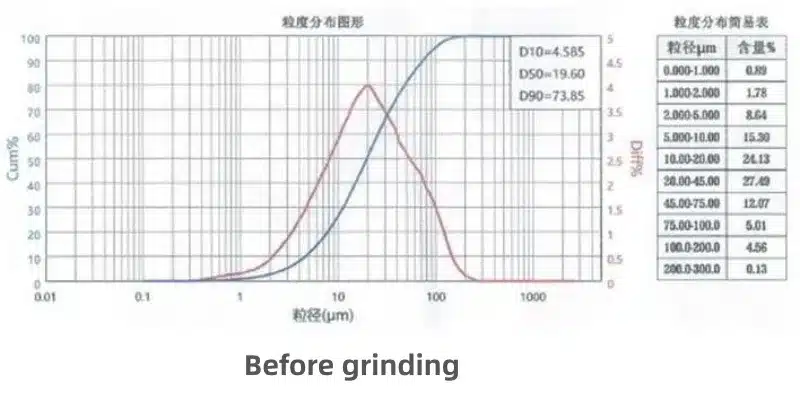
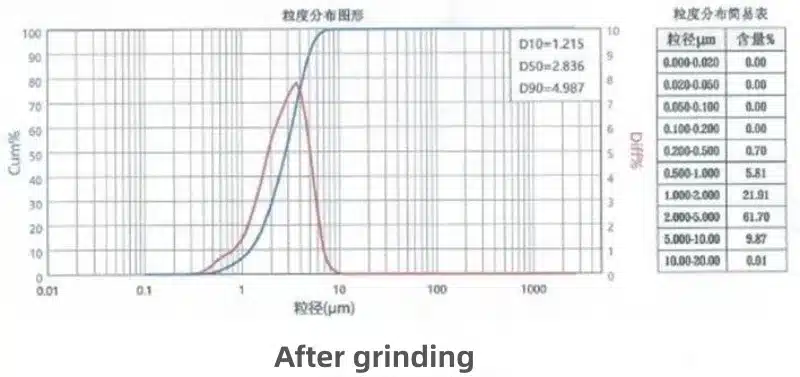
L'analyse granulométrique des échantillons avant et après broyage par jet d'air a été réalisée à l'aide d'un granulomètre laser. Les résultats ont montré que le phosphate de sodium et de vanadium synthétisé présentait une taille de particules D90 de 73,85 μm. Après broyage par jet d'air, la taille des particules D90 a été considérablement réduite à 4,987 μm, permettant ainsi à la poudre de passer à travers un tamis de 325 mesh. Le produit répond pleinement aux spécifications du client. Ces poudres finement broyées constituent des matériaux de cathode de sodium de haute qualité, adaptés aux applications de batteries avancées.
FAQ
Question 1 : Pourquoi la taille des particules de phosphate de sodium et de vanadium a-t-elle un impact significatif sur les performances de la batterie ?
Répondre:
La taille des particules influe directement sur les performances électrochimiques des matériaux de cathode à base de phosphate de sodium et de vanadium. Les particules plus grosses présentent une surface spécifique plus faible, réduisant ainsi la surface de contact entre le matériau actif et l'électrolyte et augmentant le trajet de diffusion des ions. Il en résulte une capacité de charge/décharge plus faible et une durée de vie cyclique réduite.
De plus, une distribution granulométrique non uniforme peut entraîner une densité de compactage des électrodes irrégulière. Ceci augmente la résistance interne et dégrade les performances lors des cycles de charge et de décharge rapides. Par conséquent, la micronisation de la poudre de phosphate de sodium et de vanadium à l'aide d'un broyeur à jet permet d'accroître significativement sa surface spécifique et l'uniformité de sa taille. Ceci améliore les performances globales de la batterie et la qualité des matériaux de cathode au sodium.
Question 2 : Quels sont les avantages de l'utilisation d'un broyeur à jet pour la micronisation du phosphate de sodium et de vanadium ?
Répondre:
Comparativement aux méthodes traditionnelles de broyage à billes ou de broyage mécanique, les broyeurs à jet offrent les avantages suivants :
1. Taille des particules contrôlable et uniforme
En ajustant la vitesse du flux d'air, la conception de la chambre de broyage et les systèmes de classification, les broyeurs à jet permettent de contrôler précisément les paramètres granulométriques tels que D50 et D90. Ceci permet un broyage ultrafin et des distributions de particules très uniformes.
2. Prévention des dommages thermiques et de la contamination
Le broyage par jet d'air repose sur des collisions à grande vitesse entre particules plutôt que sur des billes de broyage. De ce fait, la production de chaleur est minimale, ce qui contribue à préserver la stabilité chimique du phosphate de sodium et de vanadium tout en évitant toute contamination par les billes de broyage.
3. Production à haut rendement et en continu
Les broyeurs à jet peuvent fonctionner en continu, ce qui les rend adaptés à la production industrielle à grande échelle. Ils réduisent les étapes de traitement secondaires et contribuent à diminuer les coûts de fabrication globaux.
4. Conception à revêtement céramique pour la prévention de la contamination métallique
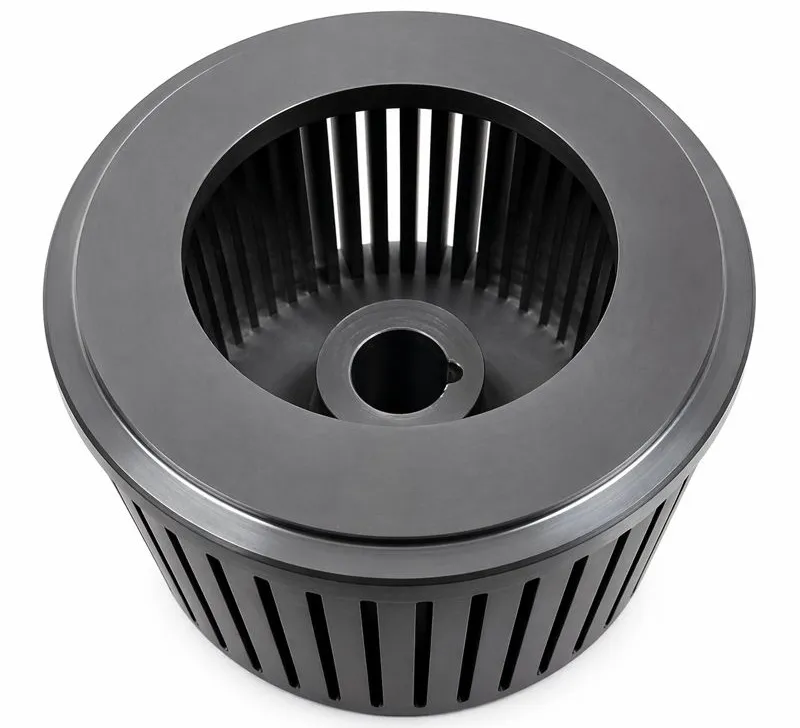
Tous les composants en contact direct avec le matériau — notamment la chambre de broyage, les buses Venturi, la roue de classification et les canalisations de transport — peuvent être revêtus de céramique de carbure de silicium (SiC), d'alumine (Al₂O₃) ou de zircone (ZrO₂) pour une protection à l'échelle micrométrique. Cette conception permet d'obtenir une contamination par le fer quasi nulle et garantit que la teneur en impuretés magnétiques du matériau de la cathode respecte les normes strictes applicables aux batteries.
Conclusion
En conclusion, le broyeur à jet est une solution efficace pour la micronisation du phosphate de sodium et de vanadium. Il permet de réduire significativement la taille des particules et d'améliorer leur uniformité. Ces améliorations contribuent à optimiser les performances électrochimiques des matériaux de cathode au sodium.
De plus, le broyeur à jet offre un traitement sans contamination, une faible génération de chaleur et une efficacité de production élevée. Ces avantages le rendent parfaitement adapté à la fabrication à grande échelle. Avec la croissance continue du secteur des batteries sodium-ion, la technologie avancée du broyeur à jet jouera un rôle important dans la production de matériaux de cathode sodium de haute qualité et contribuera au développement de systèmes de stockage d'énergie fiables et économiques.

“ Merci de votre lecture. J’espère que cet article vous sera utile. N’hésitez pas à laisser un commentaire ci-dessous. Pour toute question, vous pouvez également contacter le service client en ligne de Zelda. ”
— Publié par Emily Chen