목차

How Does a Jet Mill Enable Efficient Micronization of Sodium Vanadium Phosphate Cathode Materials?

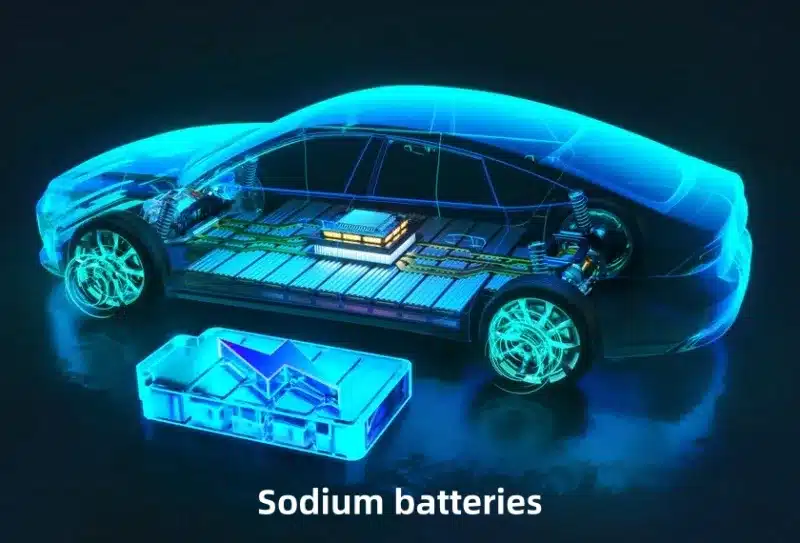
The widespread application of 리튬 이온 배터리 around the world has intensified the consumption of lithium resources, and the cost and availability of raw materials may limit their future development. Sodium has physical and chemical properties similar to those of lithium and is abundant in nature. Due to their abundant raw material reserves, low cost, safety, and environmental friendliness, sodium-ion batteries have broad application prospects in large-scale energy storage systems and low-speed electric vehicles.

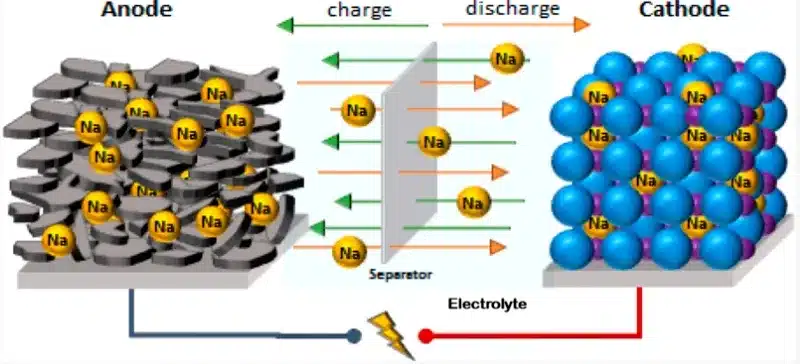
Sodium vanadium phosphate is a new type of aqueous sodium-ion battery. Its cathode material is sodium vanadium phosphate (Na₃V₂(PO₄)₃), which belongs to Sodium Cathode Materials. Its anode material is nano sodium titanate (Na₂Ti₃O₇), and its electrolyte is water-based. The cathode material of sodium vanadium phosphate batteries possesses stable chemical properties. This ensures long-term stable battery operation. With continuous technological advancements, the application prospects of sodium vanadium phosphate batteries are becoming increasingly promising.

Sodium Cathode Materials

Characteristics of Sodium Vanadium Phosphate Batteries

Compared with traditional lithium-ion batteries, sodium vanadium phosphate batteries have the following characteristics:

1. Excellent Cycle Stability

Sodium vanadium phosphate batteries exhibit excellent cycle stability and can achieve long 서비스 life through extended charge-discharge cycles.

2. High Safety

Because sodium vanadium phosphate batteries use an aqueous electrolyte and contain no organic solvents, they offer superior safety performance and are less likely to catch fire or explode under high temperatures or external impacts.

3. Lower Cost

The production cost of sodium vanadium phosphate batteries is relatively low, providing good economic benefits and making them attractive for large-scale applications.

Synthesis Processes of Sodium Vanadium Phosphate

The synthesis technology of sodium vanadium phosphate has become relatively mature and mainly includes the solution reaction method, ion-exchange reaction method, and chemical synthesis method.

Among these preparation methods, the solution reaction method and ion-exchange reaction method are more commonly used in industrial production. This is due to their simple operation and lower costs. Although the chemical synthesis method is somewhat more complex, it can produce sodium vanadium phosphate with higher purity. This makes it suitable for high-performance Sodium Cathode Materials applications.

Application of 제트 밀스 in the Micronization of Sodium Vanadium Phosphate

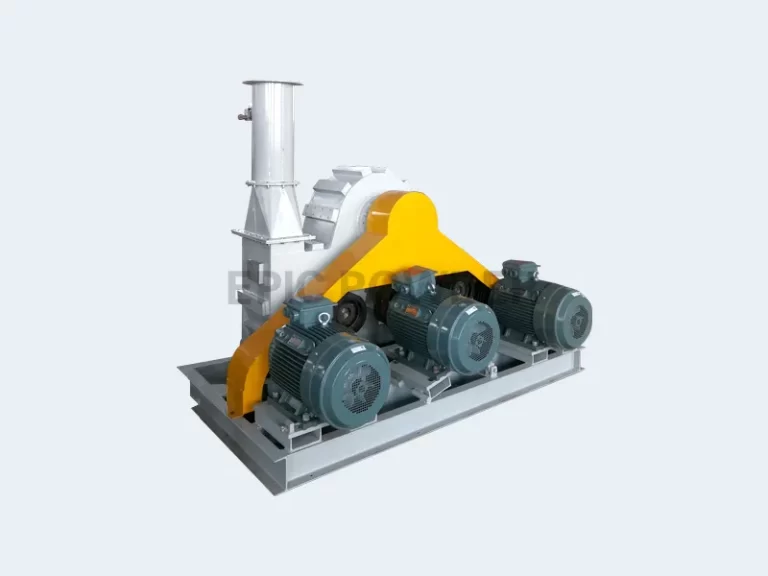
에어젯 밀링 MOW-60
에어젯 밀링 MOW-60

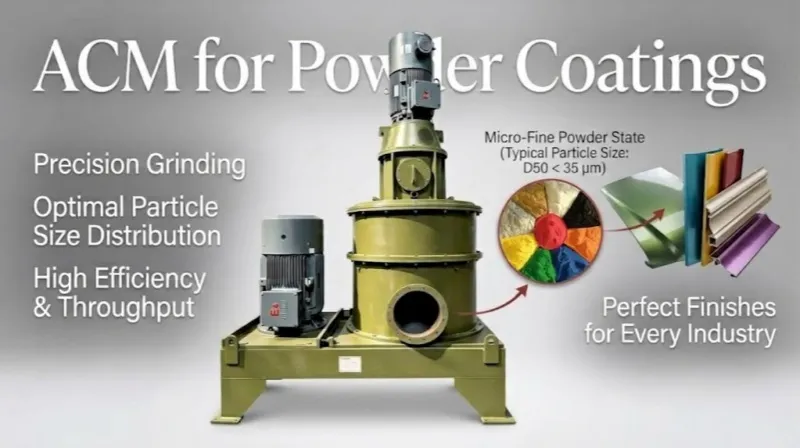
The synthesized sodium vanadium phosphate particles are usually relatively large and have a broad particle size distribution, which can significantly affect battery performance. To reduce particle size and improve powder reactivity, a 제트밀 can be employed.

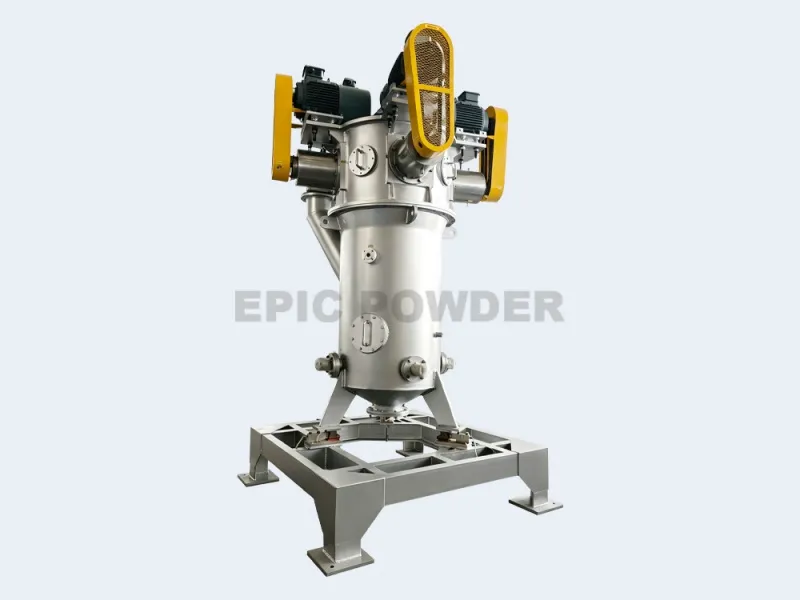
The working principle of the jet mill is as follows: the material enters the grinding chamber tangentially under the suction force generated by the high-speed airflow passing through the Venturi nozzle. Once the particles enter the grinding chamber, they are accelerated by the nozzles distributed around the chamber perimeter. The particles reach approximately 2.5 times the speed of sound. When these high-speed particles collide with one another, micronization occurs through particle-to-particle impact.

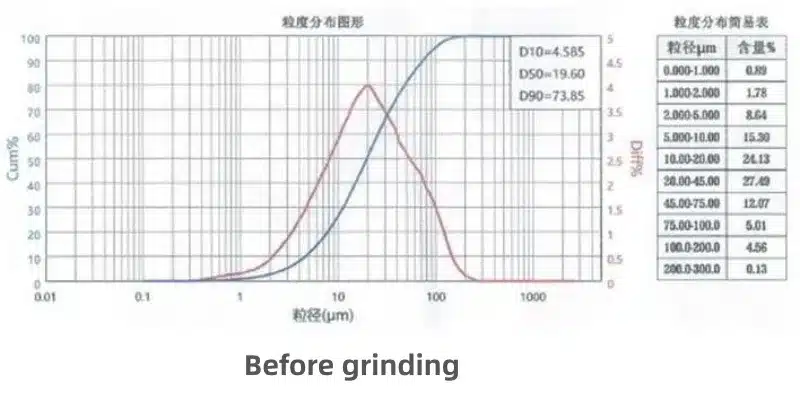
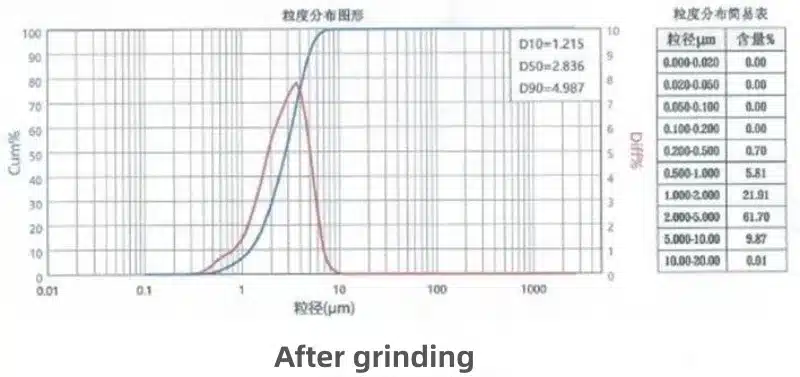
Particle size analysis of samples before and after jet milling was conducted using a laser particle size analyzer. The results showed that the synthesized sodium vanadium phosphate had a D90 particle size of 73.85 μm. After jet mill processing, the D90 particle size was significantly reduced to 4.987 μm. This enabled the powder to pass through a 325-mesh sieve. The product fully met the customer’s specifications. These finely milled powders are high-quality Sodium Cathode Materials suitable for advanced battery applications.

Sodium Cathode Materials  Before Jet Mill Grinding
Sodium Cathode Materials After Jet Mill Grinding

자주 묻는 질문

Question 1: Why Does the Particle Size of Sodium Vanadium Phosphate Have a Significant Impact on Battery Performance?

답변:
Particle size directly affects the electrochemical performance of sodium vanadium phosphate cathode materials. Larger particles have a smaller specific surface area, reducing the contact area between the active material and the electrolyte while increasing the ion diffusion path. This can result in lower rate capability and reduced cycle life.

In addition, a non-uniform particle size distribution can lead to inconsistent electrode compaction density. This increases internal resistance and results in poorer performance during high-rate charging and discharging. Therefore, micronizing sodium vanadium phosphate powder with a jet mill can significantly increase its specific surface area and particle size uniformity. This enhances the overall performance of the battery and improves the quality of Sodium Cathode Materials.

Question 2: What Are the Advantages of Using a Jet Mill for Sodium Vanadium Phosphate Micronization?

답변:
Compared with traditional ball milling or mechanical grinding methods, jet mills offer the following advantages:

1. Controllable and Uniform Particle Size
By adjusting airflow velocity, grinding chamber design, and 분류 systems, jet mills can precisely control particle size parameters such as D50 and D90. This enables ultra-fine grinding and highly uniform particle distributions.

2. Prevention of Thermal Damage and Contamination
Jet milling relies on high-speed particle-to-particle collisions rather than grinding media. As a result, heat generation is minimal, helping maintain the chemical stability of sodium vanadium phosphate while preventing contamination from grinding media.

3. High Efficiency and Continuous Production
Jet mills can operate continuously, making them suitable for large-scale industrial production. They reduce secondary processing steps and help lower overall manufacturing costs.

4. Ceramic-Lined Design for Metal Contamination Prevention
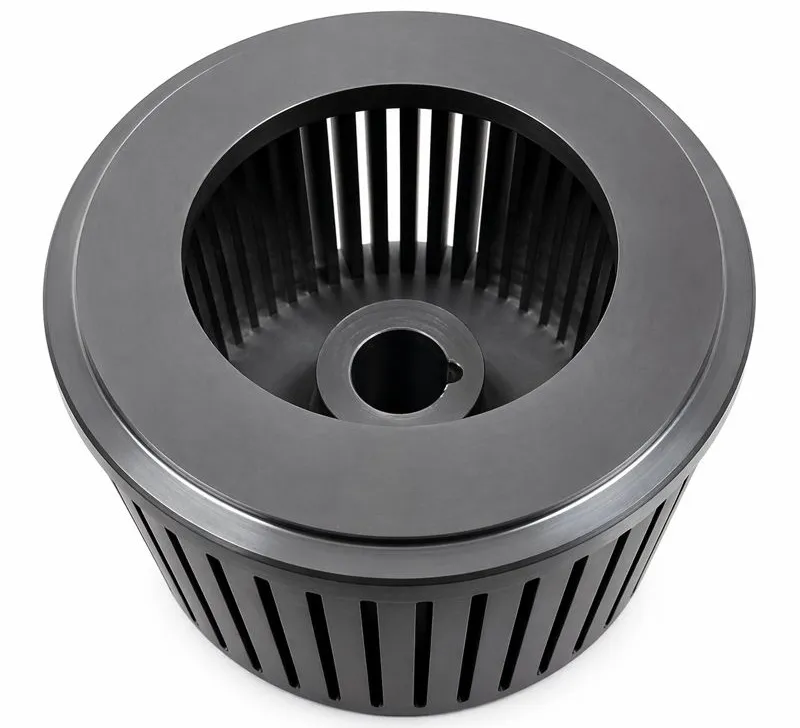
All components that come into direct contact with the material—including the grinding chamber, Venturi nozzles, 분류기 wheel, and conveying pipelines—can be lined with silicon carbide (SiC), alumina (Al₂O₃), or zirconia (ZrO₂) ceramics for micron-level protection. This design achieves virtually zero iron contamination and ensures that the magnetic impurity content of the cathode material meets stringent battery-grade standards.

Sodium batteries  (1)

결론

In conclusion, a Jet Mill is an effective solution for the micronization of sodium vanadium phosphate. It can significantly reduce particle size and improve particle size uniformity. These improvements help enhance the electrochemical performance of Sodium Cathode Materials.

In addition, the Jet Mill offers contamination-free processing, low heat generation, and high production efficiency. These advantages make it well suited for large-scale manufacturing. As the sodium-ion battery industry continues to grow, advanced Jet Mill technology will play an important role in producing high-quality Sodium Cathode Materials and supporting the development of reliable and cost-effective energy storage systems.


에밀리 첸

“"읽어주셔서 감사합니다. 제 글이 도움이 되었으면 좋겠습니다. 아래에 댓글을 남겨주세요. 추가 문의 사항이 있으시면 젤다 온라인 고객 상담원에게 문의하셔도 됩니다."”

— 게시자 에밀리 첸
문의하기

당사 전문가가 6시간 이내에 연락하여 기계 및 프로세스에 대한 귀하의 요구 사항을 논의해 드립니다.

    다음을 선택하여 인간임을 증명하십시오..

    관련 게시물