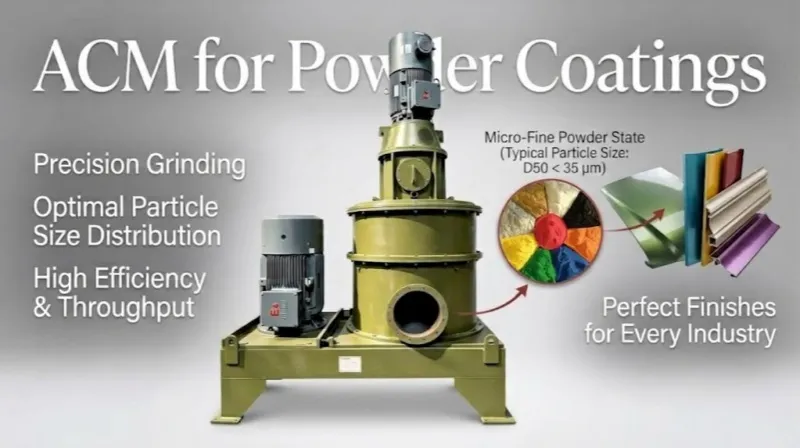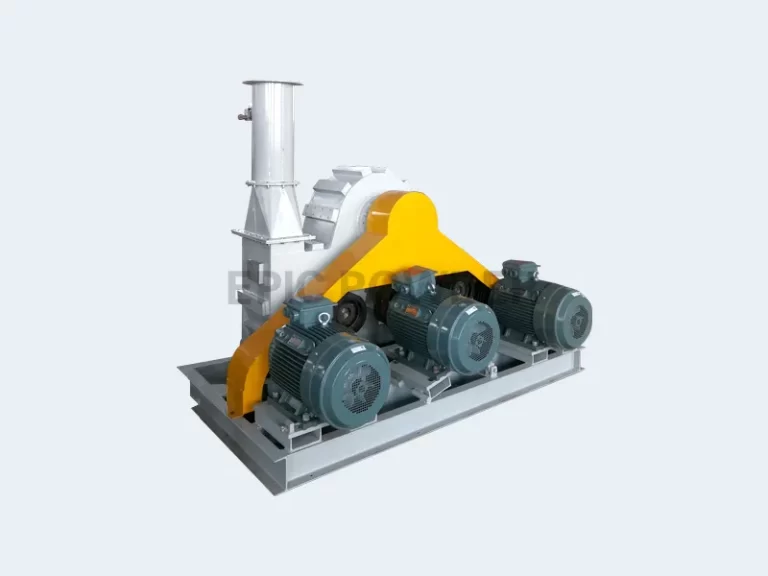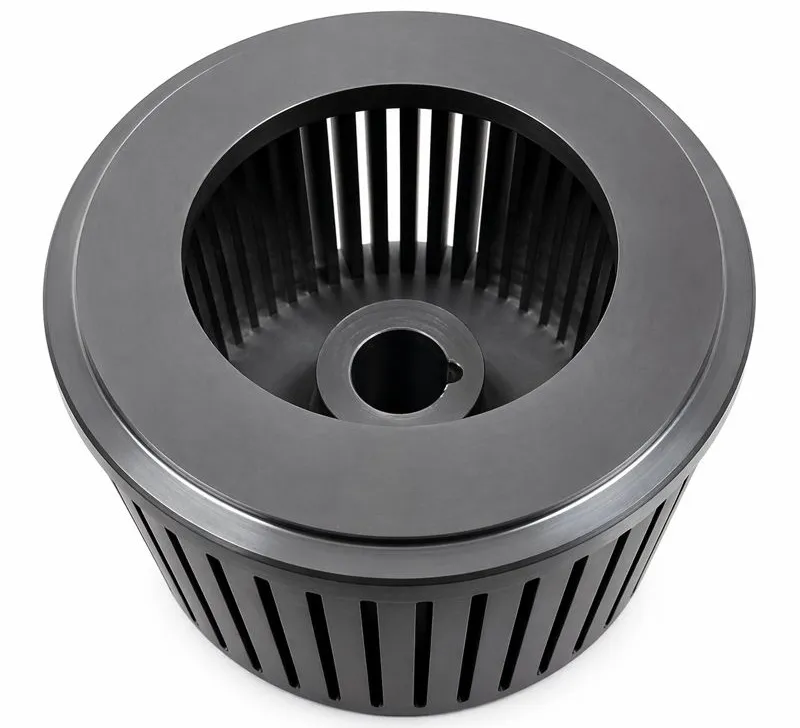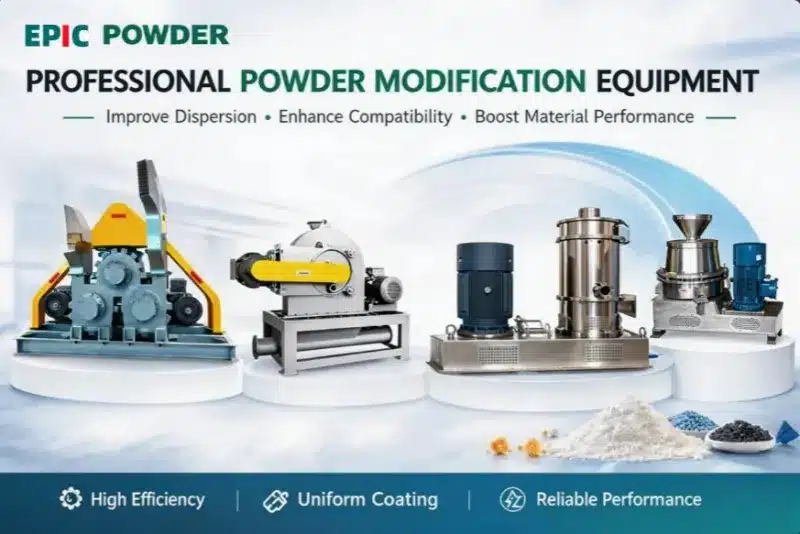
Seja para processar ingredientes alimentícios, produtos químicos ou minerais, selecionar a tecnologia de moagem correta é fundamental para a qualidade do produto e a eficiência da produção. Este guia aborda os princípios básicos da moagem de partículas sólidas e descreve os principais tipos de equipamentos, para que você possa tomar decisões seguras para o seu processo.
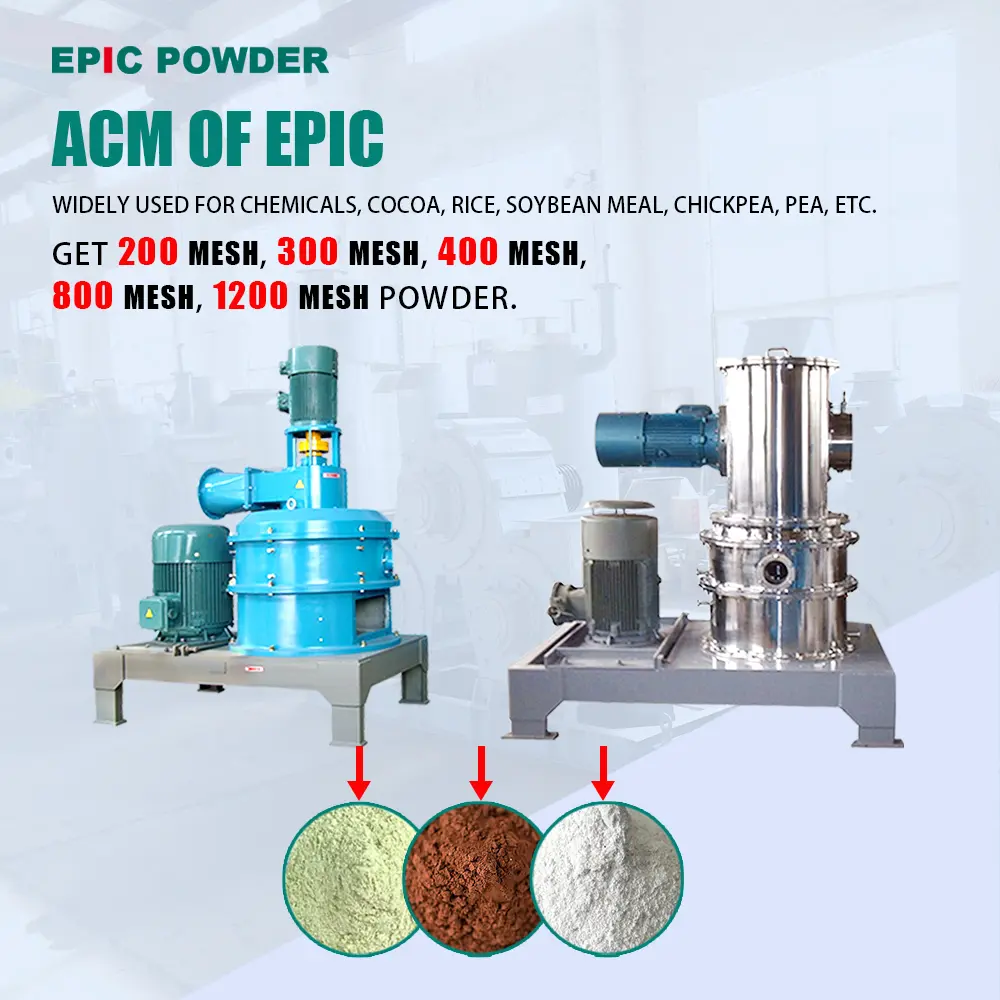
1. Os fundamentos da moagem de partículas sólidas
A moagem — também conhecida como trituração, redução de tamanho ou cominuição — é o processo de redução do tamanho de partículas sólidas por meio de ação mecânica. Quando forças mecânicas são aplicadas a uma partícula, tensões internas se acumulam até que fissuras se formem e a partícula se quebre em pedaços menores.
Os equipamentos industriais de moagem alcançam a redução de tamanho por meio de diversos mecanismos distintos:
| Mecanismo | Como funciona | Aplicação típica |
| Compressão de dupla superfície | As partículas são esmagadas ou cisalhadas entre duas superfícies sólidas. | moinhos de rolos, britadores de mandíbulas |
| Impacto em uma única superfície | As partículas são aceleradas e atingem uma superfície sólida em alta velocidade. | Moinhos de martelo, moinhos de jato |
| Corte e cisalhamento | Forças de cisalhamento ou ondas de pressão fraturam as partículas. | Moinhos coloidais, moinhos de disco |
A moagem pode ser realizada em condições secas ou úmidas, e a escolha entre elas afeta significativamente a seleção do equipamento, o processamento subsequente e as características do produto.
| Nota sobre eficiência energética: A moagem é uma das operações que mais consomem energia no processamento de pós — no entanto, apenas 1–21 TP3T da energia consumida é efetivamente utilizada na redução do tamanho das partículas. O restante se perde em atrito e calor dentro do moinho. A otimização energética do seu circuito de moagem é uma das oportunidades de redução de custos de maior impacto na sua planta. |
Como muitas variáveis afetam o desempenho da moagem, o dimensionamento do equipamento é em grande parte empírico. Na Epic Powder Machinery, recomendamos fortemente a validação do seu processo por meio de testes em escala laboratorial ou piloto antes de investir em equipamentos para produção em larga escala — e estamos aqui para apoiar esse processo.
2. Equipamentos comuns de moagem industrial
A seguir, apresentamos uma visão geral dos principais tipos de equipamentos de moagem utilizados no processamento industrial de pós, incluindo seus princípios de funcionamento e casos de uso típicos.
Laminadores (Moinhos de rolos)
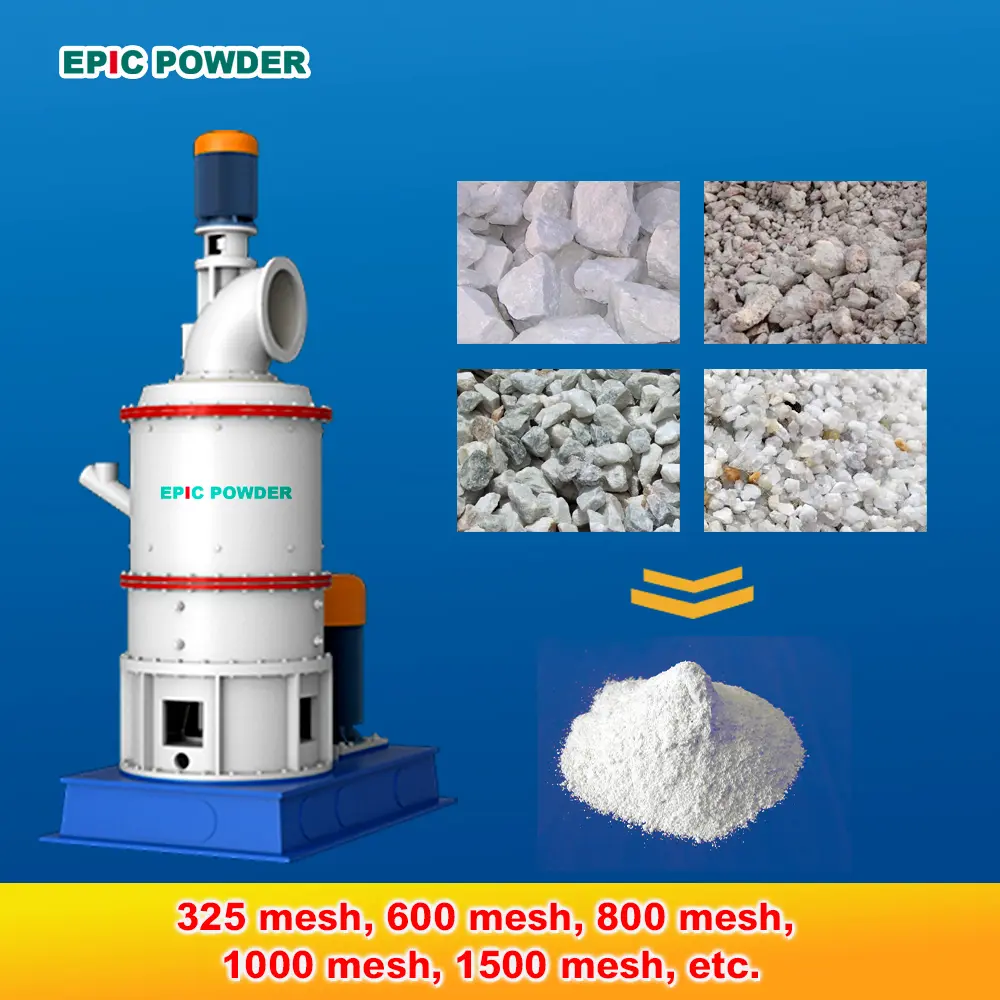
Os moinhos de rolos utilizam dois rolos contrarrotativos. O material é alimentado entre os rolos e submetido a forças de compressão e cisalhamento ao passar pelo espaço entre eles, reduzindo o tamanho das partículas. Para maior eficiência, vários pares de rolos podem ser dispostos em série com espaços progressivamente menores. Os rolos também podem ser ranhurados para melhorar a aderência do material.
Os moinhos de rolos de alta pressão (operando entre 10 e 50 bar) proporcionam uma intensidade de moagem significativamente maior. Esses sistemas incorporam mecanismos de liberação por mola para proteção contra sobrecarga quando material estranho entra na alimentação.
Moinhos de impacto
Os moinhos de impacto reduzem o tamanho do material acelerando-o contra elementos de impacto de alta velocidade — como martelos, pinos ou batedores — que giram a velocidades periféricas muito elevadas.
Moinhos de pino (moinhos de disco) Apresenta um disco fixo e um disco rotativo, cada um equipado com múltiplos pinos. O material forçado através da matriz de pinos é repetidamente atingido e fragmentado.
moinhos de martelo Utiliza-se um disco rotativo equipado com martelos oscilantes que golpeiam o material e o impulsionam contra a carcaça do moinho. Telas de peneiramento integradas podem ser usadas para refinar a distribuição granulométrica resultante. Moinhos de martelo de alta velocidade (velocidades periféricas de 40 a 70 m/s) podem produzir partículas com tamanho inferior a 0,1 mm.
Moinhos universais São uma variante avançada que apresenta elementos de impacto mais complexos, trilhas de moagem e inserções de tela, operando a velocidades de ponta de 40 a 100 m/s para uma produção mais fina.
Moinhos a jato (Moinhos a jato de ar)
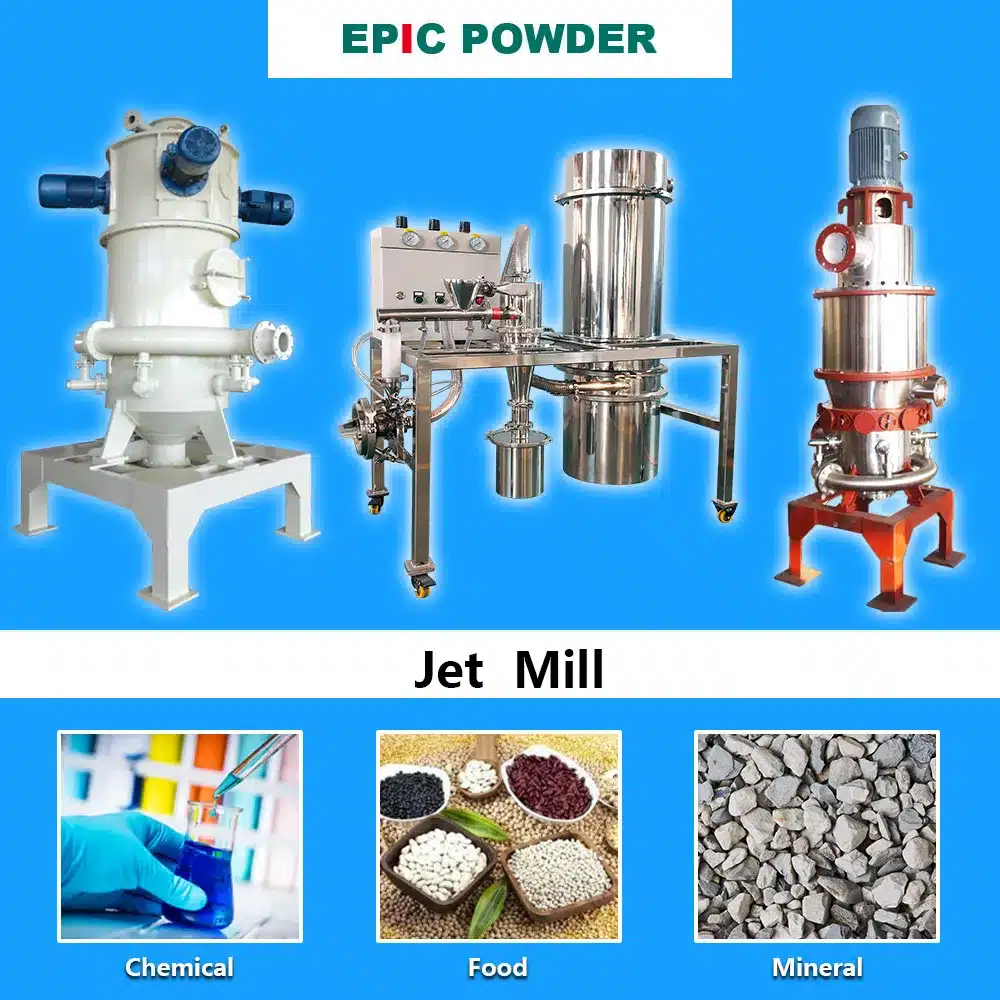
Os moinhos de jato utilizam gás comprimido para acelerar partículas a velocidades muito altas — até 250 m/s — antes de direcioná-las para um alvo estático ou para um fluxo contrário de partículas aceleradas. A energia cinética da colisão causa fraturas sem qualquer contato mecânico entre as peças, tornando os moinhos de jato ideais para materiais sensíveis ao calor ou ultraduros.
Como uma única passagem produz uma ampla distribuição de tamanho de partículas, os moinhos de jato são sempre equipados com um classificador integrado que recircula as partículas de tamanho excessivo para moagem adicional até que o tamanho de partícula desejado seja atingido.
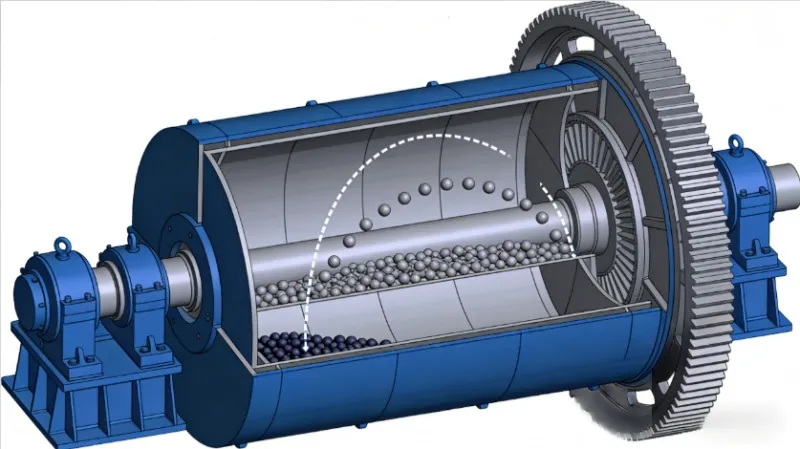
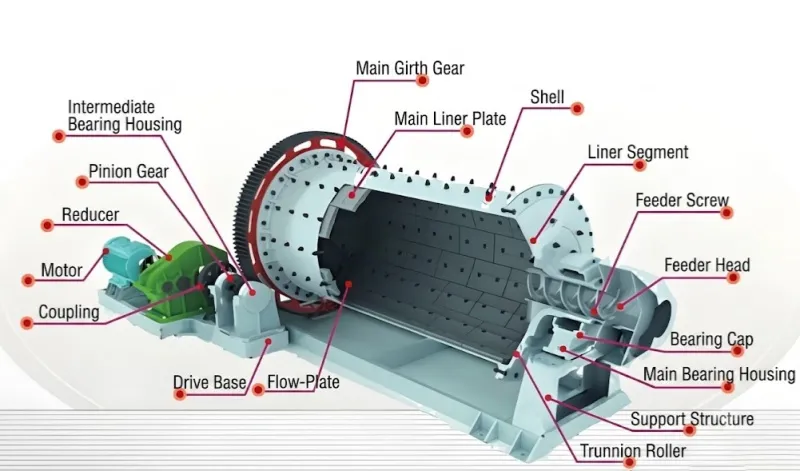
Moinhos de bolas — Secos
Os moinhos de bolas a seco consistem em um cilindro rotativo parcialmente preenchido com meios de moagem — geralmente esferas de cerâmica ou aço. À medida que o cilindro gira e os meios de moagem tombam, as partículas são quebradas pelo impacto entre as esferas, entre as esferas e a parede do cilindro e por atrito. Em alguns modelos, um agitador interno impulsiona o movimento dos meios de moagem em vez do próprio cilindro.
Moinhos de bolas — Moinhos úmidos (Moinhos de esferas agitadas)
Para moagem úmida, os moinhos de esferas agitadas são a tecnologia preferida. Em vez de um cilindro giratório, um agitador interno impulsiona o meio de moagem (esferas) para criar forças intensas de impacto e atrito nas partículas em suspensão. Projetos verticais compactos com leitos de esferas agitadas densamente compactados podem absorver altas potências de entrada e atingir tamanhos de partículas finas, na ordem de dezenas de micrômetros.
Uma peneira na saída do moinho separa os meios de moagem do produto. Como a agitação de grânulos densamente compactados gera calor significativo, esses moinhos requerem refrigeração por camisa para proteger produtos sensíveis à temperatura.
Moinhos coloidais
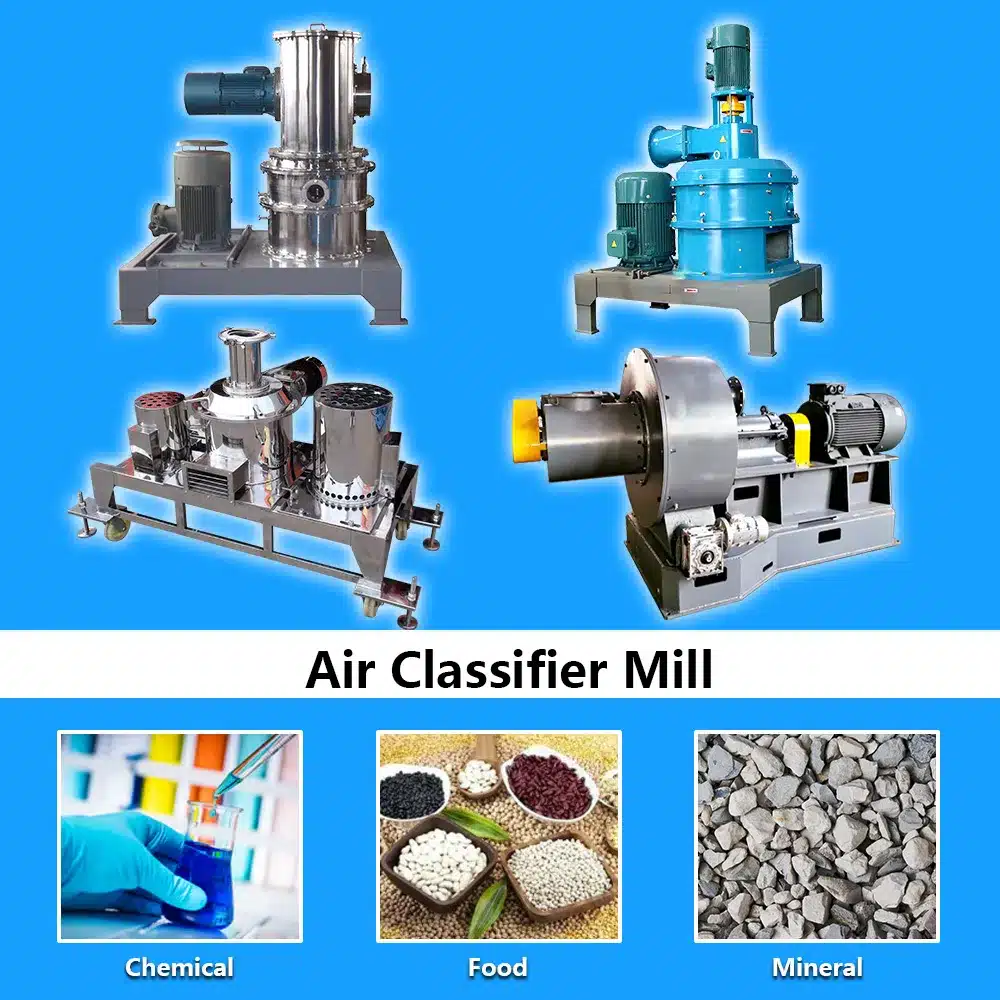
Os moinhos coloidais são amplamente utilizados no processamento industrial de suspensões, principalmente onde se necessita de uma solução compacta e de fácil integração. Um rotor de alta velocidade, girando dentro de uma carcaça com tolerâncias rigorosas, gera intensas forças de cisalhamento que quebram as partículas em um meio líquido. Aberturas de descarga na carcaça permitem a saída contínua do material processado.
Os moinhos coloidais podem ser configurados em modo de circuito aberto (passagem única) ou de circuito fechado (recirculação com classificação), dependendo da redução de tamanho de partícula necessária e da dureza do material.
3. Como selecionar a máquina de moagem adequada
A escolha do moinho certo exige a avaliação de dois fatores principais: o tamanho de partícula desejado e a dureza do material. Utilize as tabelas abaixo como ponto de partida e, em seguida, entre em contato com nossa equipe de engenharia para uma avaliação detalhada do processo.
Seleção por tamanho de partícula alvo (d50)
| Tamanho da partícula alvo | Tecnologias adequadas |
| Grosso (aproximadamente 10 mm) | moinhos de rolos, britadores de martelo |
| Médio-fino (~1 mm) | Moinhos de rolos, moinhos de martelos |
| Fino (~0,1 mm) | Laminadores de múltiplos estágios, laminadores de alta pressão, moinhos de martelo de alta velocidade, moinhos universais, moinhos de pino/disco |
| Ultrafino (~0,025 mm / 25 µm) | Moinhos universais, moinhos de pinos/discos, moinhos a jato, moinhos de esferas com agitação úmida |
Seleção por dureza do material (escala de Mohs)
| Dureza de Mohs | Exemplos de materiais | Tecnologias adequadas |
| 1–3 (Suave) | Talco, gesso, sal, calcita | Laminadores de rolos, laminadores de rolos de alta pressão, moinhos de martelo, moinhos universais, moinhos de pinos/discos, moinhos de esferas úmidas, moinhos coloidais |
| 4–6 (Médio) | Fluorita, apatita, feldspato | Laminadores de rolos de alta pressão, moinhos universais, moinhos de esferas com agitação úmida |
| 7–10 (Difícil) | Quartzo, topázio, coríndon, diamante | Laminadores de rolos de alta pressão, moinhos a jato, moinhos de esferas com agitação úmida |
Moagem úmida versus moagem a seco: Se o seu processo requer uma suspensão como produto final — ou se o seu material é sensível à temperatura e se beneficia do resfriamento líquido — a moagem úmida com um moinho de esferas agitado ou um moinho coloidal é geralmente o ponto de partida. Para pós de fluxo livre com uma forma final seca, as tecnologias de moagem a seco (moinhos de impacto, moinhos a jato, moinhos de rolos) são geralmente preferidas.
4. Resumo
Selecionar a solução ideal para moagem de pó é uma decisão complexa que envolve múltiplas variáveis, considerando as propriedades do material, o tamanho de partícula desejado, os requisitos de processamento úmido ou seco, o consumo de energia e a integração com processos subsequentes. Este guia oferece uma estrutura inicial organizada, mas cada processo possui requisitos específicos que exigem uma avaliação de engenharia personalizada.
Pó épico
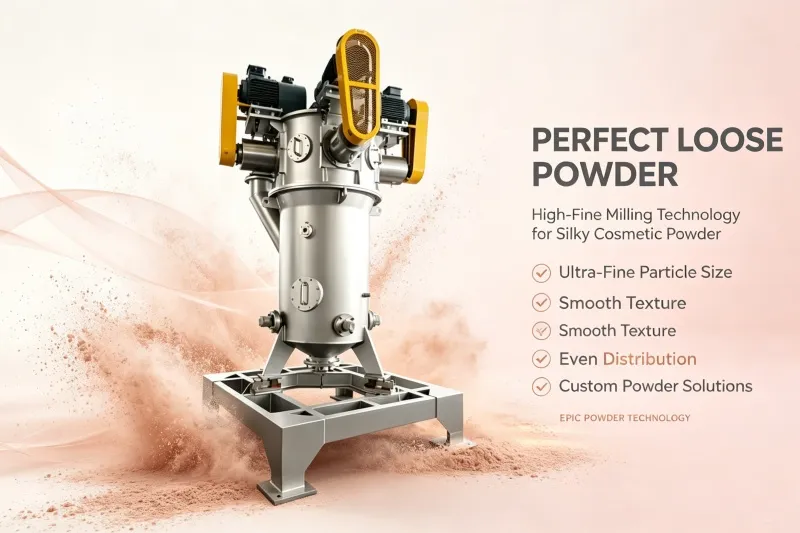
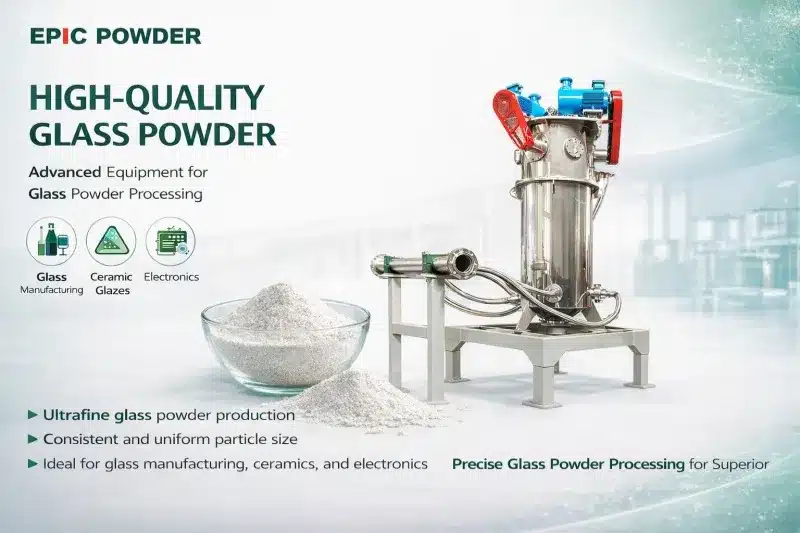
No Pó épico, Oferecemos uma ampla gama de modelos de equipamentos e soluções personalizadas para atender às suas necessidades específicas. Nossa equipe possui mais de 20 anos de experiência no processamento de diversos pós. A Epic Powder é especializada em tecnologia de processamento de pós finos para as indústrias mineral, química, alimentícia, farmacêutica, entre outras.
Entre em contato conosco hoje mesmo para uma consulta gratuita e soluções personalizadas!
Pronto para encontrar a solução de moagem ideal para o seu processo?
Entre em contato com a equipe de engenharia da Epic Powder Machinery em www.epic-powder.com/contact

“Obrigado pela leitura. Espero que meu artigo tenha ajudado. Deixe um comentário abaixo. Você também pode entrar em contato com a representante de atendimento ao cliente da EPIC Powder, Zelda, para qualquer dúvida.”
— Jason Wang, Engenheiro