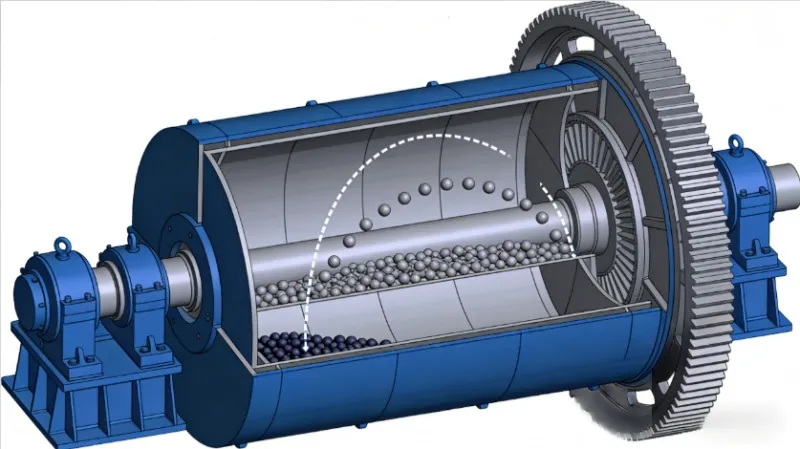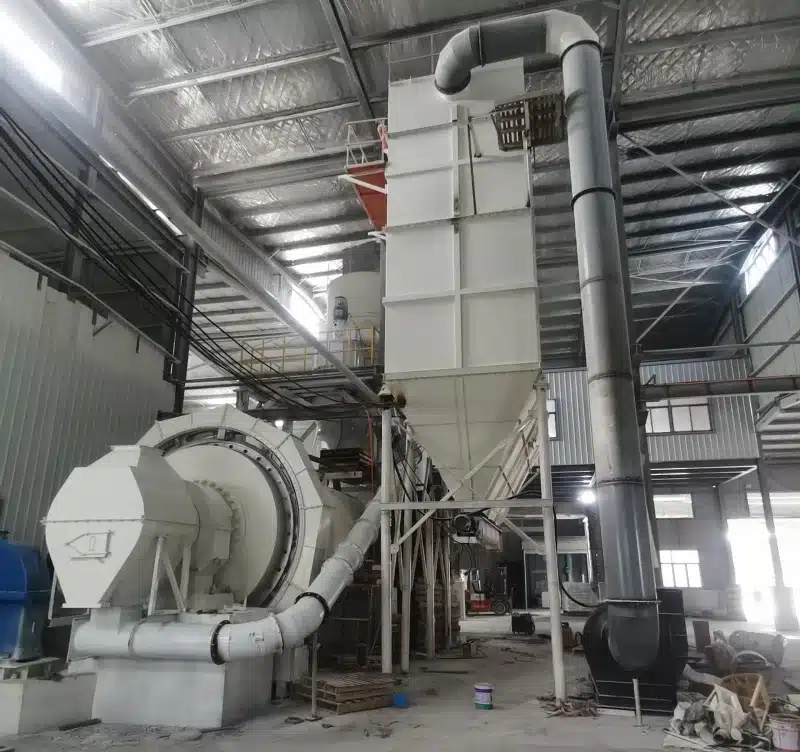
Face à la demande croissante de particules fines dans des secteurs tels que l'agroalimentaire, la chimie fine et les minéraux, les technologies de broyage ultrafin suscitent un vif intérêt. Parmi les technologies courantes de broyage ultrafin, on retrouve le broyage par jet d'air, le broyage colloïdal et le broyage à billes. Le broyage à billes exploite l'énergie mécanique et les effets thermiques pour modifier la structure et les propriétés des matériaux par friction, collision et cisaillement. Il présente des avantages tels que la stabilité des échantillons, une qualité de traitement élevée, un faible coût et un impact environnemental réduit. Il est largement utilisé pour le broyage de divers minéraux, produits alimentaires et produits chimiques.

I. Types de Broyeurs à boulets
Le principe de fonctionnement d'un broyeur à billes repose principalement sur la rotation du matériau autour de l'arbre du broyeur, tandis que le disque de support tourne en sens inverse. La combinaison de ces deux vitesses génère une force centrifuge. Celle-ci provoque un frottement et un cisaillement suffisants de l'échantillon, permettant ainsi d'obtenir une granulométrie ultrafine.
En fonction de leurs principes de fonctionnement et de leurs caractéristiques, les broyeurs à boulets sont généralement classés en trois types : les broyeurs à boulets agités, les broyeurs à boulets vibratoires et les broyeurs à boulets planétaires.
Broyeur à billes vibrant :
Un broyeur à billes vibrant exploite les vibrations harmoniques simples à haute fréquence du cylindre. Celles-ci génèrent des chocs, des compressions et des contraintes de cisaillement intenses entre les billes de broyage et le matériau, permettant ainsi un raffinage rapide et un mélange homogène. Il peut généralement broyer des matériaux jusqu'à une granulométrie micrométrique.
Broyeur à billes agité :
Un broyeur à boulets agité utilise un agitateur rotatif à grande vitesse à l'intérieur du broyeur pour transférer directement une énergie cinétique importante aux billes et aux matériaux à broyer. Sous l'effet intense des collisions, des frottements et du cisaillement, les matériaux sont finement pulvérisés. Il présente des avantages tels qu'une utilisation simple, une structure simple, un taux de pulvérisation élevé et une faible pollution. Il convient au broyage à boulets par voie humide et par voie sèche.
Broyeur à billes planétaire :
Les broyeurs planétaires à billes sont utilisés pour le traitement d'échantillons, le broyage de colloïdes et le développement de matériaux grâce à leur bonne reproductibilité, leur manipulation sûre et leur rapidité d'exécution. Ils utilisent un système de transmission permettant au cylindre du broyeur de tourner autour d'un axe central tout en effectuant une rotation sur lui-même. Ceci génère une force centrifuge puissante qui pulvérise les matériaux. Ils se caractérisent par une vitesse et une fréquence d'impact élevées.
II. Médias de broyage à billes

Le broyage à billes se divise en deux procédés : le broyage à sec et le broyage humide, selon l’ajout ou non d’un milieu de dispersion liquide. Le broyage à sec consiste à introduire directement les matériaux secs dans le broyeur. Il présente des avantages tels qu’un cycle de production court, une mise en œuvre simple et une faible consommation d’énergie. C’est pourquoi il est largement utilisé dans des secteurs traditionnels comme la transformation des céréales.
Le broyage humide à billes nécessite l'ajout d'un milieu de dispersion au matériau. Il exploite la friction, la collision et l'impact entre les billes de broyage et le matériau pour obtenir une pulvérisation. Bien que le contrôle des paramètres de procédé et les conditions opératoires du broyage humide à billes soient plus complexes, et que des adjuvants de broyage soient souvent ajoutés, la structure de l'équipement est relativement simple. Le produit obtenu présente une bonne uniformité de broyage. Qu'il soit à sec ou humide, le broyage ultrafin permet de transformer les matières premières alimentaires en poudres de différentes granulométries grâce à de puissantes forces de cisaillement, d'impact et de collision, répondant ainsi à divers besoins applicatifs.
III. Conditions de broyage à billes
Il existe différents types de broyeurs à billes. L'efficacité du broyage est influencée par de multiples facteurs, tels que la densité du matériau à broyer, le nombre et la taille des billes, la vitesse et la durée du broyage, la température de broyage, le rapport billes/matériau et le taux de remplissage. La combinaison de ces variables induit une forte variation de l'énergie fournie par le broyeur. À faible énergie, on observe uniquement une réduction de la taille des particules et une augmentation de la surface spécifique. En revanche, à très haute énergie (broyage à billes à haute énergie), on peut obtenir la rupture des liaisons chimiques et des réactions chimiques. Il est donc essentiel de déterminer les conditions de broyage optimales en fonction de l'effet recherché.
IV. Domaines d'application et principaux avantages Technologie de broyage à billes
Grâce à son rendement énergétique élevé et à son faible coût, la technologie de broyage à billes a été largement appliquée dans plusieurs secteurs industriels clés :
- Transformation des produits alimentaires et agricoles : Utilisé pour le broyage ultrafin de matériaux tels que le thé, les céréales et la chitine, améliorant significativement la solubilité, l'absorption des fibres alimentaires et la texture.
- Produits chimiques fins et matériaux minéraux : Utilisé pour le broyage et la modification de haute pureté des matériaux d'électrodes positives et négatives de batteries, des poudres céramiques et des minéraux de terres rares.
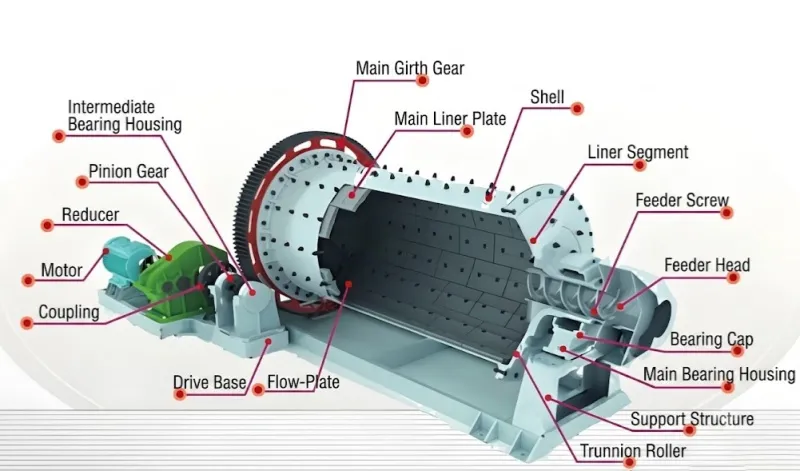
V. Paramètres de processus principaux pour l'optimisation de l'effet de broyage à billes
Pour obtenir une distribution granulométrique idéale et une efficacité de broyage optimale, les paramètres clés suivants doivent être soigneusement contrôlés :
| Nom du paramètre | Mécanisme d'action | Suggestions d'optimisation |
| Rapport masse de billes/masse de matériau (rapport masse du milieu/masse du matériau) | Détermine la fréquence des impacts et des frottements lors du meulage. | La plage courante est de 5:1 à 20:1 ; des rapports plus élevés sont recommandés pour le broyage à haute énergie. |
| Taux de remplissage (pourcentage du volume total de broyage) | Affecte l'espace de déplacement des médias et l'efficacité du transfert d'énergie. | Contrôlé à 30% – 50% du volume du bocal de broyage pour éviter une force centrifuge insuffisante due à un remplissage excessif. |
| Calibrage des billes de broyage (rapport et taille) | Les grosses billes fournissent une force d'impact, les petites billes fournissent une force de cisaillement et de frottement. | Un mélange de grosses et de petites billes permet d'équilibrer le concassage grossier et le broyage fin. |
| Calibrage des billes de broyage (rapport et taille) | Détermine l'énergie mécanique totale absorbée. | La vitesse doit atteindre 70% – 85% de la vitesse critique ; un temps excessif peut facilement conduire à une agglomération secondaire des matériaux. |
VI. Tendances de développement et perspectives d'avenir du broyage à billes ultrafin
Synthèse mécanochimique (broyage à billes à haute énergie) :
En utilisant une énergie extrêmement élevée pour induire des réactions chimiques en phase solide, la synthèse de matériaux inorganiques et la modification organique peuvent être réalisées sans solvants.
Technologie de broyage à billes à basse température/réfrigérée :
L'introduction du refroidissement à l'azote liquide permet de résoudre le problème de la dénaturation ou de la fusion des matériaux thermosensibles (tels que les protéines, les enzymes et les plastiques à bas point de fusion) pendant le processus de broyage.
Production intelligente et continue :
Combinaison de la surveillance en ligne de la granulométrie et des systèmes de contrôle automatisés. Promotion de la transformation du broyage à billes ultrafin, passant d'un traitement par lots à une production industrielle continue et intelligente.

“ Merci de votre lecture. J’espère que cet article vous sera utile. N’hésitez pas à laisser un commentaire ci-dessous. Pour toute question, vous pouvez également contacter le service client en ligne de Zelda. ”
— Publié par Emily Chen