Lithium resources are a key raw material for the new energy industry, and one of the most important downstream products is lithium carbonate. The production of lithium carbonate primarily relies on lithium mica, spodumene, and other ores. Among them, lithium mica, due to its abundant reserves and relatively low mining cost, plays a significant role in producing high-purity lithium carbonate. However, lithium mica itself has a hard structure and a prominent layered crystal, which directly affects the reaction rate and conversion efficiency in the chemical leaching process. Therefore, in the process of producing lithium carbonate from lithium mica, the front-end grinding stage becomes crucial for improving the efficiency of subsequent processes.
This article focuses on the configuration strategy of front-end grinding equipment for lithium mica, including equipment selection, process flow design, particle size control, and equipment combination optimization, aiming to provide reference for the industrial production of lithium carbonate from lithium mica.
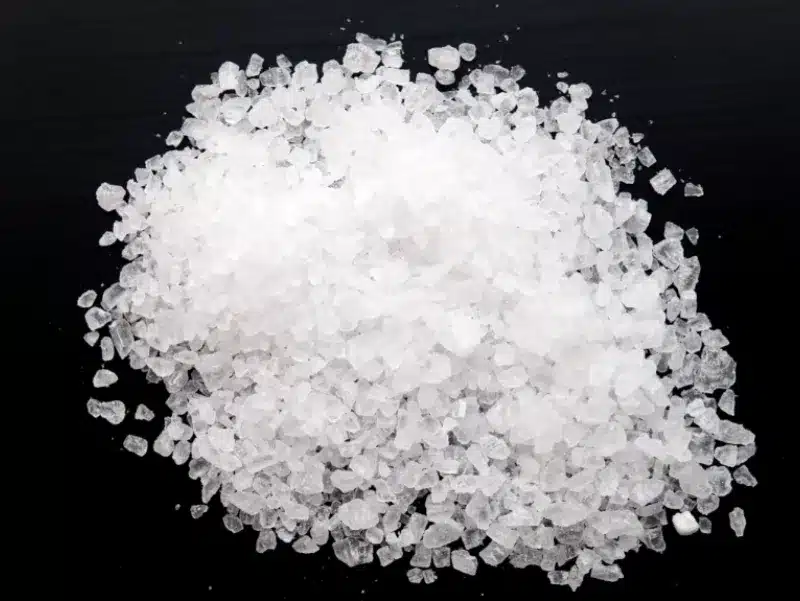
1. Crushing Characteristics and Grinding Challenges of Lithium Mica
Lithium mica (Mica, mainly K(Li,Al)₃(Si,Al)₄O₁₀(OH)₂) is a layered silicate mineral with a sheet-like crystal structure. The interlayer bonding is relatively weak, but the internal silicate tetrahedral network is strong. These structural characteristics bring the following grinding challenges:
- Layered splitting but uneven pulverization
During mechanical grinding, lithium mica tends to split along the interlayer cracks, while the layers themselves remain strong. This leads to a wide particle size distribution and a low yield of ultrafine particles, affecting subsequent leaching efficiency. - Moderate hardness but high toughness
Lithium mica has a Mohs hardness of 2.5–3. Although the surface is relatively soft, its toughness is high, causing high energy consumption and severe wear in ordinary crushing equipment. - Moisture content and hygroscopicity significantly affect grinding
Lithium mica is hygroscopic. Under high humidity, the powder tends to agglomerate, reducing grinding efficiency. Proper control of raw material moisture and grinding environment is required.
Thus, front-end grinding equipment for lithium mica must not only meet crushing capability requirements but also ensure particle size uniformity, energy efficiency, and wear resistance.
2. Selection of Front-End Grinding Equipment
The grinding process of lithium mica generally includes primary crushing, secondary (fine) crushing, and fine or ultrafine grinding. Different stages require different types of equipment:
2.1 Primary Crushing Equipment
The purpose of primary crushing is to reduce the mined lithium mica ore (typically 100–300 mm) to 10–50 mm, preparing it for fine grinding. Common equipment includes:
- Jaw Crusher
Advantages: Simple structure, large capacity, adaptable to a wide range of ore hardness.
Applicable range: Ore >100 mm, crushing ratio 3–6. - Impact Crusher
Advantages: Uniform product size, adjustable hammer plates.
Applicable range: Moisture-sensitive ore, medium to low hardness.
Recommended configuration: Use jaw crushers for primary crushing, with impact crushers as auxiliary equipment to improve particle size uniformity.
2.2 Fine Crushing Equipment
The fine crushing stage reduces 10–50 mm particles to 1–5 mm to meet the feeding requirements of grinding equipment. Common equipment includes:
- Cone Crusher
Advantages: High crushing ratio, uniform particle size, continuous operation.
Applicable range: Medium-hard, tough lithium mica. - Roll Crusher
Advantages: Controllable product size, reduced overproduction of fines.
Applicable range: Scenarios with strict requirements for dust and particle shape.
Recommended configuration: Use cone crushers combined with vibrating screens to ensure precise particle size and improve grinding efficiency.
2.3 Fine/Ultrafine Grinding Equipment
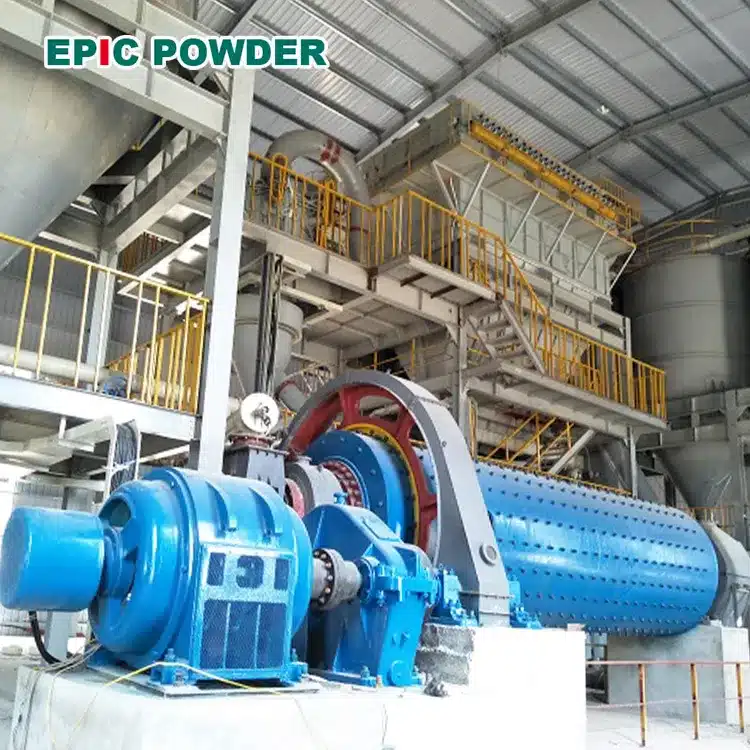
The fine/ultrafine grinding stage is the core of lithium mica processing, targeting particle sizes of 50–200 mesh (≤75 μm) to enhance chemical leaching rates. Common equipment includes:
- Raymond Mill
Advantages: Mature technology, low energy consumption, stable output.
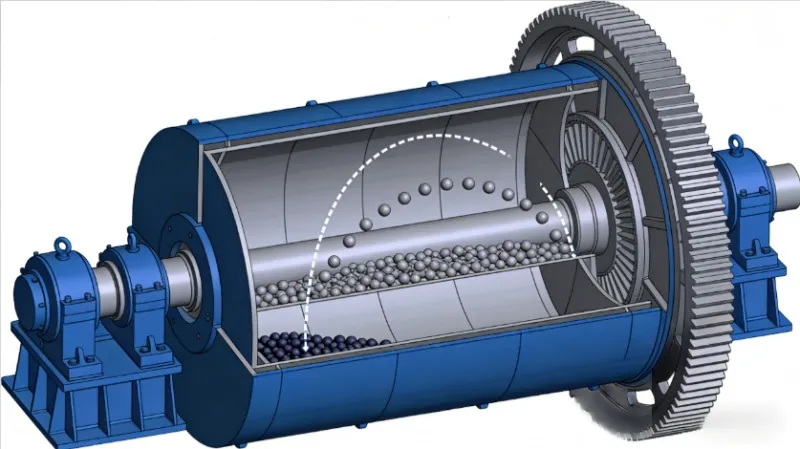
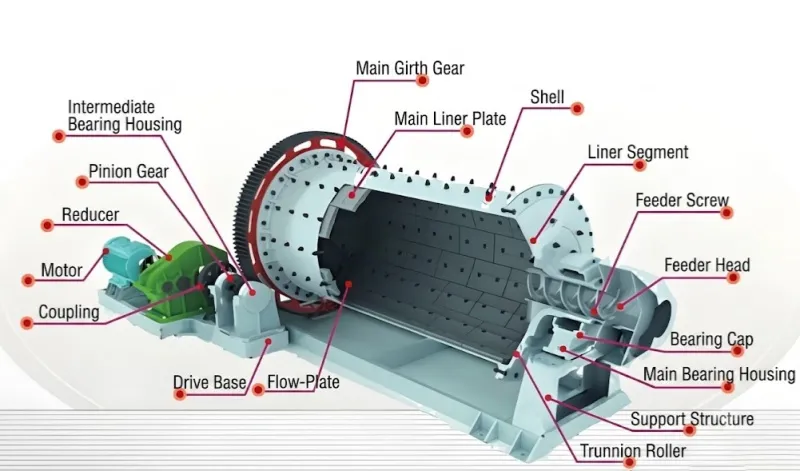
Limitations: Difficult to produce ultrafine powder. - Ball Mill
Advantages: Suitable for ultrafine grinding, can be combined with classifiers for closed-loop operation.
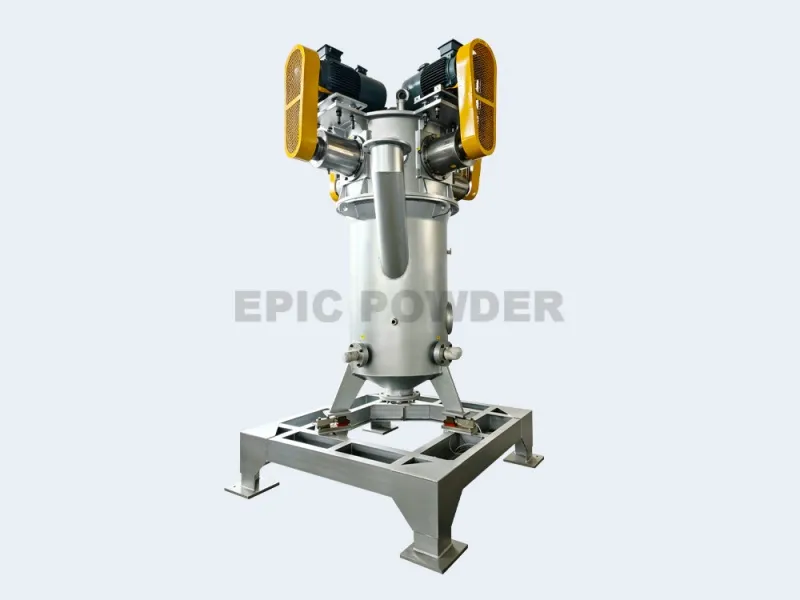
Limitations: Large equipment size, high energy consumption. - Air Jet Mill
Advantages: Can produce nanoscale powder with narrow particle size distribution.
Limitations: High investment and energy consumption. - Vibration Mill
Advantages: High efficiency, suitable for tough minerals.
Limitations: Complex maintenance, limited capacity.
Recommended configuration: Industrial production usually adopts a ball mill + high-efficiency classifier closed-loop system to balance output and particle size control. For ultra-high-purity, ultrafine powder, a jet mill can be added for secondary grinding.
3. Process Flow Design for Grinding
Based on the above equipment, the front-end grinding process typically follows these steps:
- Ore Crushing → Coarse Screening
Jaw crushers reduce ore to ≤50 mm, and vibrating screens separate particles suitable for fine crushing. - Fine Crushing → Particle Size Adjustment
Cone crushers reduce particles to 3–5 mm, with oversized particles returned to the crusher in a closed loop. - Intermediate Storage → Feeding Regulation
Silos or buffer bins ensure stable grinding load and prevent overloading. - Fine/Ultrafine Grinding → Classifier Closed-Loop
Ball mills or jet mills grind the material, which is then classified to achieve the target particle size. Undersized or oversized particles are returned for regrinding in a closed-loop system. - Finished Product Collection and Conveying
Ultrafine powder is collected using cyclone separators or bag filters, ensuring smooth operation of the subsequent leaching process.
4. Principles for Configuring Front-End Grinding Equipment
For industrial production of lithium carbonate from lithium mica, equipment configuration should follow these principles:
4.1 Particle Size Priority
Particle size directly affects leaching efficiency. Oversized primary crushed ore slows reaction rates, and coarse powder in fine grinding reduces lithium carbonate yield. Recommended particle size targets:
- Primary crushing: ≤50 mm
- Fine crushing: 3–5 mm
- Fine/ultrafine grinding: ≤75 μm
4.2 Balance Between Energy Consumption and Output
High-energy-consuming equipment such as ball mills and jet mills has limited capacity. Proper combination avoids overload and energy waste. Closed-loop grinding with classifiers improves efficiency.
4.3 Wear Resistance and Equipment Lifespan
Although lithium mica has moderate hardness, its toughness causes significant equipment wear. Using wear-resistant materials (high-chrome steel, ceramic liners) is essential for industrial operations.
4.4 Controllable and Stable Particle Size
High-purity lithium carbonate requires strict particle size control. Closed-loop classifier systems ensure narrow and stable particle size distribution.
4.5 Automation and Safety
Grinding equipment should support automated feeding, load monitoring, and dust control to reduce labor risk and improve production safety.
5. Equipment Combination Strategy
Considering lithium mica characteristics and industrial requirements, common configurations are as follows:
| Stage | Equipment Combination | Advantages |
|---|---|---|
| Primary Crushing | Jaw Crusher + Vibrating Screen | Uniform particle size, high throughput |
| Fine Crushing | Cone Crusher + Return Loop | Precise particle size, continuous operation |
| Fine Grinding | Ball Mill + Classifier Closed Loop | Stable output, controllable particle size |
| Ultrafine Grinding (optional) | Jet Mill + High-Efficiency Classifier | Nanoscale powder, narrow particle size distribution |
By combining staged crushing with closed-loop grinding, high output, low energy consumption, and stable particle size can be achieved, providing reliable feed for subsequent leaching.
6. Case Study
A domestic large-scale lithium carbonate producer configured their front-end grinding as follows:
- Ore Crushing: Jaw crusher + vibrating screen, reducing ore to ≤50 mm;
- Fine Crushing: Cone crusher to 3–5 mm;
- Fine Grinding: Ball mill + cyclone classifier closed loop to reach ≤75 μm;
- Ultrafine Grinding: Selected batches used a jet mill for secondary grinding, achieving 40–50 μm powder for high-purity lithium carbonate.
Results:
- Narrow particle size distribution, average particle size controlled at 60–70 μm;
- Chemical leaching conversion increased by 8–10%;
- Energy consumption per ton decreased by approximately 12%, and equipment wear was significantly reduced.
This case demonstrates that scientific configuration of front-end grinding equipment has a decisive impact on the lithium mica to lithium carbonate process.
7. Conclusion
The front-end grinding stage in lithium mica to lithium carbonate production is critical for downstream chemical leaching efficiency and lithium carbonate yield. Rational configuration of grinding equipment should consider lithium mica’s physical characteristics and industrial requirements, following principles of particle size priority, moderate energy consumption, high wear resistance, and controllable particle size.
Recommended configuration: Jaw Crusher → Cone Crusher → Ball Mill + Classifier Closed Loop → Jet Mill (optional for ultrafine powder). Through staged crushing and closed-loop grinding, not only can particle size uniformity be ensured, but leaching conversion rates and production efficiency are also significantly improved.
For enterprises producing lithium carbonate from lithium mica, optimizing front-end grinding equipment is key to
achieving low-cost, efficient, and green production, and is an important guarantee of enhanced competitiveness.

“Thanks for reading. I hope my article helps. Please leave a comment down below. You may also contact Zelda online customer representative for any further inquiries.”
— Posted by Emily Chen