The Raymond mill has been in continuous production use for over a century. For many applications that need medium-fineness minerals at modest throughput, it still works. The question is not whether Raymond mills can produce powder, but whether they are the right choice for your specific target fineness, material, and operating economics.
For producers targeting D50 below 20 microns, for heat-sensitive materials, for high-purity applications where metal contamination must be minimised, and for operations where total cost per tonne matters more than initial capital cost, the air classifier mill (ACM) consistently delivers better economics. This article compares both technologies on the parameters that determine actual operating performance.
EPIC Powder Machinery supplies air classifier mills for mineral, pharmaceutical, chemical, and battery material applications. This comparison is based on real installation data from plants that have run both technologies.
How Each Technology Works — and Why the Difference Matters
Raymond Mill: Compression and Shear
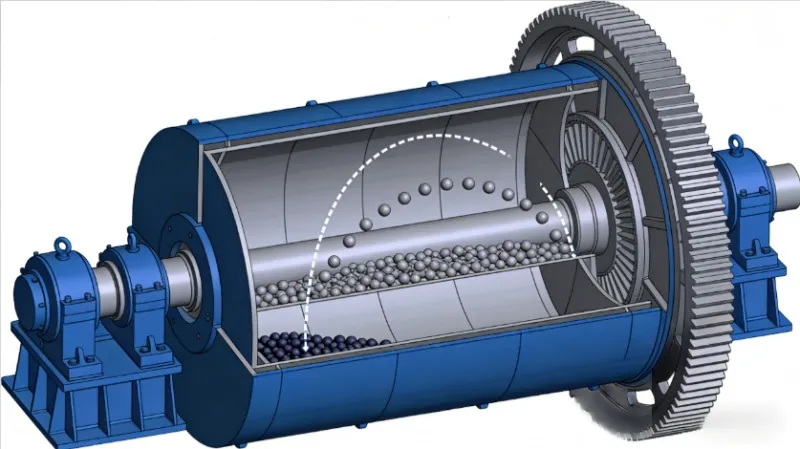
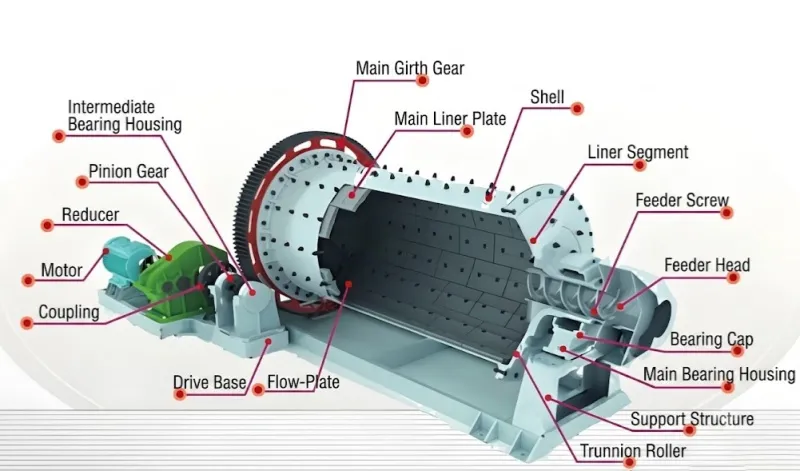
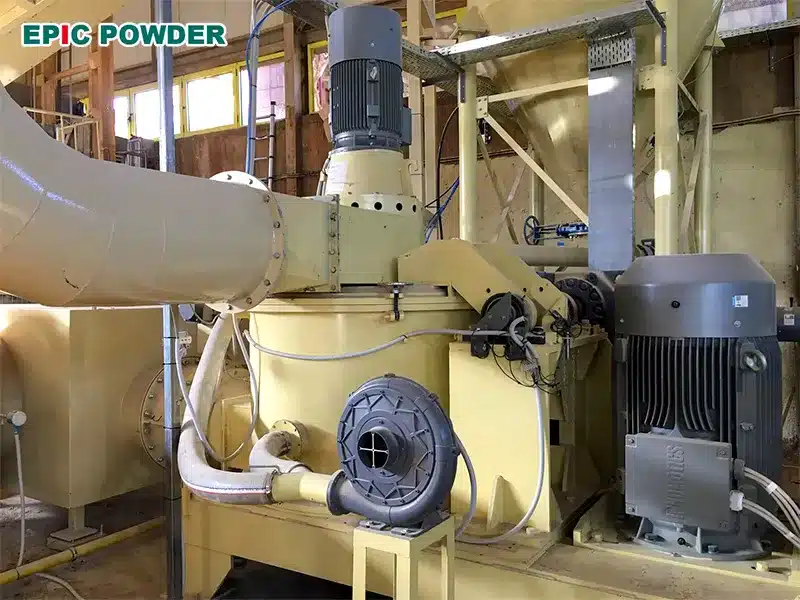
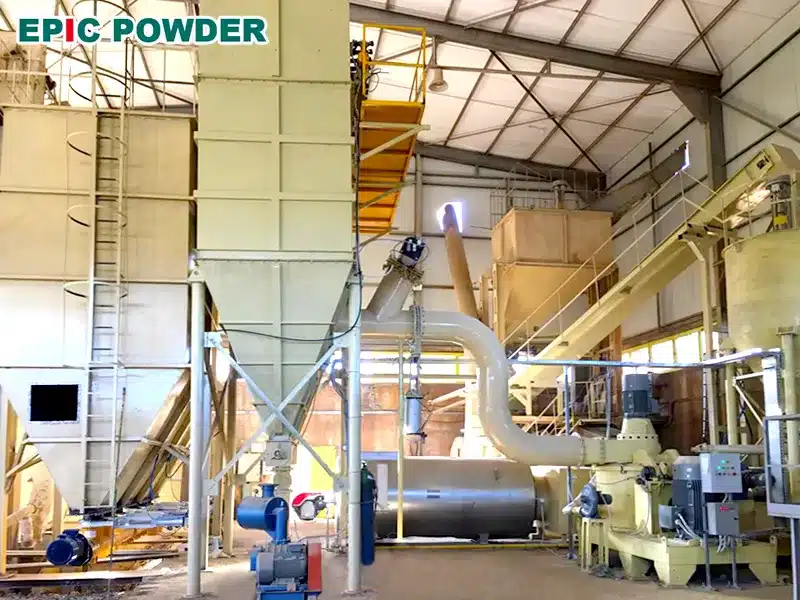
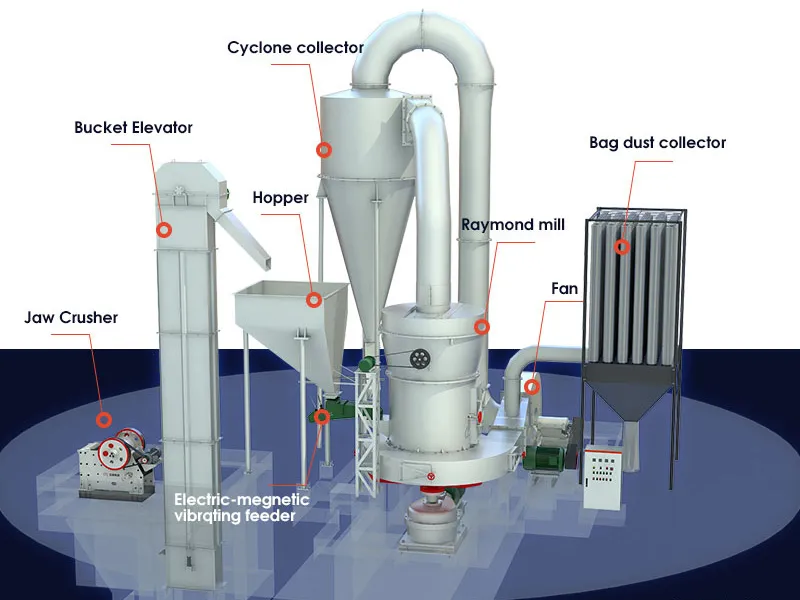
A Raymond mill grinds material between a rotating grinding roller and a fixed grinding ring. The rollers are pressed against the ring by centrifugal force or spring tension; material fed into the grinding zone is drawn into the gap and fractured by compression and shear. Coarser and finer particles both remain in the grinding zone together. The mill has no built-in mechanism to remove on-spec particles as soon as they reach the target size. Most Raymond mill installations add a downstream air classifier to separate fine from coarse, but this external classification adds pressure drop, energy consumption, and complexity to the circuit.
The compression-and-shear fracture mechanism produces flat, angular particles — a consequence of how roller-ring grinding breaks material along flat cleavage planes. For many filler applications this does not matter. For applications where particle shape affects flowability, packing density, or surface performance (battery materials, pharmaceutical tablets, coatings), flaky particles are a genuine disadvantage.
Air Classifier Mill: Impact with Integrated Classification
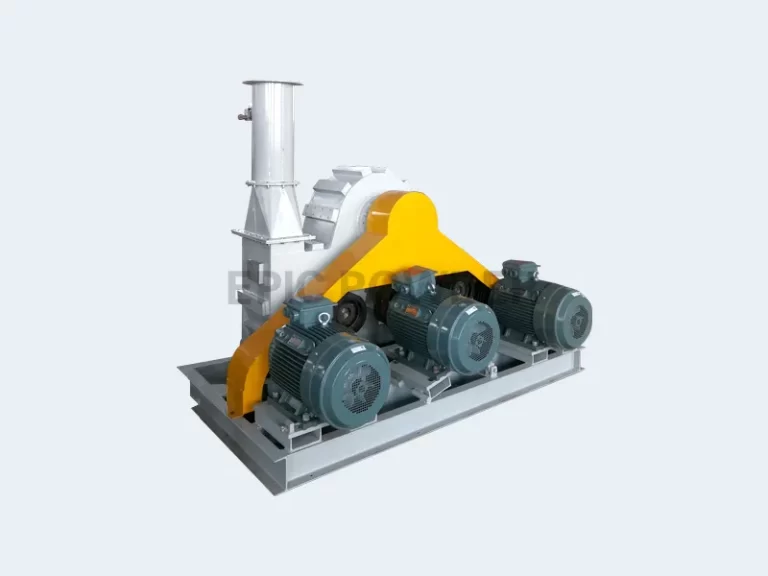
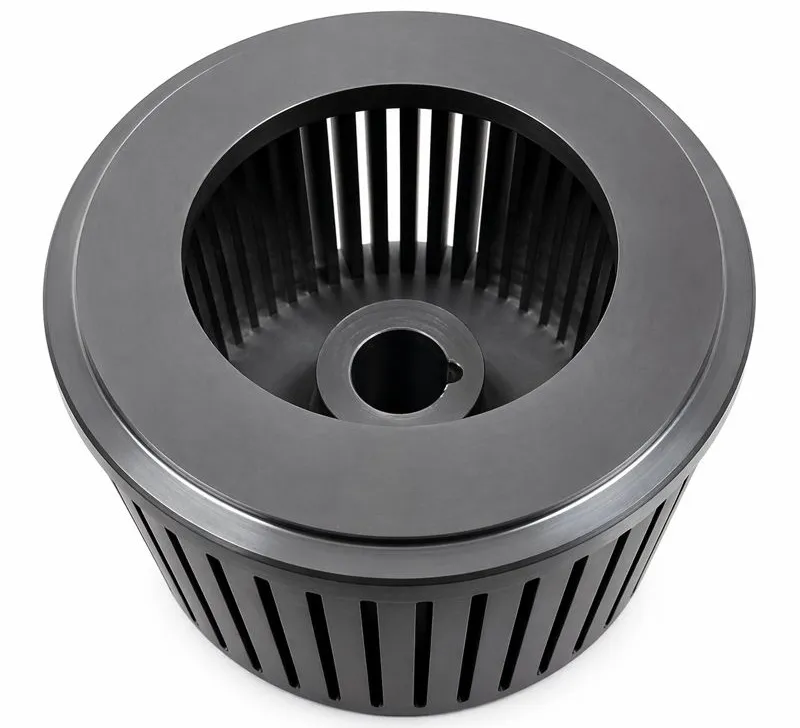
An air classifier mill combines a high-speed grinding rotor with an integrated dynamic classifier wheel in a single housing. Feed material enters, is ground by impact and attrition against the rotor blades, and the resulting particles are immediately presented to the classifier wheel. Fine particles — those that meet the target size — pass through the classifier wheel and exit to collection. Coarse particles are centrifuged back to the grinding zone. This closed-loop internal circuit means fine particles are removed from the grinding zone as soon as they reach specification, rather than continuing to be ground unnecessarily.
Impact-dominant grinding with this closed-loop classification produces more equiaxed, rounded particles than roller-ring grinding. And because the classifier wheel speed is adjustable (by variable frequency drive, without stopping the mill), the product D50 and D97 can be changed in real time — a significant operational flexibility advantage over the Raymond mill’s spring-pressure or gap adjustment.
Side-by-Side Comparison
| Parameter | Raymond Mill | Air Classifier Mill (ACM) |
| Grinding mechanism | Compression + shear (roller on ring) | High-speed impact + attrition |
| Integrated classification | No — requires external classifier | Yes — classifier wheel built in |
| Product fineness range | 80-600 mesh (180-25 um); output falls sharply above 400 mesh | 5-300 um; consistent output to 5 um |
| Particle shape | Flaky / angular (cleavage fracture) | More equiaxed / polyhedral (impact fracture) |
| D50 adjustment method | Spring pressure or roller gap — manual, imprecise | Classifier wheel speed via VFD — precise, real-time |
| Over-grinding risk | High — no removal of on-spec fines | None — fines exit immediately via classifier |
| Specific energy at D50 15-20 um | High (over-grinding energy penalty) | 25-35% lower than Raymond + external classifier |
| Wear mode | Roller-ring metal-to-metal contact (high wear) | Impact on lining plates; no metal-to-metal contact |
| Metal contamination risk | High (roller/ring wear debris) | Low; ceramic lining option available |
| Heat-sensitive materials | Not suitable — grinding zone runs hot | Suitable — continuous cooling airflow |
| Automation level | Manual (spring/gap adjustment) | Fully automated (VFD, PLC-ready) |
| System footprint | Large (mill + external classifier + multiple fans) | 40-50% smaller; fewer components |
| Initial capital cost | Lower | Moderate |
| Total operating cost at fine grades | High | Lower — payback typically 6-18 months |
Where the Air Classifier Mill Has a Clear Advantage
Below 25 Microns: The Fineness Threshold
The Raymond mill’s effective upper limit is approximately 25 microns (600 mesh). At this fineness, throughput has already dropped significantly from the mill’s rated capacity, and the product PSD is wide — a substantial coarse tail is typically present even with a downstream classifier. Going finer than 25 microns on a Raymond mill is technically possible but economically impractical at production scale.
The air classifier mill produces consistent product at 5-20 microns as standard operation. The classifier wheel speed is the primary D50 control, and its adjustment is continuous and precise. A plant producing D50 10 microns calcium carbonate on an air classifier mill runs at essentially the same energy per tonne as one producing D50 20 microns — the mill is not working significantly harder for the finer product because the integrated classification removes on-spec particles promptly. A Raymond mill producing D50 15 microns is working hard against itself: grinding material that has already reached specification.
Heat-Sensitive Materials
Raymond mills are unsuitable for materials that soften or degrade under frictional heat: resins, waxes, some polymers, sulfur, and certain agricultural chemicals. The grinding zone of a Raymond mill runs hot because the roller-ring compression mechanism continuously generates frictional heat with no effective removal mechanism.
The air classifier mill handles heat-sensitive materials because the high-volume airflow through the mill continuously removes heat from the grinding zone. The mill can also be supplied with chilled air injection for materials with very low softening points. This capability opens a range of applications that are simply not possible with a Raymond mill.
High-Purity Applications
Metal contamination from Raymond mill roller and ring wear is a persistent problem for white minerals (GCC, talc, kaolin), pharmaceutical excipients, food ingredients, and battery materials. The roller-ring metal-to-metal contact under pressure generates iron and chromium contamination that is difficult to remove downstream and can cause product rejection.
An air classifier mill with ceramic lining (alumina, zirconia, or silicon carbide) eliminates metal-to-metal contact entirely. The wear mechanism is material-to-ceramic impact, which introduces only ceramic wear particles — typically acceptable for white mineral and pharmaceutical applications. For battery material processing where Fe must stay below 50 ppm, the ceramic ACM is the standard choice.
When a Raymond Mill Still Makes Sense
The Raymond mill is not obsolete — it remains the right choice in specific situations:
- Target fineness is 400 mesh or coarser: at D97 above 38 microns, Raymond mill operating cost and capital cost make it a rational choice for moderate-hardness materials
- Material hardness is below Mohs 4: for very soft materials like gypsum, soft limestone, and bentonite, the Raymond mill handles them efficiently without the wear problems that harder materials cause
- Production volume is low or intermittent: for small-scale or batch operations where running cost differences are small in absolute terms, the lower capital cost of a Raymond mill may be the deciding factor
- Capital is severely constrained: if initial investment is the binding constraint and total cost of ownership is a secondary concern, the Raymond mill’s lower purchase price may be necessary
For any serious fine powder producer targeting D50 below 20 microns, processing heat-sensitive or high-purity materials, or operating at a throughput where energy cost per tonne is a significant business concern, the ACM is the better long-term choice.
Real Plant Data: Two Installations
CASE STUDY 1
GCC Filler Plant — Air Classifier Mill Upgrade from Raymond Mill
The situation
A ground calcium carbonate producer running two Raymond mills with downstream external classifiers was producing D50 15 microns for the plastics filler market. Their specific energy consumption was approximately 95 kWh per tonne at this fineness. Roller and ring replacement was required every 2-3 months per mill, with each replacement taking 2-3 days of downtime. Annual wear parts cost across both mills was the single largest maintenance line item. Metal contamination from roller wear was causing occasional brightness failures on white mineral product.
The switch
The plant replaced both Raymond mills with EPIC Powder air classifier mills sized for the same throughput. Lining was specified in ceramic for the white mineral application.
Results
• Specific energy: 68 kWh per tonne — 28% reduction at equivalent D50
• Annual wear parts cost: reduced by 62% — roller and ring replacement eliminated; ACM lining plates replaced annually rather than every 2-3 months
• Unplanned downtime: reduced from 15 days per year (across both Raymond mills) to 3 days per year
• Product D50 consistency: improved — Raymond mill output varied ±4 microns across shifts; ACM output varies ±1 micron with the VFD-controlled classifier
• Brightness: improved — ceramic lining eliminated the metal contamination that had caused occasional brightness failures
CASE STUDY 2
Pharmaceutical Excipient Grinding — ACM for Heat-Sensitive Material
The situation
A pharmaceutical excipient producer needed to grind a heat-sensitive lactose-based material to D50 12 microns for inhalation drug delivery. Their Raymond mill was rejected during the feasibility assessment because the grinding zone temperature exceeded the material’s softening point, causing particle fusion and inconsistent PSD. Jet milling was evaluated but was too expensive for the required throughput volume.
The solution
EPIC Powder supplied an air classifier mill with chilled air injection and full stainless steel contact surfaces for GMP compliance. The cooling airflow kept the grinding zone below 35 degrees C, well within the material’s stability range.
Results
- D50: 12.1 microns, D97 28 microns — consistent across all production batches
- Grinding zone temperature: 32-36 degrees C throughout production runs — no material fusion events
- PSD consistency: batch-to-batch D50 variation of less than 0.8 microns — acceptable for inhalation drug regulatory requirements
- Energy vs. jet milling: 68% lower specific energy than the jet mill quotation received — the ACM was the cost-effective middle option between the rejected Raymond mill and the over-specified jet mill
GMP compliance: stainless steel contact surfaces with surface finish Ra below 0.8 microns met facility cleaning validation requirements
Material Applications: Where the ACM Has Replaced Raymond Mills
The following material categories are now predominantly processed on air classifier mills rather than Raymond mills in modern fine powder plants:
- Ground calcium carbonate (GCC): D97 5-25 microns for plastics, paints, paper — the transition from Raymond to ACM is largely complete in premium GCC production
- Talc: for cosmetics, plastics, and paper applications requiring D50 below 15 microns and controlled platelet morphology
- Kaolin: paper coating and filler grades at D50 below 20 microns — Raymond mills cannot achieve the brightness and fineness required
- Pharmaceutical APIs and excipients: where contamination control and heat sensitivity make Raymond mills unsuitable
- Battery materials: graphite, LFP, NMC — metal contamination from Raymond mills is incompatible with battery chemistry specifications
- Food and spice powders: where hygiene, temperature control, and contamination requirements rule out Raymond mills
- Pigments and dyes: fine grinding below 20 microns where colour performance requires tight PSD and low contamination
When to Choose ACM Over Raymond Mill — Quick Reference
- Target D50 below 25 microns: Raymond mill output falls sharply above 400 mesh; ACM operates consistently to 5 microns
- Heat-sensitive material (softening point below 80 degrees C): Raymond mill grinding zone cannot be controlled for temperature; ACM cooling airflow manages it
- Metal contamination limit below 100 ppm: Roller-ring wear makes Raymond mills unsuitable; ACM with ceramic lining achieves near-zero metal contribution
- Tight PSD specification (span below 1.5): Raymond mill PSD is broad; ACM classifier provides sharp cut with narrow span
Evaluating an Upgrade from Raymond Mill to Air Classifier Mill?
EPIC Powder Machinery can conduct a free process audit on your existing Raymond mill installation — measuring specific energy per tonne, wear parts consumption, and product PSD — and calculate the payback period for an air classifier mill upgrade based on your actual operating data rather than generic estimates.
We also offer test grinds on your feed material at our R&D facility, so you can confirm the achievable D50 and D97 before committing to equipment.
Request a Free Process Audit: www.epic-powder.com/contact
Explore Our Air Classifier Mill Range: www.epic-powder.com
Frequently Asked Questions
What is the energy saving from switching from a Raymond mill to an air classifier mill for fine grinding?
For products at D50 15-20 microns, plants switching from Raymond mill plus external classifier to an air classifier mill typically see specific energy savings of 25-35% per tonne of product. The saving comes from two sources. First, the ACM’s integrated classification eliminates over-grinding — particles exit the circuit as soon as they reach the target size, rather than continuing to receive grinding energy they do not need. Second, the external classifier, its fan, cyclone, and ductwork are eliminated, removing the pressure drop and energy loss associated with that external circuit. The saving is larger at finer product sizes: at D50 10 microns, the energy saving versus a Raymond mill is typically 30-40%, because the Raymond mill’s over-grinding penalty is greater at fine sizes where it operates far from its design optimum.
Can an air classifier mill replace a Raymond mill without changing the downstream process?
In most cases yes — the ACM produces equivalent or better powder at the same D50, and the downstream process (coating, compounding, tablet pressing, etc.) does not need to change. Two aspects may need attention. First, particle shape: ACM product tends to be more equiaxed and less flaky than Raymond mill product, which can affect slurry rheology and packing density. For most applications this is an improvement, but for some applications where flaky particle shape is functional (certain barrier coatings, for example), the shape change may affect the formulation. Running a small-scale trial with ACM product in the downstream process before full changeover is advisable. Second, PSD width: ACM product has a narrower PSD than Raymond mill product. If your downstream process was calibrated on a broad Raymond mill distribution, the tighter ACM distribution may require minor formulation adjustments (binder loading in tablets, for example, where surface area and PSD width affect tablet hardness).
What materials can an air classifier mill process that a Raymond mill cannot?
The two main categories where the ACM handles materials that Raymond mills cannot are heat-sensitive materials and high-purity applications. For heat-sensitive materials (resins, waxes, polymers, some agricultural chemicals, and pharmaceutical actives with low glass transition temperatures), the Raymond mill’s hot grinding zone causes particle fusion, softening, and PSD broadening. The ACM’s continuous cooling airflow keeps the grinding zone at controlled temperature, enabling processing of materials that melt or degrade at 50-80 degrees C. For high-purity applications, the ACM with ceramic lining eliminates the metal contamination from roller-ring wear that makes Raymond mills unsuitable. A Raymond mill operating on talc or GCC for pharmaceutical use would introduce iron contamination that would fail ICH Q3A limits; a ceramic-lined ACM operates within these limits.
Epic Powder
At Epic Powder, we offer a wide range of equipment models and tailor solutions to meet your specific needs. Our team has more than 20 years experience in various powders processing. Epic Powder is specialized in fine powder processing technology for mineral industry, chemical industry, food industry, pharama industry, etc.
Contact us today for a free consultation and customized solutions!

“Thanks for reading. I hope my article helps. Please leave a comment down below. You may also contact EPIC Powder online customer representative Zelda for any further inquiries.”
— Jason Wang, Engineer