Quote the same batch of material to four equipment makers, and you will get four different energy figures. All four can be correct. The specific energy of ultrafine grinding is never a property of the machine itself. It is a function of 装置 × target particle size × material hardness. Understand that first, and selection stops being a contest over who has the prettiest sample.
What you should calculate is not “how many kWh/t does this machine draw.” It is the total cost per ton of qualified powder: electricity, media and wear parts, and the yield lost to over-grinding.
1. Halve the Particle Size, and Energy More Than Doubles
Comminution has two old rulers. Rittinger holds that energy consumption is proportional to the new surface area created. Bond gave a form that is more usable in engineering: power draw is inversely proportional to the square root of the product size. Translated into workshop language: taking D50 from 20 μm down to 10 μm does not nudge your power bill up a little. It moves it up a whole step.
So before you compare specific energy, you must lock down three things: target D50/D97, Mohs hardness of the material, and feed size. Any specific energy figure quoted without those three is not comparable to any other.
The second, even more cost-effective measure is closed-circuit classification. Particles that already meet spec should leave the grinding chamber promptly. Coarse ones go back for another pass. Do not keep beating powder that is already fine enough. Over-grinding is both an energy black hole and the main culprit behind a broadened particle size distribution. On many production lines, the energy gap does not come from the choice of main machine. It comes from whether the classification circuit is a match for it.
2. The Four Routes: Where the Electricity Actually Goes
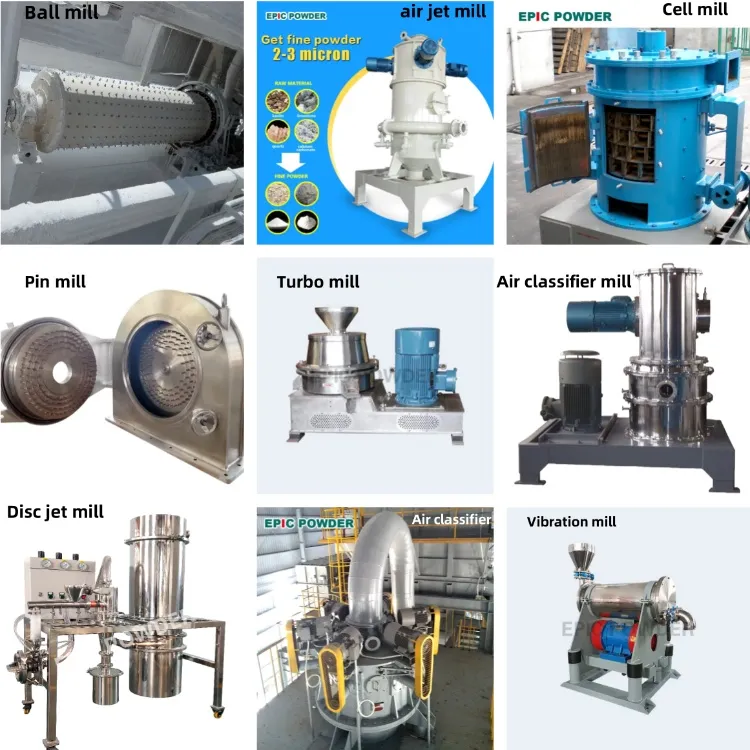
These four ultrafine grinding machines do not spend their electricity in the same place. A jet mill spends it on compressed air. An impact mill spends it on rotor impact. A stirred mill spends it on media shear. A ball mill spends it on turning the shell.
| Route | Typical size | Energy profile | Where it pays off |
| ジェットミル | D50 2–10 μm | Highest. Effective utilization below 20% | High-value powders that fear metal contamination, are heat-sensitive, or need a narrow distribution |
| インパクトミル | D50 tens of μm | Lowest tier. Energy delivered directly | Large throughput, undemanding fineness |
| Stirred mill | D97 down to the 1–2 μm range | Moderate. Saves 25%–50% versus a ball mill | Wet ultrafine grinding, continuous large-scale duty |
| ボールミル | 200 mesh to tens of μm | Most power-hungry. Wins on ruggedness | Coarse grinding stage, capital-sensitive projects, hard material at high tonnage |
Note: the size and energy figures are typical operating ranges. The same machine can vary several-fold in energy use across different materials and target fineness. Always calibrate against actual measurements.
ジェットミル
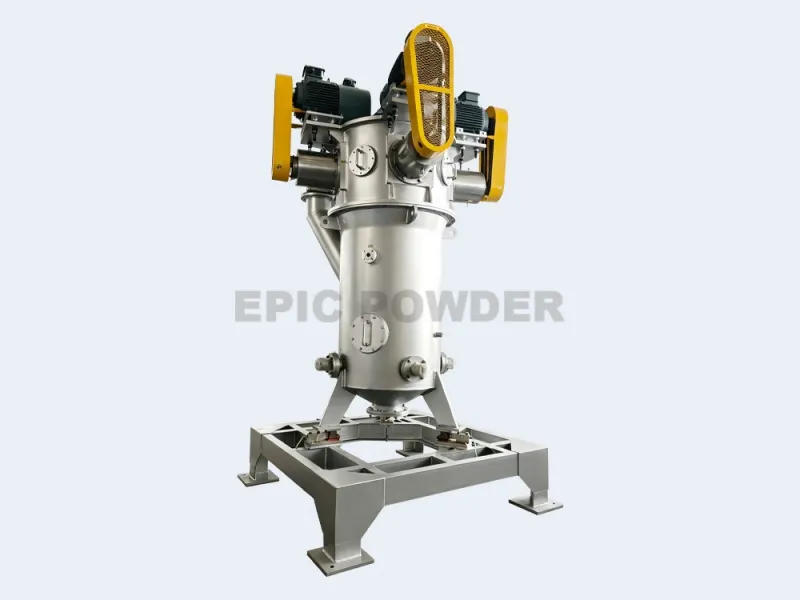
The jet mill is expensive because of the degradation of energy. One patent description puts it bluntly. Energy must first pass through an air compressor and become a high-velocity gas stream before it can drive the particles. The quality of that energy drops during conversion. In the end, less than 20% goes into effective size reduction.
What does that money buy? No media contamination, a narrow particle size distribution, a low-temperature chamber, and the option of inert gas shielding. For heat-sensitive, low-melting-point, or metal-ion-sensitive high-value powders, it is money worth spending.
But the finer you go, the less it pays. Once D50 drops below 10 μm, throughput falls off noticeably and cost climbs steeply. The sub-micron range is no longer its home ground.
機械式インパクトミル
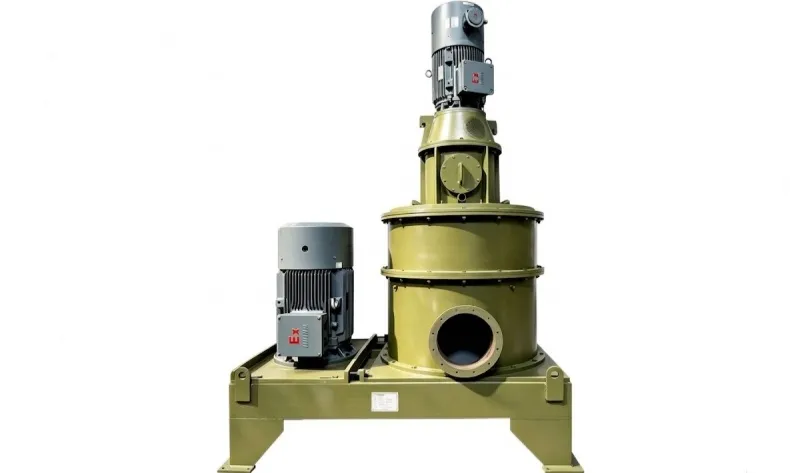
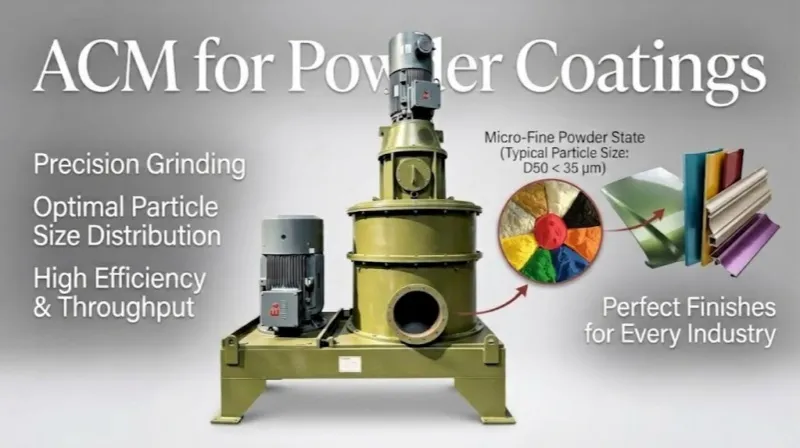
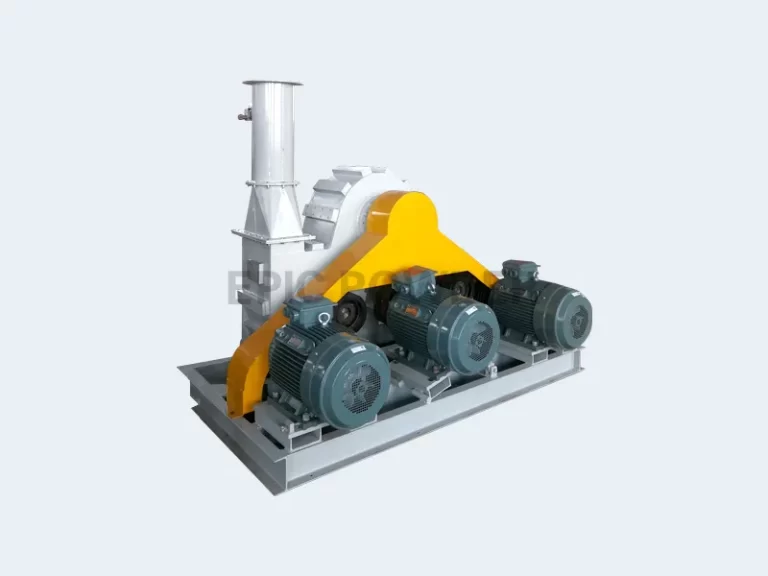
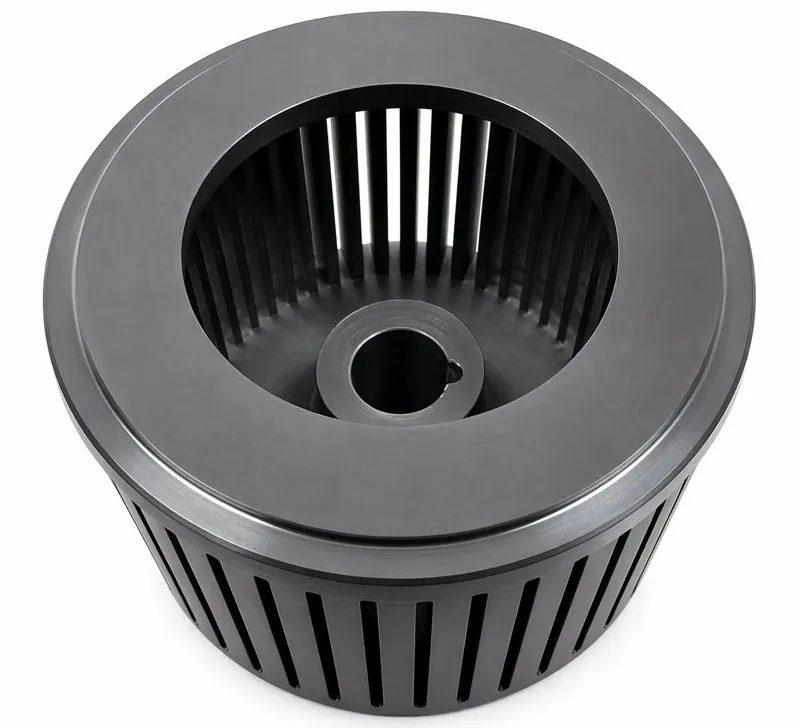
The mechanical impact mill sits at the lowest unit energy consumption of the four routes. The motor drives the rotor directly. Energy travels through hammers or pins and strikes the particles with the fewest intermediate steps. Throughput is high and investment is low.
Its ceiling is fineness. It usually lands somewhere between ten and a few tens of microns. Push below that and efficiency decays fast, while wear on hammers and liners rises sharply. Heat-sensitive materials also have to worry about temperature rise.
Stirred Mill
The stirred mill replaces “rotating the entire shell” with “driving only the agitator.” Energy goes straight into the media, producing high-intensity shear and collision. Its energy density is several times that of a ball mill, so it presses the particle size down to the D97 1–2 μm range more easily.
Domestic mill selection cases report power savings of 25%–50%, a grinding efficiency gain of 10–20 percentage points, and roughly 9.8% lower media consumption. The trade-off is that it mostly runs wet. Drying and classification have to follow downstream.
ボールミル
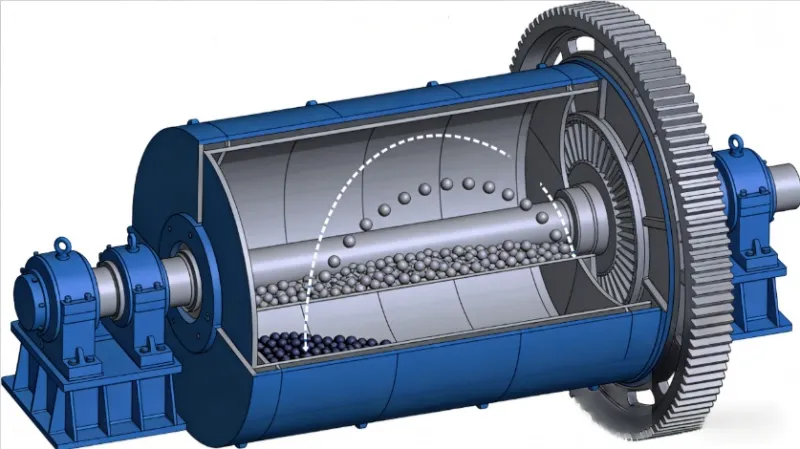
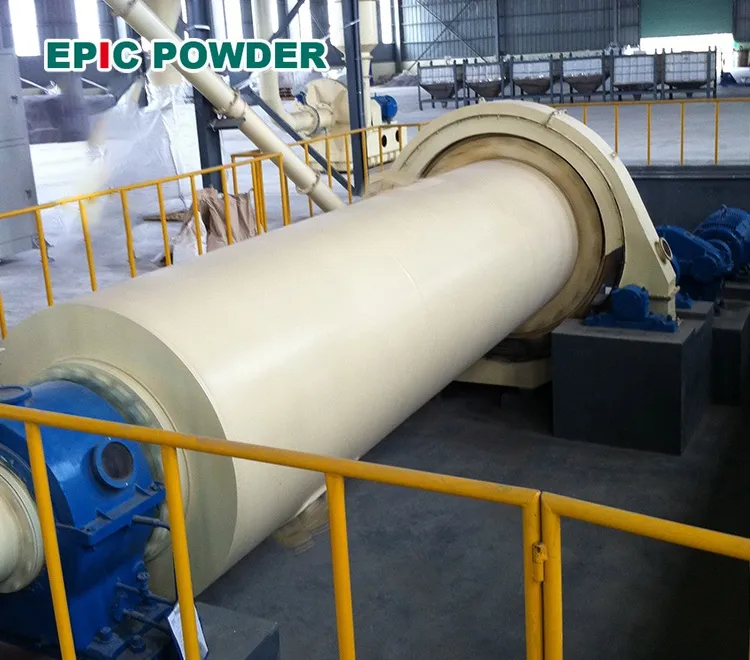
The ball mill is the most power-hungry of the four. The motor must first overcome the dead weight of the shell and the media. A substantial share of the energy turns into heat, noise, and liner wear.
Its advantages are just as solid, though. Capital cost is low, the structure is rugged, and it handles hard material and high tonnage well. In a coarse grinding stage, or wherever fineness demands are modest, its total cost is still the lowest.
3. How to Choose: Four Decision Lines
- Start with the fineness threshold. Above 45 μm, an impact mill or an improved Raymond mill is enough. Between 10 and 45 μm is the contest zone between the impact mill and the stirred mill. Below 10 μm, the choice is essentially between a stirred mill and a jet mill.
- Then look at purity and contamination. Battery materials and electronic ceramics cannot tolerate metal ions. Give priority to a jet mill. Alternatively, choose a stirred mill or sand mill with ceramic linings and zirconia media.
- Then look at wet vs. dry and heat sensitivity. If wet processing is acceptable, the stirred mill is usually the most economical. If it must be dry and the material degrades when heated, the low temperature and inert atmosphere of a jet mill become a hard requirement.
- Finally, calculate the full cost. Do not compare electricity alone. Media consumption, wear parts such as nozzles, hammers and liners, classification efficiency, dust collection and exhaust — all of it belongs on the ledger. Over a five-year horizon, the purchase price is often not the big item. Operating cost is what decides whether the line makes money.
4. Three Observations
- The gap is often in the circuit, not the main machine. On the same main machine, how well classification is matched, how stable the feed is, and whether the media grading is sensible can sometimes cause a bigger difference than switching machine types.
- Beware of “the finer the better.” Push the size down one notch and energy consumption jumps a whole level. Downstream may not need it. Confirm first whether what actually matters is D50, D97, or specific surface area.
- Treat kWh/t as an operating-condition value, not a machine value. When you ask for data, always ask for the material, the particle size, and the capacity along with it. Otherwise the number you receive cannot be compared sideways.
Choosing a ultrafine grinding machine is not about picking the one that uses the least power. It is about picking the one that uses the least power at the particle size you actually need.

“Thanks for reading. I hope my article helps. Please leave a comment down below. You may also contact Molly online customer representative for any further inquiries.”
— 投稿者 エミリー・チェン