目次

粉体空気分離機:微粒子の精密な「分離」を実現するには?

化学、製薬、, 食べ物 processing, and new energy, controlling the particle size of powders directly determines product quality and production efficiency. For example, battery materials require uniform particle distribution to ensure conductivity; pharmaceutical powders must be precisely classified to control dosage accuracy; and food powders need consistent solubility and mouthfeel. The key equipment that enables these objectives is the powder 空気分級機—a highly efficient device that uses aerodynamic principles to precisely separate particles of different sizes.

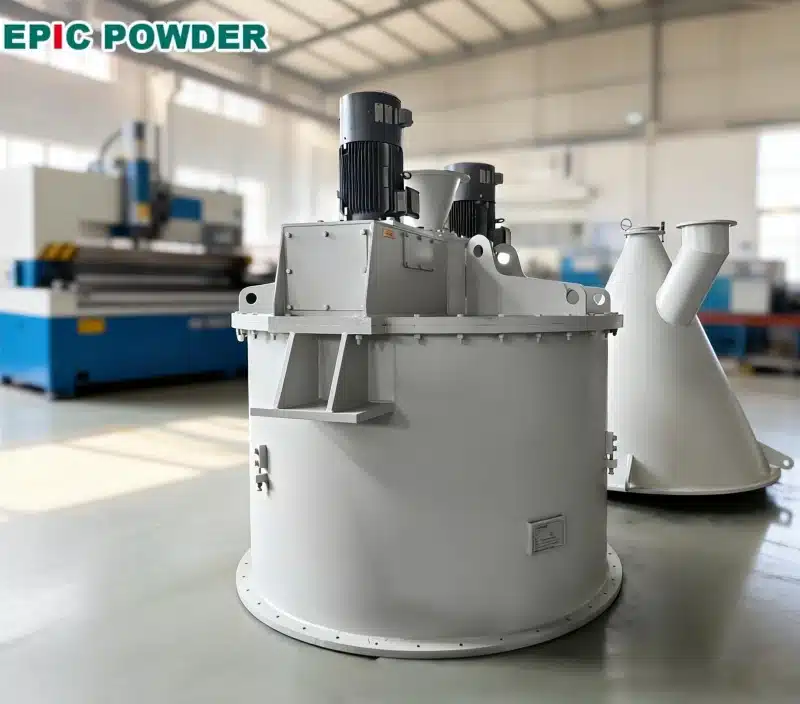
Powder air classifier-CTC-3 01

1. Classification Principle: How Does Airflow Become a “Sorter”?

The core principle of a powder air classifier lies in exploiting the differences in forces acting on particles within an airflow. When mixed powders are introduced into the 分類 chamber at high speed:

  • Coarse particles: Due to their larger mass and stronger inertia, they directly impact the classifier wheel or chamber wall and settle;
  • Fine particles: With smaller mass, they follow the airflow and pass through the gaps of the classifier wheel, achieving separation between coarse and fine fractions.

This process is similar to traditional sieving, but unlike sieves, air classification does not require a physical screen, avoiding clogging, wear, and overheating. Moreover, it can handle micron-sized particles (typically 1–100 μm), achieving higher precision in classification.

For instance, in calcium carbonate processing, an 空気分級機 can separate raw material into multiple grades such as 200 mesh, 325 mesh, and 600 mesh to meet different application requirements: fine powder for paper fillers improves surface smoothness, while coarser powder enhances the toughness of plastics. This level of classification precision far surpasses traditional sieving equipment, and overall production efficiency can increase by over 30%.

2. Equipment Structure: Four Key Modules Working in Harmony

A typical air classifier consists of four essential modules, each working closely to ensure precise classification and stable output:

  1. 給餌システム
    • Uniformly delivers powders into the classification chamber via a vibrating feeder or screw conveyor, preventing local accumulation or airflow disturbances.
  2. Classification Chamber
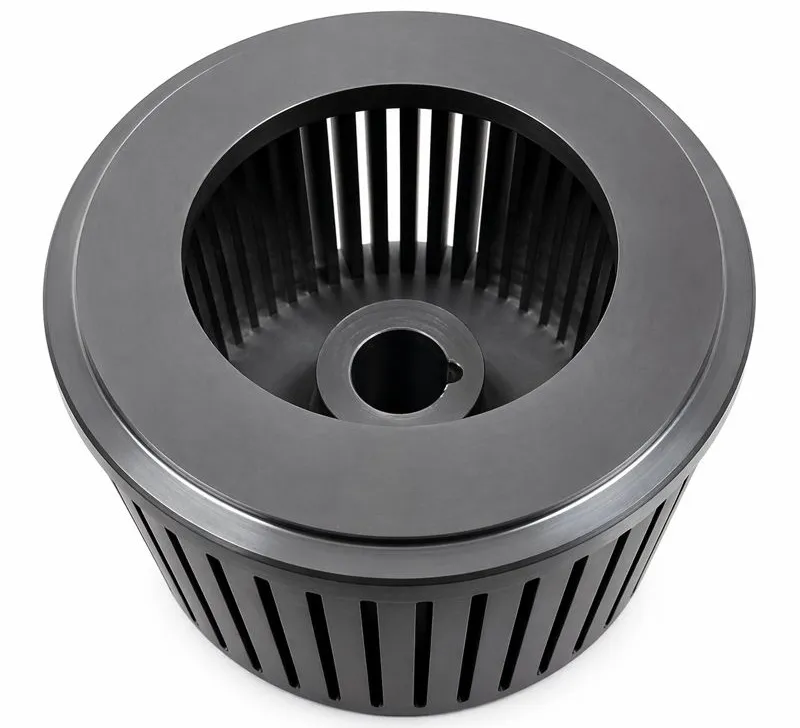
    • The core component contains a high-speed rotating classifier wheel (rotor). The design, material (such as high-purity alumina ceramic or tungsten carbide wear-resistant coating to prevent metal contamination), and machining precision of the blades are extremely high. By adjusting the rotor speed with a variable frequency drive, the cut-off particle size (d50) can be precisely controlled.
  3. Airflow System
    • Powered by a downstream high-capacity, high-pressure induced draft fan, creating a strictly negative pressure environment. This ensures stable particle transport while preventing any dust from escaping the system.
  4. 収集システム
    • Fine powder passing through the classifier wheel first enters a high-efficiency cyclone separator (collecting over 90% of the target fine powder), while ultrafine tailings are captured by a pulse bag filter or sintered plate filter. Clean air is discharged after purification, achieving a comprehensive collection efficiency of up to 99.9%.
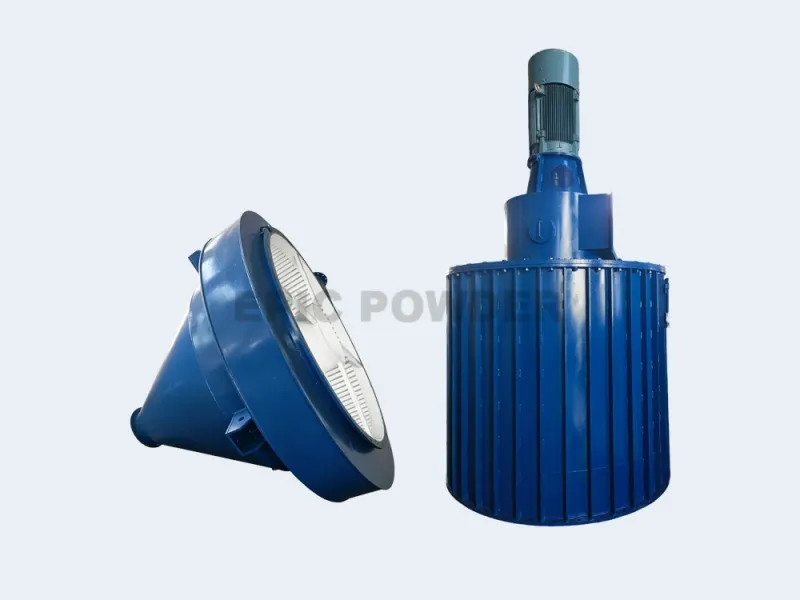
ITC-6 粉体空気分離器

3. Technical Advantages: Precision, Efficiency, and Environmental Friendliness in One

Compared with traditional sieving equipment, air classifiers offer three significant advantages:

  1. High Classification Precision
    • By adjusting rotor speed and airflow, micron-level particle separation is achievable, resulting in a more uniform particle size distribution.
  2. No Screen Wear, メンテナンス Cost Reduced by 50%
    • Traditional screens are consumable items, requiring frequent replacement and potentially contaminating products. Air classifiers often employ ceramic liners for wear protection, enabling continuous operation for thousands of hours without shutdown, significantly lowering overall operating costs.
  3. 優れた環境性能
    • Fully enclosed design prevents dust leakage, complying with modern industrial clean production standards.

For example, in lithium-ion battery cathode material production, air classifiers can grade precursor powders into D50 = 3 μm, 5 μm, 8 μm, etc., ensuring the stability of battery energy density and cycle life—a level of precision difficult to achieve with traditional equipment.

4. Application Scenarios: From Food to New Energy

The application boundaries of powder air classifier is expanding rapidly alongside the global boom in new materials industries.

Industry SectorTypical MaterialsCore Value Brought by Air Classification
New Energy BatteriesCathode (NCM/LFP), Anode (Si-C/Graphite)Strictly control d50 and d100 to eliminate the risk of large particles piercing the separator, greatly improving battery energy density and safety life.
Modern PharmaceuticalsInhalable powders, APIs, ultrafine herbal powdersAchieve micron-level controlled release, remove impurities, and significantly improve bioavailability and absorption rate of active pharmaceutical ingredients.
Semiconductors & PhotovoltaicsSilicon carbide (SiC) polishing powder, high-purity crystalline siliconRemove oversized particles (prevent wafer scratches), provide highly consistent particle size for slicing and polishing micro powders.
Advanced Chemical FillersUltrafine calcium carbonate, titanium dioxide, calcined kaolinPrecisely classify raw materials into 1250 mesh, 2500 mesh, 5000 mesh grades for high-end paper and automotive coatings.
Health FoodsBroken-wall spore powder, microencapsulated probiotics, superfine flourImprove texture by eliminating granular feeling, enhance solubility and flavor release efficiency for instant products.

Moreover, air classifiers can be integrated with ultrafine grinding equipment to achieve “one-step” superfine powder processing, further expanding their industrial applications.

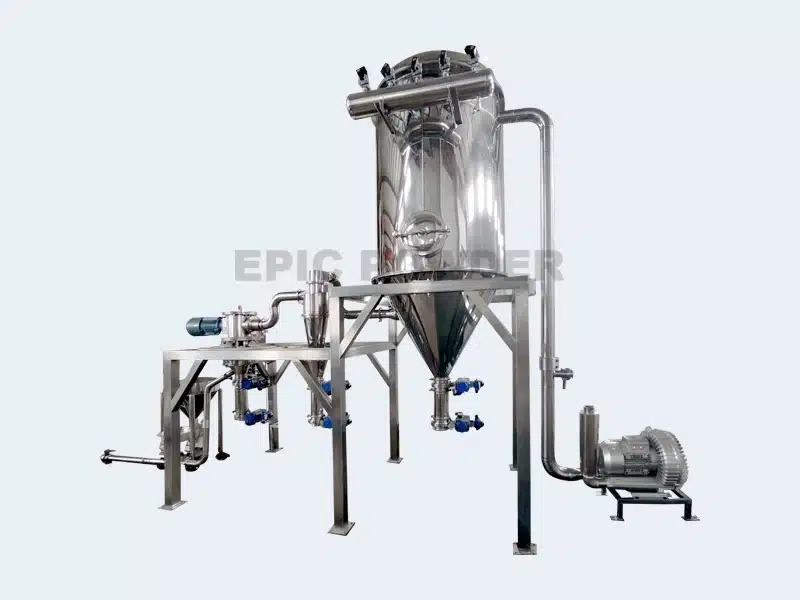
HTS100

5. Conclusion: The “Separation Art” of Fine Particles Holds Great Wisdom

From microscopic particle size to macroscopic industrial impact, powder air classifier precisely control particle size, providing crucial support for high-quality development across multiple industries. Whether enhancing product performance, reducing production costs, or meeting environmental standards, this equipment demonstrates irreplaceable value.

In the future, with growing demands for precision manufacturing, green production, and high-performance materials, the application prospects of air classification technology are even broader. Every precise “separation” of fine particles could incubate the next industry innovation and breakthrough.


エミリー・チェン

“お読みいただきありがとうございます。この記事がお役に立てば幸いです。ご意見・ご感想は下のコメント欄にお寄せください。その他ご質問がございましたら、ゼルダのオンラインカスタマーサポートまでお問い合わせください。”

— 投稿者 エミリー・チェン
お問い合わせ

弊社の専門家が 6 時間以内にお客様に連絡し、機械とプロセスに関するお客様のニーズについてご相談させていただきます。

    あなたが人間であることを証明するために、

    関連記事