Material Information

Powder materials are crucial in many industries, including pharmaceuticals, metallurgy, and additive manufacturing. These fine particles, sized from micrometers to millimeters, have unique properties. They are suitable for many applications. It is key to know the traits and behaviors of powders. This is vital for optimizing processes and getting the desired results.

A key factor in powder material is its particle size and distribution. These factors significantly influence the flowability, packing density, and reactivity of the powders. In additive manufacturing, a narrow range of particle sizes can improve layer uniformity. This leads to better mechanical properties in the final product.

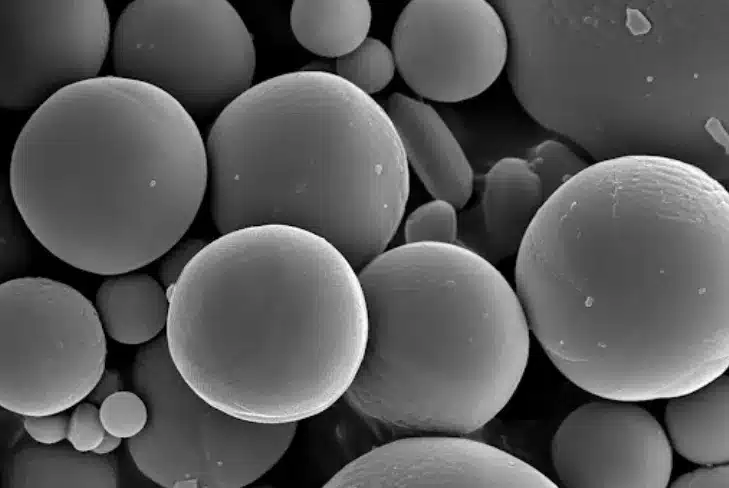
Another important aspect is the morphology of the particles. The shape and surface texture of powder materials can affect their behavior during processing. Spherical powders flow and pack better than irregularly shaped particles. So, they are ideal for 3D printing.

Also, the chemical composition of powder materials is critical in fields like pharmaceuticals. There, purity and consistency are vital. Manufacturers must ensure that powders meet strict quality standards. This is to guarantee the efficacy and safety of end products.

Lastly, it is vital to understand how to store and handle powder materials. This prevents contamination and degradation. Good techniques can keep powders intact. They will then work well in their intended uses.

In conclusion, powder material info includes many factors. These are particle size, morphology, chemical composition, and handling practices. A thorough grasp of these elements is vital for industries that use powder materials to innovate and improve their products.

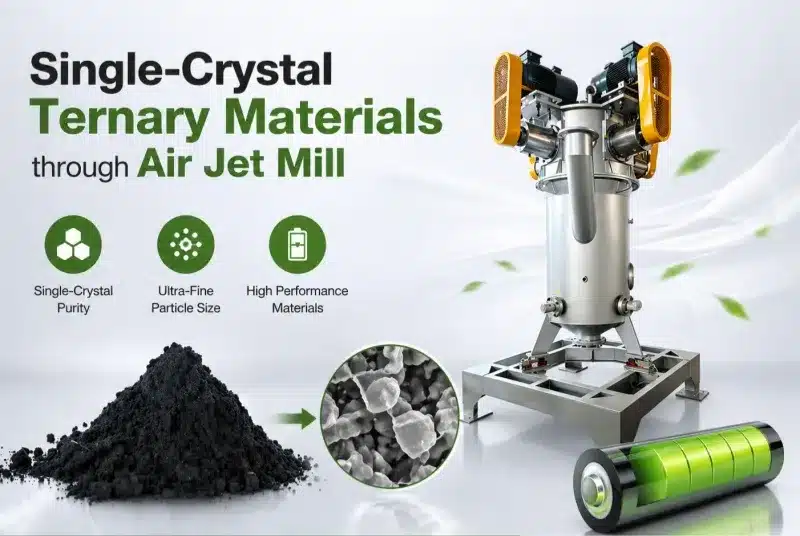
Ternary Materials Air Jet Mill

How to Overcome the “Agglomeration” Problem of Single-Crystal Ternary Materials through Air Jet Mill ?

In the field of modern lithium battery materials, single-crystal ternary materials—such as LiNiₓCoᵧMn₁₋ₓ₋ᵧO₂—have become a major focus for power battery cathodes. They are highly valued for their excellent cycle stability, high energy density, and safety. However, as material particle sizes continue to be refined for higher performance, these materials commonly face the issue of “agglomeration” […]

How to Overcome the “Agglomeration” Problem of Single-Crystal Ternary Materials through Air Jet Mill ? Read More »

ball mill classification production line

Lithium Mica to Lithium Carbonate Process: How Should Front-End Grinding Equipment Be Configured?

Lithium resources are a key raw material for the new energy industry, and one of the most important downstream products is lithium carbonate. The production of lithium carbonate primarily relies on lithium mica, spodumene, and other ores. Among them, lithium mica, due to its abundant reserves and relatively low mining cost, plays a significant role

Lithium Mica to Lithium Carbonate Process: How Should Front-End Grinding Equipment Be Configured? Read More »

Fly Ash Ball Mill +Classifier System

Is Finer Fly Ash Always Better? Balancing Optimal Fineness, Performance, and Grinding Equipment to Avoid the “Fineness Trap”

In the context of continuously advancing utilization of fly ash resources, the notion that “the finer, the more valuable” has become widely accepted across the industry. Whether used as a cement admixture, a concrete additive, or a high-end functional filler, increasing numbers of companies are treating fly ash grinding and ultrafine processing as the core

Is Finer Fly Ash Always Better? Balancing Optimal Fineness, Performance, and Grinding Equipment to Avoid the “Fineness Trap” Read More »

Dry Modification of Fly Ash

Is Dry Modification of Fly Ash Better than Chemical Activation for Cementitious Materials

Many engineers and contractors ask: Which treatment method improves fly ash better—dry modification or chemical activation? Both methods aim to boost fly ash reactivity and enhance concrete performance, but they do so in different ways. Understanding what each process involves, their advantages, and limitations helps in making the best choice for specific projects. Dry Modification

Is Dry Modification of Fly Ash Better than Chemical Activation for Cementitious Materials Read More »

0715-acm--MJW-W

Powder Milling and Grinding: Principles, Equipment, and How to Choose the Right Solution

Whether you’re processing food ingredients, chemicals, or minerals, selecting the right grinding technology is critical to product quality and production efficiency. This guide covers the core principles of solid particle milling and walks through the key equipment types — so you can make confident decisions for your process. 1. The Fundamentals of Solid Particle Grinding

Powder Milling and Grinding: Principles, Equipment, and How to Choose the Right Solution Read More »

Air-classifier-mill-calcium-carbonate

Air Classifier Mill vs Raymond Mill: A Technical Comparison for Fine Powder Producers

The Raymond mill has been in continuous production use for over a century. For many applications that need medium-fineness minerals at modest throughput, it still works. The question is not whether Raymond mills can produce powder, but whether they are the right choice for your specific target fineness, material, and operating economics. For producers targeting

Air Classifier Mill vs Raymond Mill: A Technical Comparison for Fine Powder Producers Read More »

spherical-resin-tuobo-mill

How to Produce 5μm D50 Spherical Resin Powders with Turbo Mill & Air Classifier

Producing resin powder at D50 5 microns is harder than the particle size target alone suggests. Resins are not brittle in the way that minerals are — they have some toughness and elasticity, they soften under frictional heat, and they tend to shatter into irregular angular fragments rather than rounded particles when ground with conventional

How to Produce 5μm D50 Spherical Resin Powders with Turbo Mill & Air Classifier Read More »

Ceramic grading wheel

Ceramic Wheel Classifiers for Battery Materials: Eliminating Metal Contamination Without Compromising Precision

Metal contamination is one of the most serious quality risks in battery material production. A few parts per million of iron, nickel, or copper in a cathode or anode powder is enough to trigger unwanted electrochemical side reactions, accelerate capacity fade, or — in the worst case — cause a short circuit or thermal runaway

Ceramic Wheel Classifiers for Battery Materials: Eliminating Metal Contamination Without Compromising Precision Read More »

Classifier Mill for Resin Coated Powder

How to Prevent Resin Overheating in Powder Coating Milling – and Why It Is Costing You More Than You Think

If your powder coating is showing gloss inconsistency, unexpected brittleness, or particle size that varies between batches, the grinding step is the most likely place to look. Overheating during milling is one of the most common – and most underdiagnosed – quality problems in powder coatings production. The resins at the heart of most powder

How to Prevent Resin Overheating in Powder Coating Milling – and Why It Is Costing You More Than You Think Read More »

2026 Inter Battery Jet Mill

Epic Powder to Exhibit at InterBattery 2026 in Seoul | Jet Mills for Battery Material Grinding

Epic Powder is excited to announce that we will participate in InterBattery 2026, one of the most influential exhibitions for the global battery industry. The event will take place from March 11 to March 13, 2026, at the COEX Convention & Exhibition Center in Seoul, Korea. As a professional manufacturer of ultrafine powder processing equipment,

Epic Powder to Exhibit at InterBattery 2026 in Seoul | Jet Mills for Battery Material Grinding Read More »