Most people still think of powders as nothing more than “dust, fillers, and excipients.” Yet few realize something important: powders give modern industry half of its underlying character.
Coatings rely on them for color and brightness. Plastics depend on them for reinforcement and modification. New-energy batteries need them for thermal conductivity and flame retardancy. Ceramics and refractories use them for shaping and heat resistance.
Powders are not supporting actors. They are foundational, indispensable materials running through the entire industrial chain.
As manufacturing moves toward precision upgrading in 2026 — and as new energy and advanced materials keep booming — this seemingly traditional industry is quietly entering a new round of structural opportunity.
1. Powders Are Everywhere: Everything Can Be “Powdered”
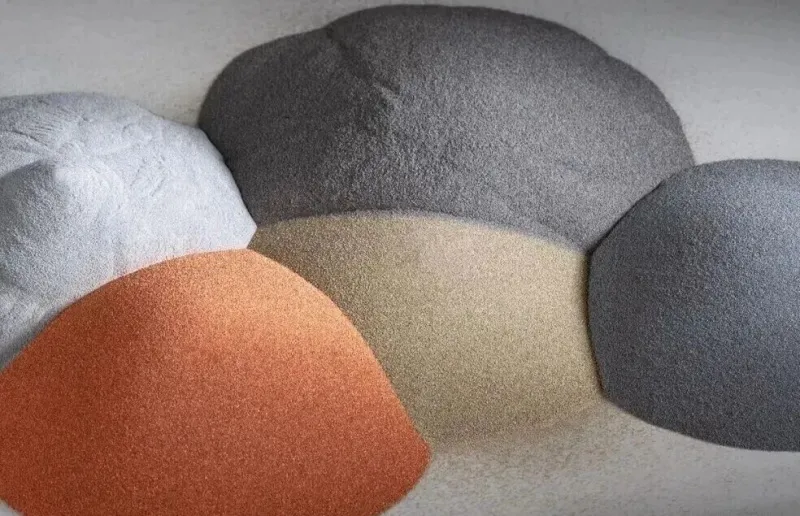
In daily life, almost every industrial product contains powder. It exists in powder form, hidden inside formulations, substrates, and coatings. That is exactly why it is so easily overlooked.
Common industrial powders fall into several core categories, spanning construction materials, chemicals, rubber and plastics, coatings, new energy, electronics, and personal care.
Mineral base powders — the largest volume and the strongest demand
Calcium carbonate, talc, kaolin, quartz powder, silica micro-powder, barium sulfate, dolomite powder, feldspar powder, bentonite, attapulgite, diatomite, and more.
As the most basic fillers and functional base materials in industry, they cut cost, reinforce, whiten, improve wear resistance, prevent settling, and enhance weatherability. They are the “cornerstone powders” of all manufacturing.
Functional flame-retardant powders — a new-energy necessity
Aluminum hydroxide, magnesium hydroxide, and similar materials. They deliver flame retardancy, smoke suppression, and high-temperature resistance. They are widely used in wire and cable, plastics, lithium battery materials, and fireproof coatings.
Metal and oxide powders — the core of high-end manufacturing
Titanium dioxide, zinc oxide, alumina, zirconia, iron oxide pigments, aluminum powder, copper powder, and more. They serve pigments, polishing, thermal conduction, electrical conduction, ceramics, and precision manufacturing.
Carbon-based powders — the high value-added track
Carbon black, graphite powder, activated carbon, graphene, and carbon nanotubes. They cover reinforcement, electrical and thermal conduction, adsorption, and environmental purification.
Organic and plant-based powders
Wood flour, bamboo powder, starch, cellulose, resin powder, and more. They suit wood-plastic composites, eco-friendly materials, personal care, and pharmaceutical excipients.
What looks like an ordinary pile of powder can differ enormously in performance, price, and end use. Small differences in particle size, purity, whiteness, activity, or modification process are enough to change everything.
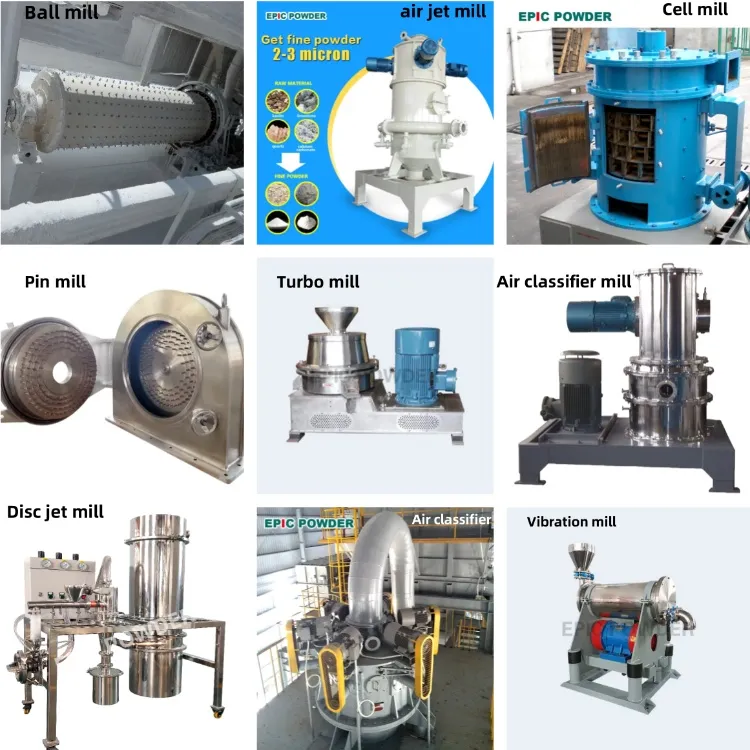
2. The Powder Industry Has Moved Beyond “Just Selling Powder”
In the past, people in this business competed on resources, price, and supply. During the era of rough, extensive growth, having stock was enough to move volume.
In the past two years, that logic has completely changed.
Low-end, homogeneous powders are trapped in brutal competition. High-end, refined powders are in short supply. Downstream customers no longer look only at a cheap price. They increasingly value:
- ✅ Stable particle size and consistent batches
- ✅ High whiteness, low impurities, strong stability
- ✅ Effective surface activation and modification, strong compatibility
- ✅ A fit with their formulation, and the ability to solve real production pain points
Simply put: low-end powders compete on price. High-end powders compete on technology, solutions, and stability.
Moving from “raw material supply” to “functional material solutions” is the single biggest shift in this industry.
3. Where Is the Opportunity in 2026?
Manufacturing as a whole is moving toward precision, lightweight design, environmental protection, and high performance. This directly drives four new growth areas for powders.
1) The new-energy powder track keeps exploding
Lithium batteries, energy storage, charging piles, and new-energy cables are driving rising demand for flame-retardant powders, thermally conductive powders, high-purity silica micro-powder, and ultrafine functional powders. The supply gap at the high end is enormous.
2) Eco-friendly, halogen-free, low-smoke materials become a hard requirement
Policy is forcing industrial upgrading. Traditional toxic and heavily polluting additives are being phased out step by step. Green inorganic powders and eco-friendly fillers are replacing them across the board.
3) Coatings, rubber and plastics, and building materials upgrade across the board
Finished products now compete on quality, weatherability, and appearance. This pushes powder producers to upgrade toward ultrafine, ultra-white, surface-modified, and application-specific grades.
4) Domestic substitution in high-end ceramics, precision electronics, and advanced materials
High-purity quartz powder, alumina, zirconia, and functional micro-powders are accelerating the replacement of imports. The room for localization is huge.
4. What Really Has Value Is “Powder That Understands the Application”
Today’s powder market is clear. Ordinary powders fight a race to the bottom. Refined powders capture the upside.
What customers lack is never “powder” itself. It is a functional powder solution that is stable, well-matched, and able to solve real production problems.
Whoever can deliver batch consistency, controllable parameters, customized modification, and scenario fit will survive the industry’s price war — and keep earning.
Competition in the powder industry of the future will no longer be about who controls the source material. It will be about technology, service, and refined

“Gracias por leer. Espero que mi artículo les haya sido útil. Dejen sus comentarios abajo. También pueden contactar al servicio de atención al cliente de Molly para cualquier otra consulta.”
— Publicado por Emily Chen