Material Information

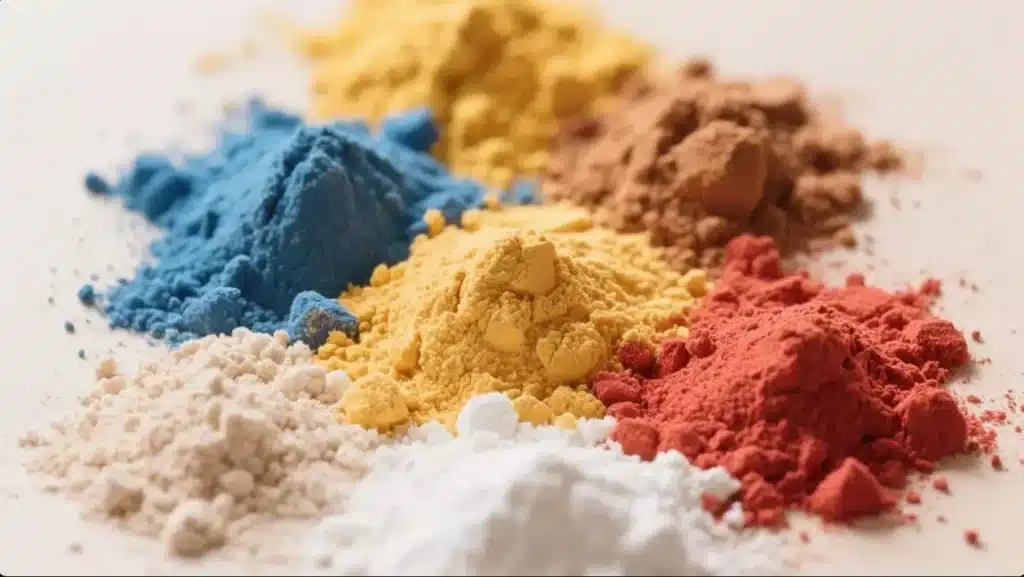
Powder materials are crucial in many industries, including pharmaceuticals, metallurgy, and additive manufacturing. These fine particles, sized from micrometers to millimeters, have unique properties. They are suitable for many applications. It is key to know the traits and behaviors of powders. This is vital for optimizing processes and getting the desired results.

A key factor in powder material is its particle size and distribution. These factors significantly influence the flowability, packing density, and reactivity of the powders. In additive manufacturing, a narrow range of particle sizes can improve layer uniformity. This leads to better mechanical properties in the final product.

Another important aspect is the morphology of the particles. The shape and surface texture of powder materials can affect their behavior during processing. Spherical powders flow and pack better than irregularly shaped particles. So, they are ideal for 3D printing.

Also, the chemical composition of powder materials is critical in fields like pharmaceuticals. There, purity and consistency are vital. Manufacturers must ensure that powders meet strict quality standards. This is to guarantee the efficacy and safety of end products.

Lastly, it is vital to understand how to store and handle powder materials. This prevents contamination and degradation. Good techniques can keep powders intact. They will then work well in their intended uses.

In conclusion, powder material info includes many factors. These are particle size, morphology, chemical composition, and handling practices. A thorough grasp of these elements is vital for industries that use powder materials to innovate and improve their products.

Diatomite Powder

The Versatile World of Functional Fillers – From Kaolin to Silica – Part 2

In Part 1, we uncovered the secrets behind stronger and more cost-effective plastics, exploring the fundamental roles of calcium carbonate, talc, and wollastonite. But the world of plastic fillers doesn’t stop there. Now, let’s discover how materials like kaolin, mica and silica can be the key to your next innovative plastic compound. Kaolin Kaolin (Al₂O₃·2SiO₂·2H₂O), […]

The Versatile World of Functional Fillers – From Kaolin to Silica – Part 2 Read More »

plastic

The Versatile World of Functional Fillers – From Kaolin to Silica – Part 1

Have you ever wondered why some plastic products outperform others in strength, durability, and cost-effectiveness? The secret often lies not in the base polymer itself, but in the sophisticated world of plastic modification through functional fillers. These mineral powders, when properly selected and incorporated, can dramatically enhance material properties while reducing production costs. In this

The Versatile World of Functional Fillers – From Kaolin to Silica – Part 1 Read More »

Ball mill0

Q&A: Why is Aluminum Powder Used in the Production of Aerated Concrete Blocks?

This article explores the critical role of aluminum powder in manufacturing aerated concrete blocks—a lightweight, energy-efficient building material. Specifically, we will examine how aluminum powder enables the formation of the material’s distinctive porous structure and review the grinding equipment offered by Epic Powder, a specialist in ultra-fine powder processing technology. Q1: Why is aluminum powder

Q&A: Why is Aluminum Powder Used in the Production of Aerated Concrete Blocks? Read More »

Lithium Iron Phosphate

Is Ceramic Protection Needed in Lithium Iron Phosphate Pulverization?

In the production of lithium iron phosphate (LFP) batteries, maintaining material purity is critical to ensuring electrochemical performance and safety. One key process, the pulverization of LFP cathode materials often raises the question of whether ceramic protection is necessary. Below, we explore the importance of ceramic protection during the grinding process. As a cathode material

Is Ceramic Protection Needed in Lithium Iron Phosphate Pulverization? Read More »

Carbon black

Pulverization of Carbon Black with Epic Powder Air Classifier Mills

As a leading supplier of ultrafine powder processing solutions, Qingdao EPIC Powder Machinery Co., Ltd. is at the forefront of technological innovation in carbon black milling. This article provides a comprehensive technical overview of the pulverization and classification process for carbon black using air classifier mills, underpinned by robust market and application data to help

Pulverization of Carbon Black with Epic Powder Air Classifier Mills Read More »

Alumina Ceramic

Can Alumina Ceramics’ Brittleness Be Overcome?

As one of the oldest members of the advanced ceramics family, Al₂O₃ ceramics (alumina ceramics) possess a range of outstanding properties unmatched by other ceramic materials. These include low cost, high strength and hardness, excellent heat resistance, wear resistance, and corrosion resistance. Alumina ceramics are widely used in national defense, aerospace, and biomedical fields. However,

Can Alumina Ceramics’ Brittleness Be Overcome? Read More »

Nano Calcium Carbonate

Why is Nano Calcium Carbonate Added to Photovoltaic Glue?

Silicone sealant is a new type of polymer sealing material. Due to its silicon-oxygen structure and organic groups, it is endowed with excellent UV resistance, high and low temperature resistance, and high humidity resistance. In addition, silicone sealant has a strong bonding effect on substrates such as metal, glass, ceramics, and plastic. It is widely

Why is Nano Calcium Carbonate Added to Photovoltaic Glue? Read More »

方解石

The Formation and Properties of Limestone and Chalk

Limestone and chalk are essential minerals widely used in various industries such as construction, agriculture, and even cosmetics. Understanding their formation, properties, and processing methods is crucial for maximizing their potential in industrial applications. This article explores the geological origins and characteristics of limestone and chalk, while also highlighting how Epic Powder Machinery’s jet mills

The Formation and Properties of Limestone and Chalk Read More »

Black Talc1

Non-metallic Mineral Dark Horse in 12 Potential Markets

Black talc is a silicate mineral with a main chemical composition of Mg3(Si4O10)(OH)2. Due to its graphene-like organic matter, it apprears black or gray-black. It is soft and has good electrical insulation and heat resistance. It is resistant to strong acids and alkalis, has a strong adsorption effect on grease, and possesses excellent lubricity. Its

Non-metallic Mineral Dark Horse in 12 Potential Markets Read More »

Cosmetics 3

What Mineral Powders Are Common in Cosmetic Products?

When individuals purchase makeup products, they typically consider factors such as color, texture, and price — rather than the raw materials used in their formulation. In fact, these details are often deliberately downplayed in promotional materials. While the exact reason remains unclear, one possible explanation is that cosmetic brands may prefer to avoid creating an

What Mineral Powders Are Common in Cosmetic Products? Read More »