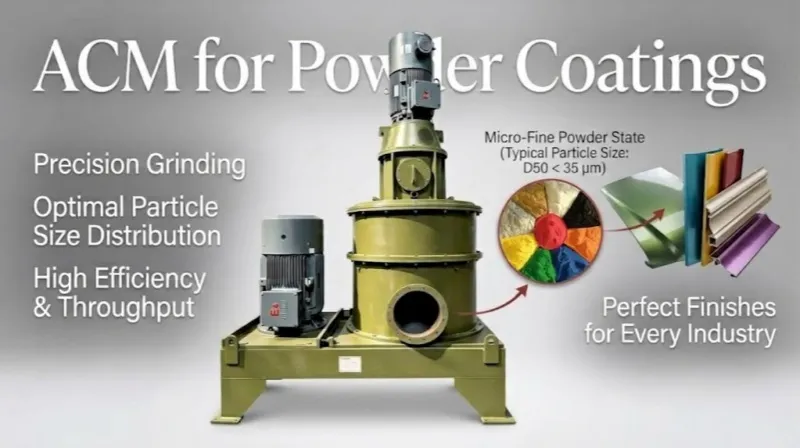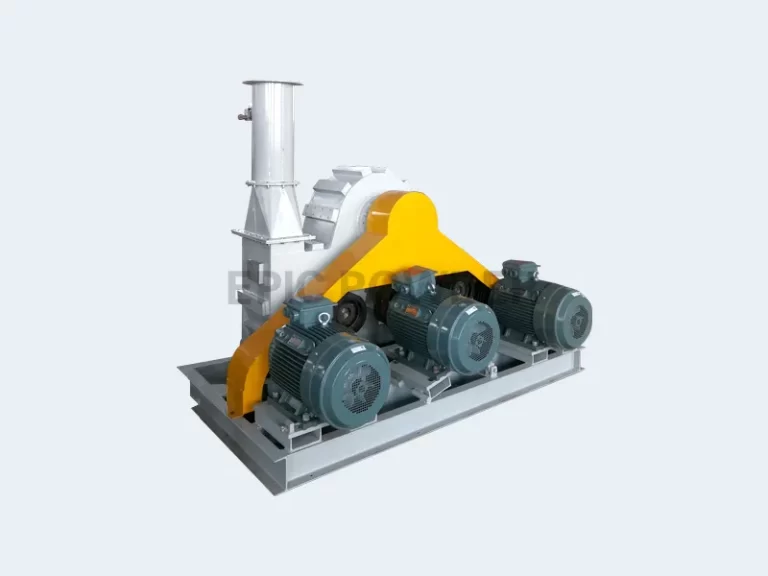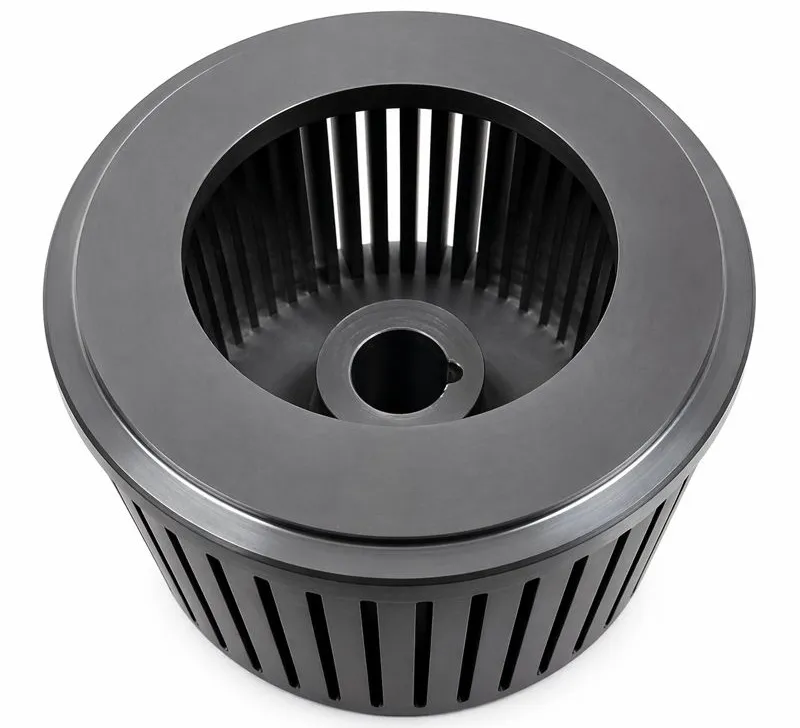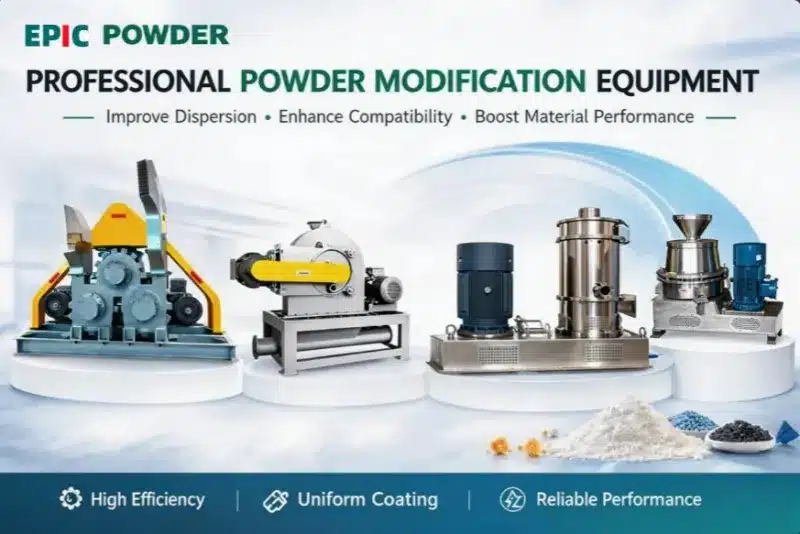
Jet milling is a dry grinding process that uses high-velocity compressed air or steam to create particle-on-particle collisions inside the mill chamber. Unlike traditional mills with rotating blades or balls, jet mills rely on this aerodynamic energy to micronize graphite powder with precision. This method makes jet mills especially suitable for graphite micronization because the particles impact each other rather than coming into contact with metal parts, minimizing contamination.
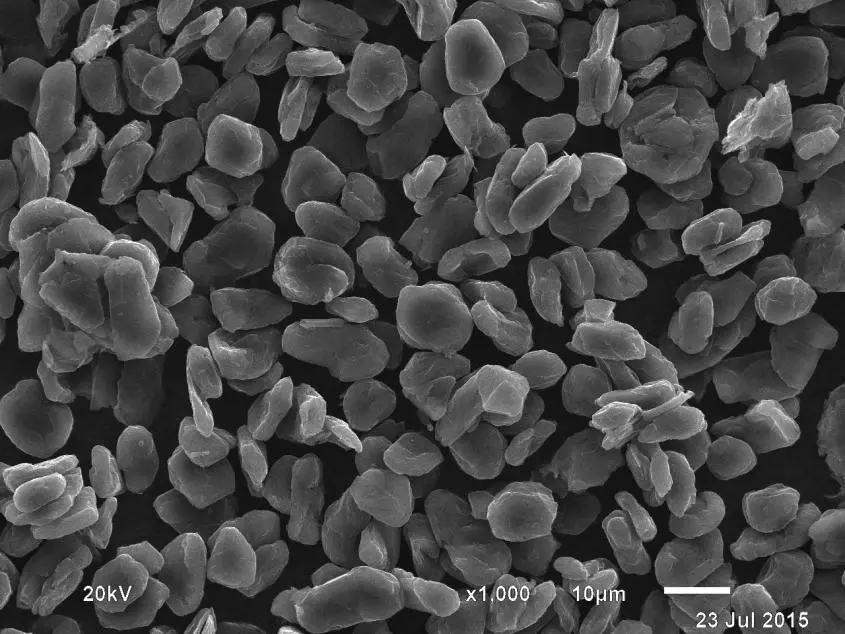
Key Factors to Consider When Selecting a Jet Mill for Graphite
Choosing the right jet mill for graphite powder production depends on several important factors to meet your specific goals.
Target particle size and distribution
For graphite micronization, aiming for a D50 particle size between 5-20 μm is common, especially for battery anode graphite milling. Narrow particle size distribution (PSD) ensures consistent performance in applications like conductive materials and lubricants.
Production capacity and throughput
Decide if you need a lab-scale jet mill for testing or a full industrial system. Throughput requirements vary widely, so choose a model that scales without sacrificing particle size control.
Material properties of graphite
Consider whether you’re processing flake or spherical graphite. Flake graphite is more abrasive and fragile, while spherical graphite requires ultra-fine grinding and spheroidization. Also, factor in moisture sensitivity and electrical conductivity, which may affect your mill choice.
Purity and contamination control
High purity is critical for battery-grade graphite. Look for jet mills with ceramic linings or non-metallic contact parts to avoid contamination. Compliance with GMP standards is often required to maintain product integrity.
Energy efficiency and operating costs
Jet milling uses compressed air or steam. Operating costs depend on consumption levels and grinding pressure. Opt for a jet mill design that balances energy consumption with yield optimization to save costs long term.
Safety and environmental factors
Since graphite dust can pose explosion risks, choose jet mills with ATEX certification and closed-loop dust control systems. Proper safety features protect both workers and product quality.
By carefully assessing these factors, you can select a jet mill that delivers high purity, consistent ultra-fine graphite grinding, and reliable production for your specific graphite processing needs. For real-world insights, exploring detailed production line examples like the rare earth ultra-fine grinding jet mill production line helps understand efficiency and scale considerations.
Types of Jet Mills for Graphite Processing
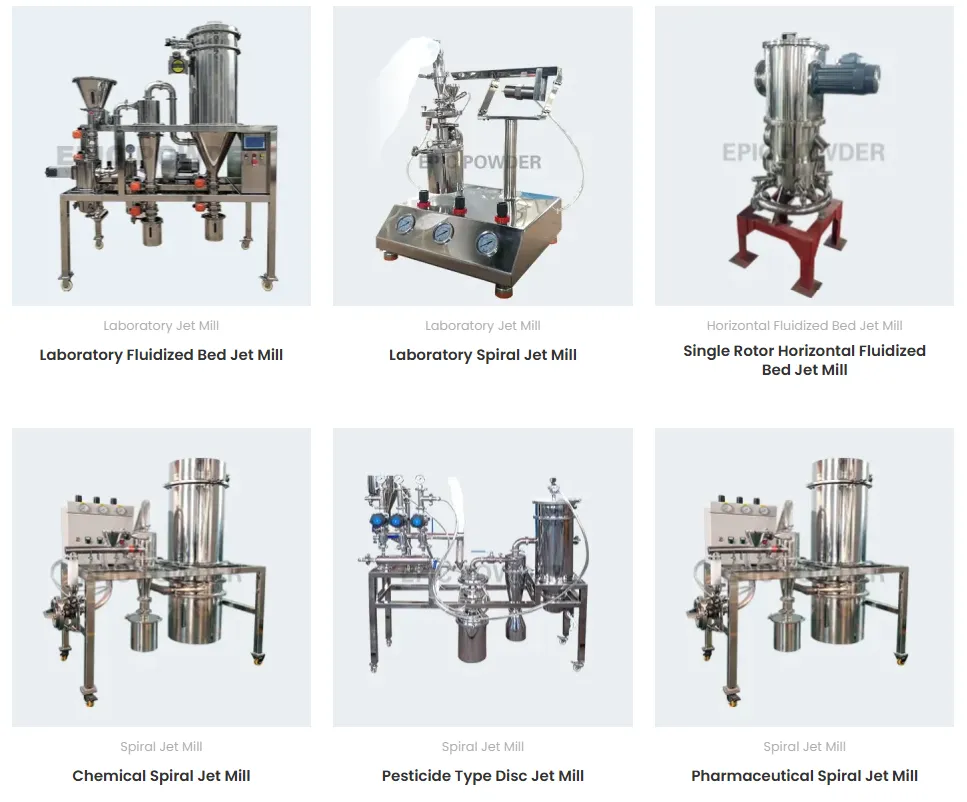
Choosing the right jet mill for graphite powder depends on the type of graphite and desired particle size. Here’s a quick look at common jet mill types and their fit for graphite micronization:
| Jet Mill Type | Fineness Range (μm) | Features | Best for Graphite Type | Contamination Risk | Notes |
|---|---|---|---|---|---|
| Fluidized Bed Opposed Jet Mill | 1–5 | Dynamic classifier, ultra-fine grinding | Spherical graphite, battery anode grade | Very Low | Ideal for ultra-fine, high-purity graphite fluidized bed jet mill graphite |
| Spiral/Pancake Jet Mill | 5–20 | Static classification, cost-effective | Flake graphite, general fine grinding | Low | Suitable for largescale fine grinding with moderate precision |
| Opposed Jet Mill with Classifier | 1–10 | High precision, controls heat buildup | Heat-sensitive & abrasive graphite | Very Low | Great for brittle or sensitive graphite, fine grading |
- The fluidized bed opposed jet mill excels in ultra-fine grinding and producing spherical graphite for batteries.
- The spiral or pancake jet mill is cheaper and fits well when ultra-fine specs aren’t critical.
- The opposed jet mill with classifier strikes a balance between precision and material sensitivity, perfect for abrasive or heat-sensitive graphite.
Each type minimizes contamination by using ceramic or tungsten carbide linings, crucial for maintaining high purity graphite powder. Selecting the proper mill type ensures narrow particle size distribution (PSD) and optimizes performance for your graphite applications.
Jet Mill vs Alternatives for Graphite Grinding
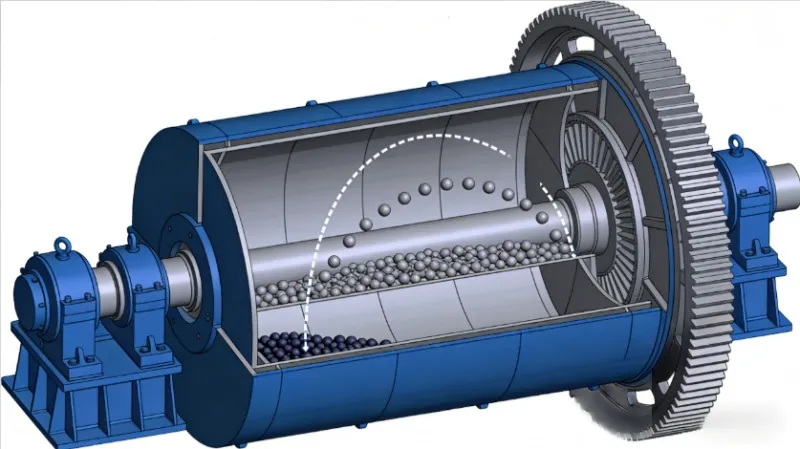
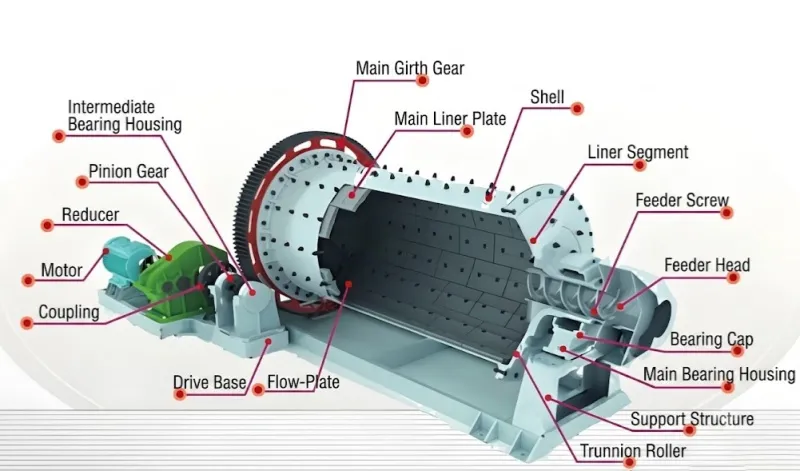
When it comes to graphite micronization, choosing the right equipment can make a big difference. Air classifier mills rely on mechanical impact, which tends to cause higher wear and risks contamination—making them more suitable for initial shaping or spheroidization rather than ultra-fine grinding. Mechanical or ball mills are generally cheaper but produce a broader particle size distribution (PSD) and are not recommended for battery anode graphite where purity and fineness are critical.
Jet mills stand out for producing high-purity, ultra-fine graphite powder with a narrow PSD, essential for battery-grade materials. They use no mechanical parts in the grinding zone, which greatly reduces contamination and wear. Plus, jet milling scales well from lab trials to full production volumes. For applications demanding ultra-fine, contamination-free graphite with consistent particle size—jet milling remains the go-to solution.
For example, several battery companies have optimized their graphite processing using dedicated jet mill grinding lines, achieving excellent control over particle size and purity. You can see practical applications of this in the graphite milling production line for a battery company in Yichun.
By opting for jet mill technology over alternatives, you maximize product quality, consistency, and operational reliability—key factors for today’s demanding graphite markets.
Special Considerations for Battery-Grade Graphite Production
When producing battery-grade graphite, especially spherical graphite, jet milling plays a crucial role in achieving the right particle size and shape. Jet mills are excellent for producing ultra-fine, uniform graphite particles that meet the demanding specs for battery anodes. The process helps create spherical graphite with high tap density and consistent surface area, both key to enhancing electrochemical performance in lithium-ion batteries.
Integrating jet milling with upstream crushing and precise classification ensures the feedstock is optimized, avoiding oversized particles that can reduce battery efficiency. After milling, coating steps can further improve conductivity and stability. This combination of milling, classification, and coating is essential for producing high-quality battery anode graphite that meets industry standards.
For example, advanced jet mill systems can be tailored for spherical graphite production, ensuring narrow PSDs and minimal contamination—crucial for battery applications where purity is critical. These systems often work alongside classifiers and crushers in a streamlined production line, delivering consistent, reliable graphite powder ideal for battery manufacturers. For more on efficient graphite processing lines, check out this lithium iron phosphate and single crystal ternary jet mill production line.
Practical Tips for Evaluation and Purchase
When choosing a jet mill for graphite powder, it’s smart to start with trials using your specific graphite feedstock. This allows you to see firsthand how the jet mill handles your material’s particle size, moisture, and abrasiveness. Small-scale testing helps nail down the right mill model, grinding pressure, and airflow settings to achieve your target graphite particle size distribution.
Next, think about scalability. What works in a lab might not translate perfectly to industrial volumes. Make sure your chosen jet mill model can ramp up production smoothly without compromising the ultra-fine grinding quality needed for battery anode graphite milling or spherical graphite production.
Maintenance is another key point. Jet mills have wear parts like ceramic nozzles and liners, especially critical to control jet mill contamination and maintain purity. Choose equipment designed for easy parts replacement and long-term reliability to reduce downtime and operating costs.
Finally, vendor choice matters a lot. Pick suppliers who offer strong technical support, customization options, and solid after-sales service. A partner familiar with the nuances of graphite processing equipment can guide you in optimizing your setup and troubleshooting issues quickly.
For example, companies have successfully upgraded their processes by integrating tailored spiral jet mill production lines, enhancing both efficiency and product quality. You can see how such projects improve output by reviewing detailed case studies on spiral jet mill production lines for pharmaceutical and other fine powders.
Taking these practical steps lets you confidently select a jet milling system that fits your graphite processing needs while ensuring flexibility and long-term success.
Epic Powder
Epic Powder’s customized jet milling solutions have played a subtle yet vital role in these successes. Their expertise in designing fluidized bed jet mills and opposed jet mills tailors particle size and shape for specific graphite applications, including spherical graphite production and battery-grade graphite micronization. You can see how such tailored grinding solutions elevate product quality and operational efficiency in their recent projects, including advanced materials and conductive additives processing.
For those exploring improvements in graphite processing equipment, references like the Epic Powder case involving advanced resin production showcase how specific jet milling setups can be adapted to meet demanding purity and fineness requirements without compromising throughput or energy efficiency. This balance is key for industrial-scale graphite micronization targeting narrow PSD graphite, especially when producing battery anode graphite.
To learn more about these practical advancements and real-world results, consider examining Epic Powder’s tailored jet milling solutions in related industrial projects.

“Thanks for reading. I hope my article helps. Please leave a comment down below. You may also contact EPIC Powder online customer representative Zelda for any further inquiries.”
— Jason Wang, Senior Engineer