목차

폐기물에서 부가가치로: 고에너지 볼 밀링으로 보크사이트 잔류물(적토)을 고부가가치 제품으로 전환하는 방법

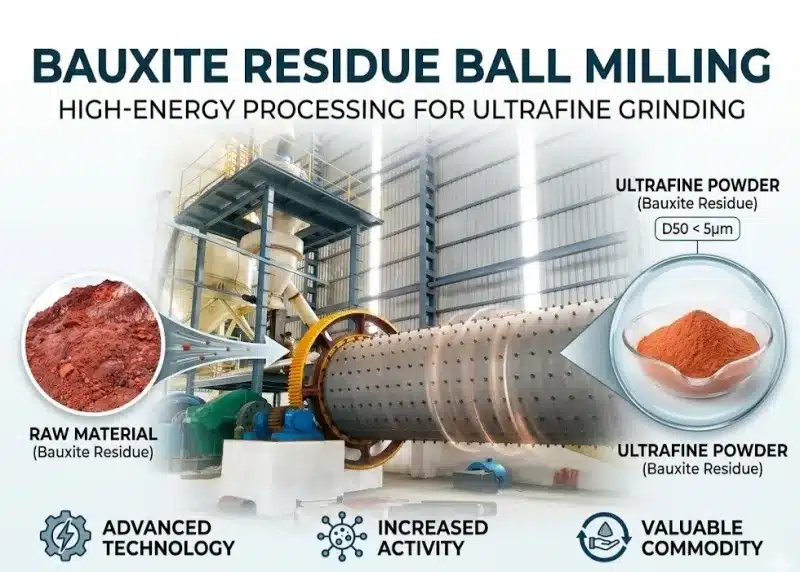
In the course of global industrialization, the rapid growth of the aluminum industry has left behind a significant environmental burden—bauxite residue (red mud). As a highly alkaline solid waste generated during alumina production, approximately 1.0 to 1.5 tons of red mud are produced for every ton of alumina manufactured. It is estimated that the global stockpile of red mud has exceeded 4 billion tons and continues to grow at a rate of about 150 million tons per year. n this context, Bauxite Residue 볼 밀링 has emerged as a critical enabling technology for unlocking the hidden value of this massive waste stream.

For a long time, red mud has been regarded as a costly liability. Its strong alkalinity (with a pH value typically ranging from 10 to 13) and complex mineral composition pose significant environmental risks, making landfilling and simple disposal both expensive and unsustainable. However, from the perspective of the circular economy, red mud is not waste—it is a “misplaced resource.”

This article explores how high-energy ball milling (HEBM), through the core mechanism of mechanochemical activation, can transform red mud from industrial waste into high-value ultrafine powder materials, achieving a true transition from “waste” to “wealth.”

보크사이트 잔류물 볼 밀링

I: The Challenges of Bauxite Residue (Red Mud) and the Role of High-Energy Ball Milling

Why Is Red Mud Difficult to Utilize Directly?

Globally, the utilization rate of red mud remains below 15%, primarily due to the following challenges:

  • Inert Physical Structure: Red mud exhibits uneven particle size distribution and high porosity, with very low chemical reactivity in its natural state.
  • Complex Mineral Composition: It contains large amounts of iron-bearing minerals (hematite, goethite), aluminum phases, calcite, and complex aluminosilicates (such as hydrogarnet).
  • High Alkalinity Constraint: The presence of residual alkali limits its large-scale application in construction materials.

High-Energy Ball Milling: Beyond Conventional Size Reduction

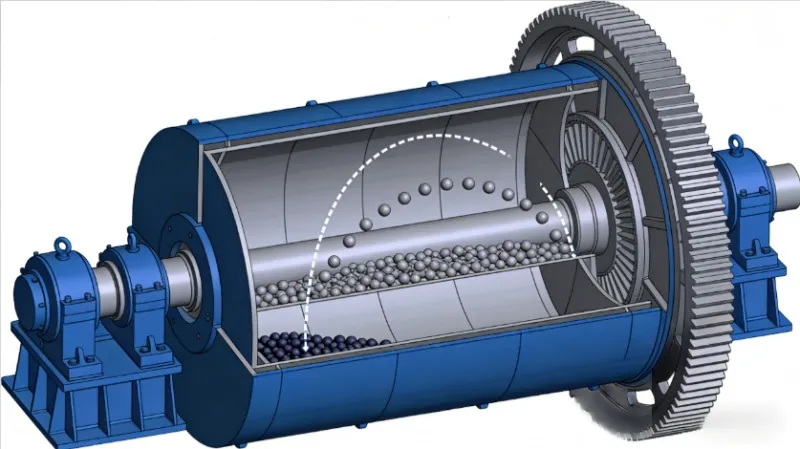
Traditional ball mills mainly achieve particle size reduction, whereas high-energy ball milling (HEBM) represents a fundamentally different approach. It subjects materials to extremely high-frequency impacts, friction, and shear forces generated by grinding media (steel or ceramic balls).

During high-energy ball milling, the material experiences not only mechanical forces but also significant physicochemical transformations once the energy input exceeds a critical threshold:

  • Lattice Distortion: The crystal structure is disrupted, leading to disordered atomic arrangements and the formation of defects and dislocations.
  • Surface Energy Increase: As particle size is reduced to the micron or submicron level, the specific surface area increases exponentially.
  • Bond Breakage: Mechanical forces directly induce the rupture of chemical bonds, releasing reactive ions such as Al³⁺ and Si⁴⁺.

II: Technical Pathway — From Bauxite Residue(Red Mud) to Ultrafine Powder

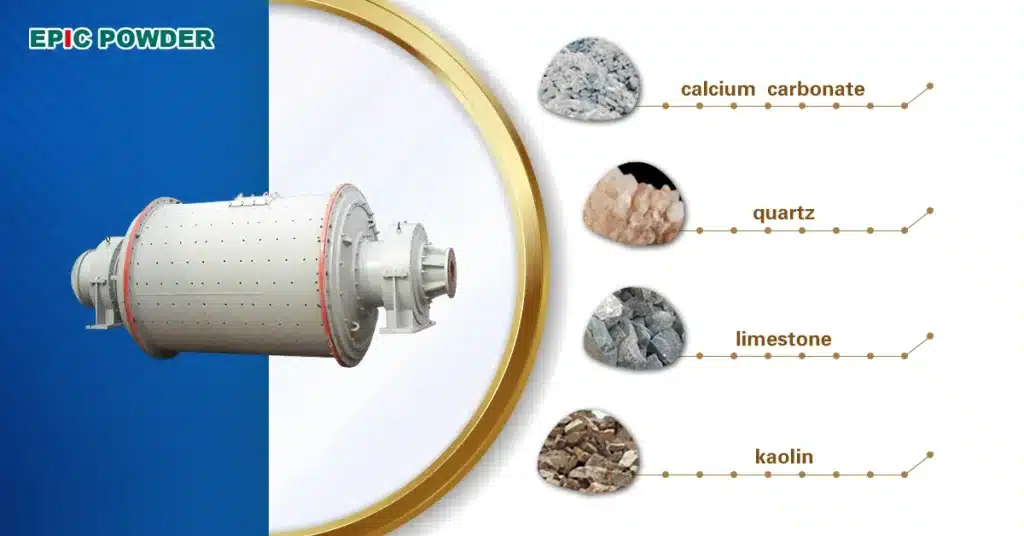
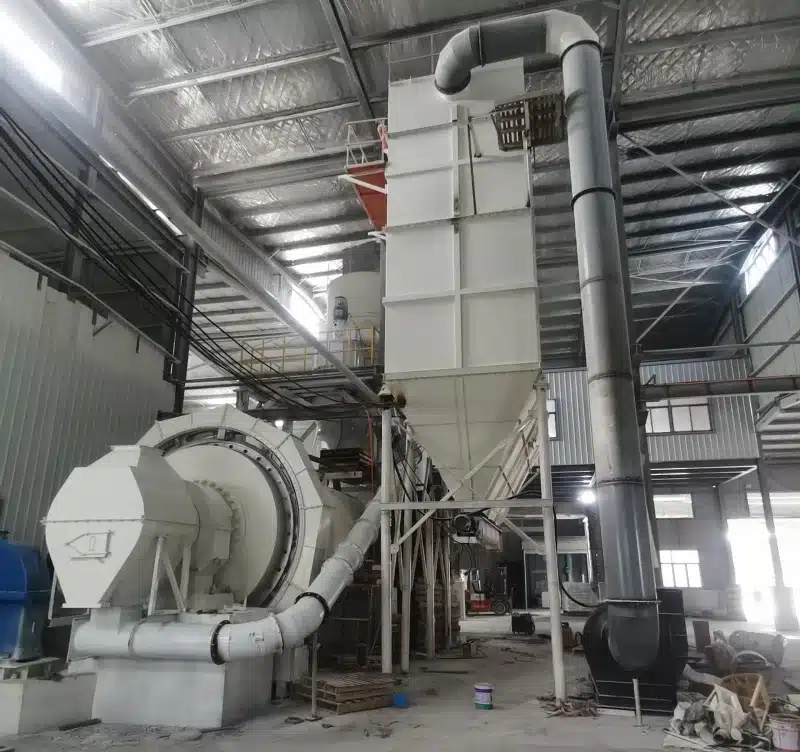
볼밀0
볼밀0

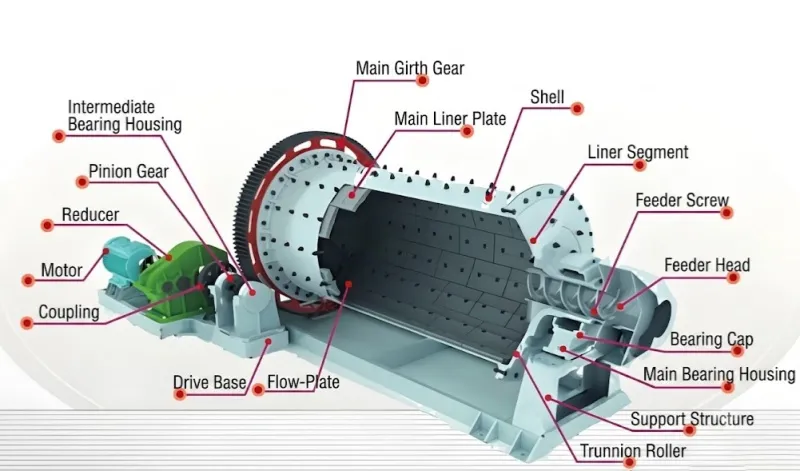
To convert red mud into a marketable product, a well-designed process flow is essential, and Bauxite Residue Ball Milling is at the heart of this transformation.

Pretreatment: Dealkalization and Drying

Before entering the mill, red mud must undergo pretreatment. This includes washing, chemical neutralization, or CO₂ carbonation to reduce its pH level. Subsequently, industrial drying is required to reduce moisture content below 5%, preventing agglomeration during milling.

Core Process: Ultrafine Grinding and Mechanochemical Activation

This is the most critical step for value enhancement. Inside a high-energy 볼밀, by optimizing the ball-to-powder ratio, rotational speed, and milling time, red mud particles undergo rapid transformation:

  • Stage 1 (0–30 min): Rapid particle size reduction and increased surface area, mainly physical size diminution.
  • Stage 2 (30–120 min): A balance between cold welding and fragmentation is established; particles reach the micron scale (e.g., D50 < 5 μm), and crystal structures begin to collapse.
  • Stage 3 (Mechanochemical Equilibrium): Mineral phases such as hematite undergo amorphization. At this stage, red mud exhibits strong pozzolanic activity.

In-situ Modification: One-Step Composite Processing

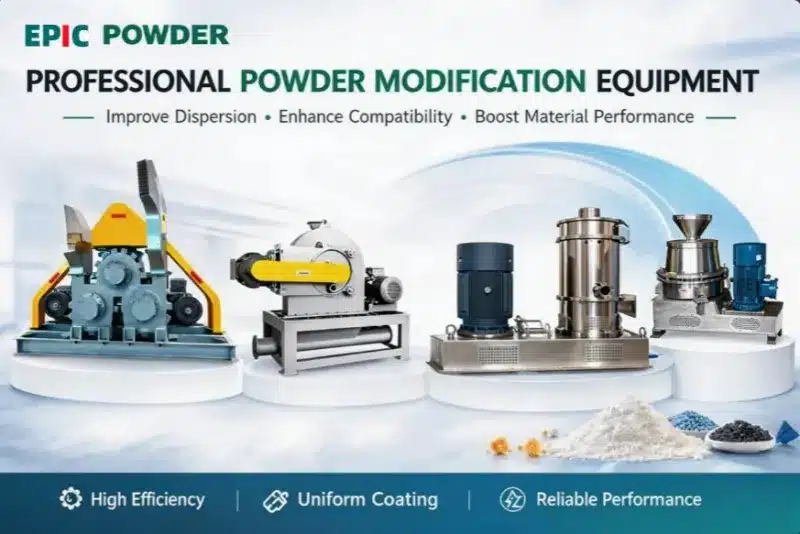
By adding small amounts of modifiers (such as silane coupling agents, stearic acid, or activation agents) during milling, 표면 개조 can be achieved simultaneously with particle size reduction. This “one-step” process produces modified ultrafine red mud powder that is directly suitable for use as a polymer filler or advanced construction additive.

III: High-Value Applications of Processed Red Mud

After high-energy ball milling, red mud can be transformed into high-value products across multiple industries:

“Super-Active Additive” for Green Construction Materials

In cement and concrete industries, ultrafine red mud can be used as a high-performance supplementary cementitious material.

  • 장점: Mechanochemically activated red mud significantly accelerates secondary hydration reactions. Studies show that concrete with 20% ultrafine red mud can achieve 28-day compressive strength comparable to or even exceeding that of conventional concrete.
  • Value Proposition: Reduces cement consumption and lowers carbon emissions in construction.

Functional Filler in Polymer Industry

Ultrafine (and especially nanoscale) red mud demonstrates reinforcing effects in plastics and rubber.

  • 장점: Iron oxide components provide inherent flame retardancy and UV resistance.
  • Value Proposition: Can replace more expensive fillers such as calcium carbonate or kaolin, reducing material costs.

High-Performance Adsorbent in Environmental Engineering

The significantly increased surface area makes ultrafine red mud an excellent adsorbent for pollutants.

  • 장점: Adsorption capacity for heavy metals (Pb²⁺, Cd²⁺, Cr³⁺) can increase by 5–10 times compared to untreated red mud.
  • Value Proposition: Widely applicable in wastewater treatment and mine remediation, achieving “waste-to-treat-waste.”

Pre-treatment for Valuable Metal Recovery

Red mud contains valuable metals such as iron, aluminum, titanium, and rare earth elements (e.g., scandium).

  • 장점: High-energy ball milling breaks down aluminosilicate encapsulation, significantly improving leaching efficiency.
  • Value Proposition: Reduces extraction costs and enhances overall resource recovery rates.
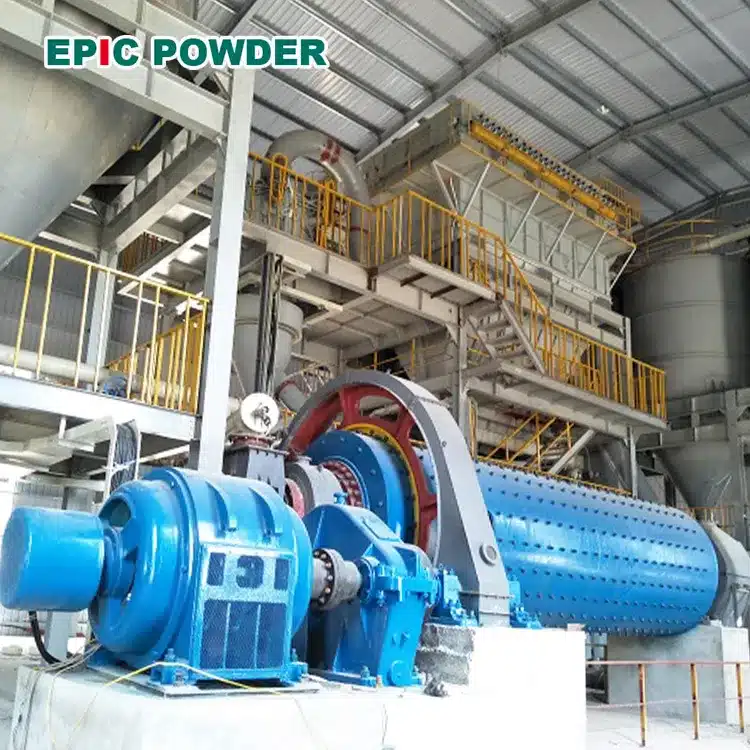
볼밀 분류 생산 라인
볼밀 분류 생산 라인

IV: Economic and Sustainability Analysis (ROI Perspective)

For global investors, technical feasibility is important, but return on investment (ROI) is the ultimate driver.

Cost Structure Optimization

Although high-energy ball milling consumes electricity, the resulting ultrafine red mud powder commands a much higher market value compared to disposal costs. With large-scale automated production, energy consumption per ton can be controlled, while the product’s premium as a high-performance additive remains substantial.

Carbon Credits and Policy Incentives

Under the global push toward carbon neutrality, replacing cement clinker with red mud offers significant carbon reduction benefits. Companies can reduce landfill costs and potentially generate additional revenue through carbon trading mechanisms.

V: Future Outlook — Toward the Nanoscale Era

With advances in material science, red mud processing is moving toward nanoscale applications. Using advanced planetary ball mills or stirred media mills, red mud may enter high-end markets such as:

  • Advanced coatings
  • Semiconductor polishing materials
  • Catalyst supports

결론

The resource utilization of bauxite residue is not only an environmental necessity but also a major industrial opportunity. High-energy ball milling serves as a critical bridge between industrial waste and high-value products.

By reconstructing the microstructure of red mud, this technology unlocks its latent value and provides a viable pathway for circular economy development. In practice, Bauxite Residue Ball Milling will continue to evolve as a core process, enabling higher efficiency, better product performance, and broader industrial adoption.

을 위한 powder processing equipment manufacturers, this represents not only a technical challenge but also a vast market opportunity.


에밀리 첸

“"읽어주셔서 감사합니다. 제 글이 도움이 되었으면 좋겠습니다. 아래에 댓글을 남겨주세요. 추가 문의 사항이 있으시면 젤다 온라인 고객 상담원에게 문의하셔도 됩니다."”

— 게시자 에밀리 첸
문의하기

당사 전문가가 6시간 이내에 연락하여 기계 및 프로세스에 대한 귀하의 요구 사항을 논의해 드립니다.

    다음을 선택하여 인간임을 증명하십시오. 트럭.

    관련 게시물