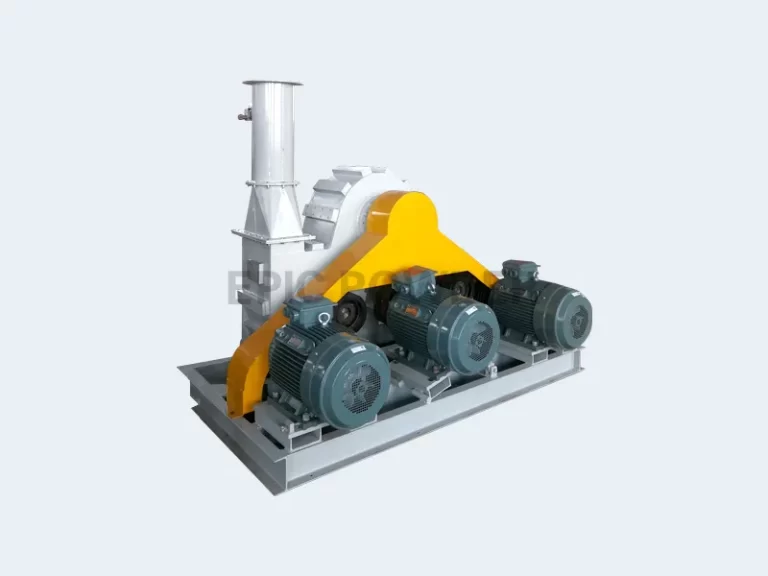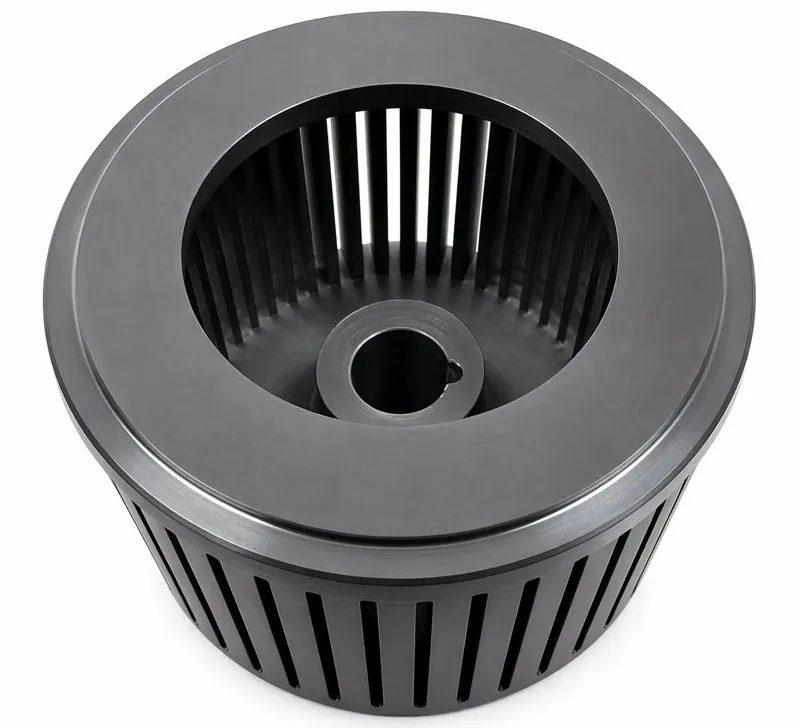
In the lithium-ion battery supply chain, the particle size and particle size distribution (PSD) of anode materials are among the key factors that determine energy density, first-cycle coulombic efficiency, cycle life, and processing performance. For artificial graphite, oversized particles limit compaction density and rate capability, while undersized particles increase specific surface area and reduce first-cycle efficiency. As a result, D50 must be tightly controlled within the target range (typically 6–18 µm). To achieve this fine grinding with no contamination and low temperature rise, the jet mill is the mainstream choice in the anode material industry.
1. Why Anode Materials Require Precise Particle Size Control
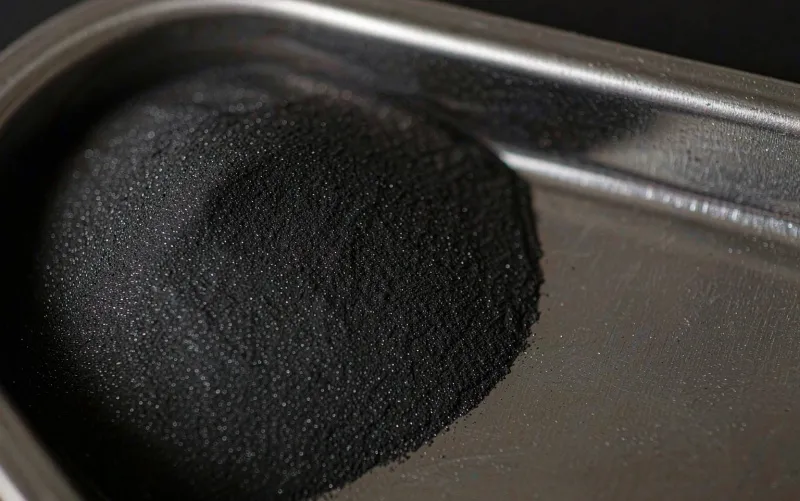
- D50 governs energy density and rate performance: an optimal median particle size balances compaction density against lithium-ion diffusion pathways.
- PSD affects coating quality: a broad distribution leads to rough electrode surfaces and poor uniformity during calendering.
- Fines increase surface area: excessive fines accelerate side reactions with the electrolyte, lowering first-cycle coulombic efficiency.
- Metallic contamination is a red-line metric: magnetic foreign matter (Fe, Cr, Ni) in anode powder is typically limited to tens of ppb, making contamination control during grinding critical.
2. How a Jet Mill Works
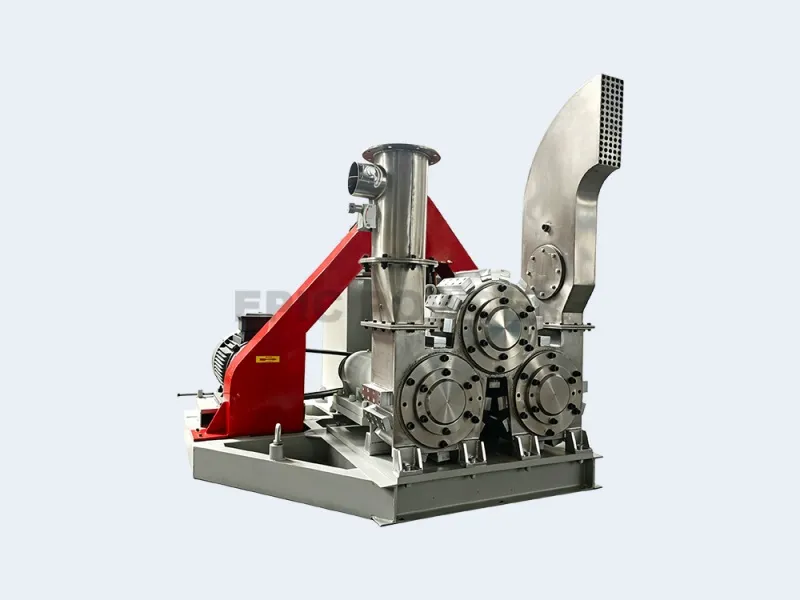
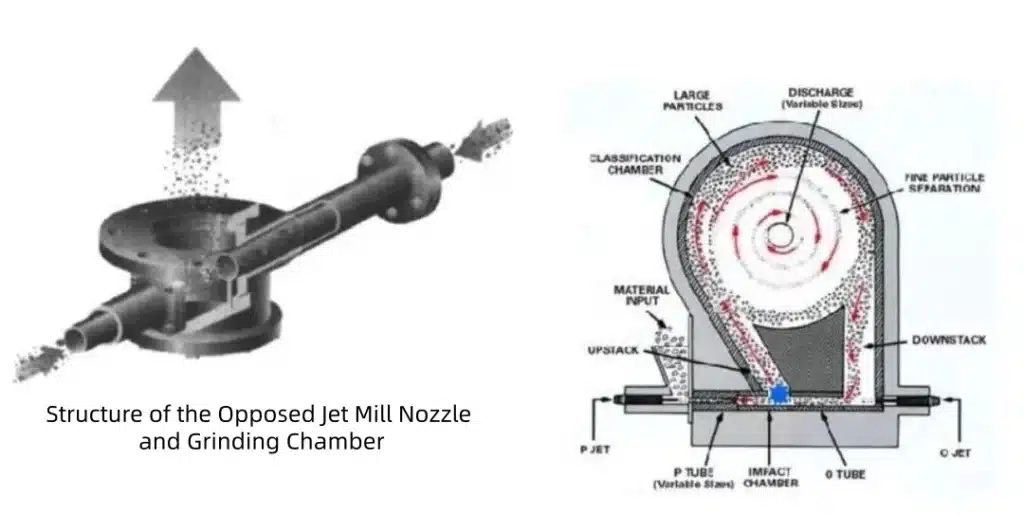
A jet mill uses high-speed gas flow (compressed air or nitrogen, up to Mach 2–3) as the grinding energy source:
- Acceleration: material is drawn into the grinding chamber through a venturi feeder and accelerated to sonic speed at the nozzles.
- Self-collision pulverization: particles shatter by colliding with each other and with the chamber wall — no grinding media are involved.
- Air classification: ground material rises into a built-in (or external) turbo classifier; qualified fines exit with the airflow into the collection system, while coarse particles are returned by centrifugal force for further grinding.
This closed “grinding–classification” loop produces ultrafine powder with a narrow, adjustable size distribution and no oversized particles.
3. Key Advantages of Jet Milling for Anode Materials
| Advantage | Benefit for Anode Materials |
| Media-free grinding | Particle-on-particle impact introduces no media wear contamination; ceramic/abrasion-resistant liners help meet ppb-level magnetic impurity targets |
| Narrow PSD | Turbo classifier speed and airflow are precisely adjustable; D50 and D90 fully controllable |
| Purely physical process | No chemical reaction involved — suitable for graphite, silicon-carbon, hard carbon and other anode systems |
| Low temperature rise | Air expansion cooling prevents graphite surface oxidation and damage to coating layers |
| Continuous production | Fully enclosed, negative-pressure operation with continuous feeding/discharge, dust-free and automation-ready |
| Process integration | Can be combined with surface coating and spheroidization steps into one integrated line |
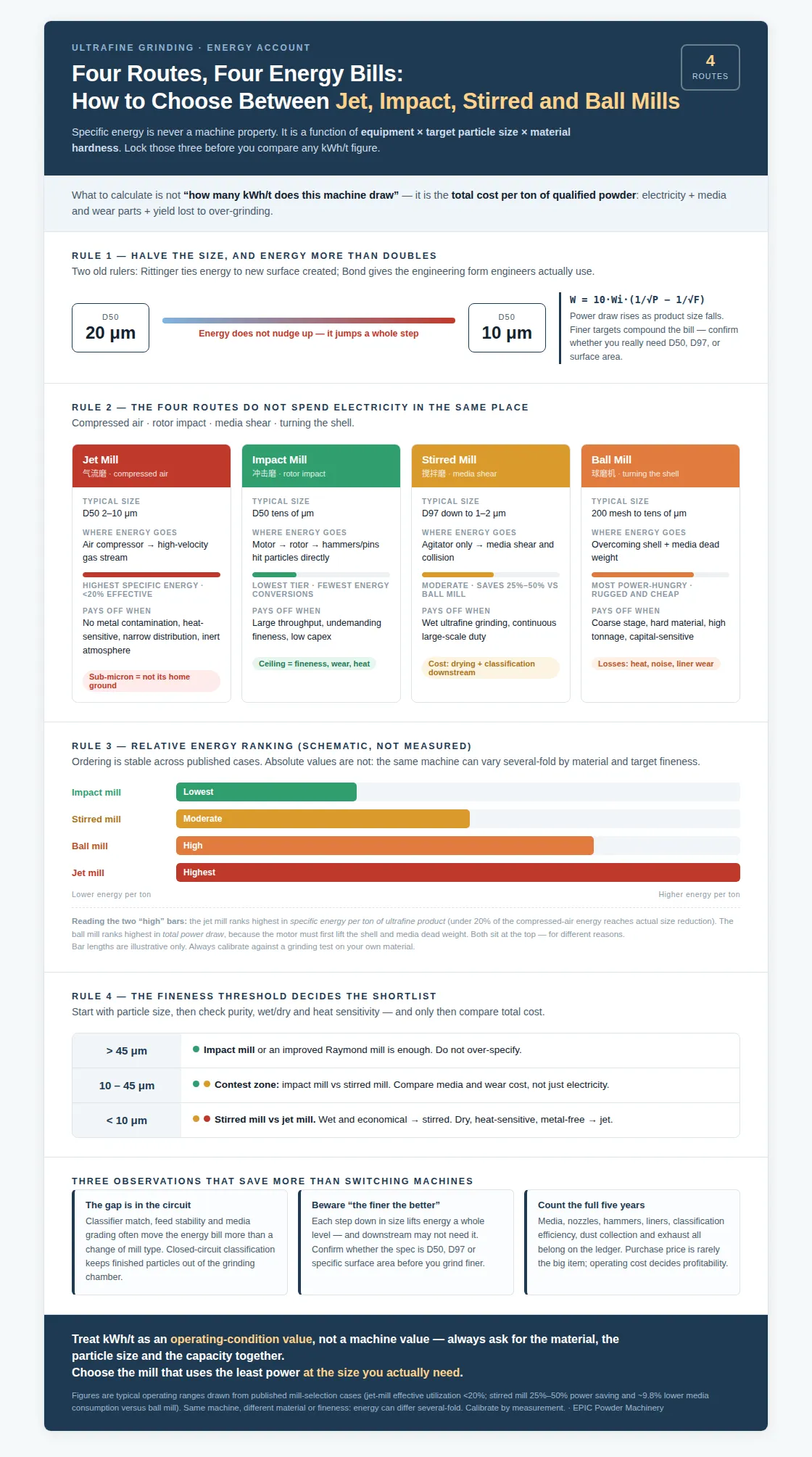
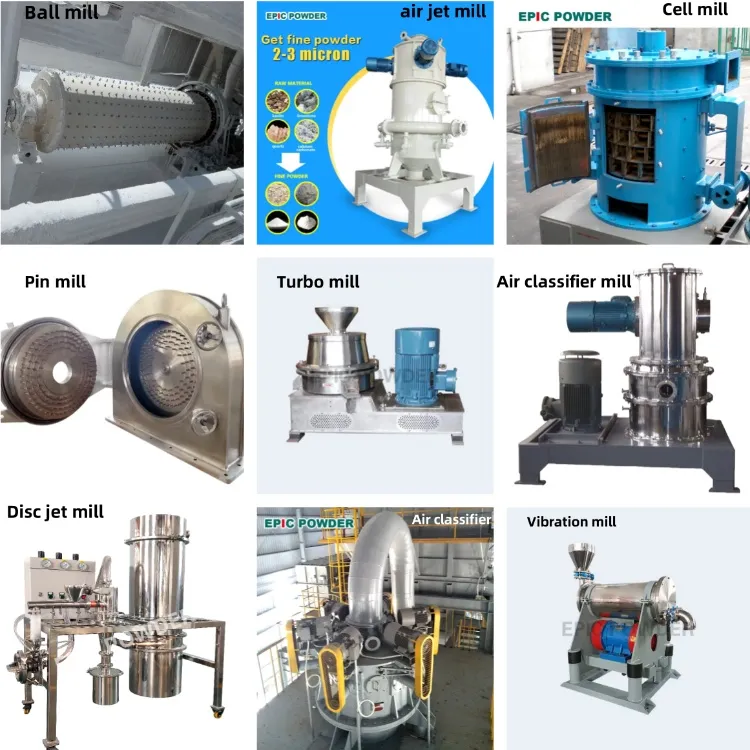
4. Jet Mill vs Ball Mill vs Vertical Roller Mill
| Item | Jet Mill | Ball Mill | Vertical Roller Mill |
| Mechanism | High-speed air self-collision | Media impact & attrition | Roller pressure & shear |
| Fineness | D97 adjustable down to 2–45 µm | Limited fineness, broad PSD | Medium-fine range |
| Contamination | Very low (no media) | Media wear contamination | Low |
| Temperature rise | Low | High | Medium |
| Energy consumption | Higher (air consumption) | Medium | Lower |
| PSD | Narrow, adjustable | Broad | Medium |
| Best fit | Premium anodes, Si-C, pre-spheroidized graphite | Coarse grinding, contamination-tolerant systems | High-volume graphite pre-grinding |
Conclusion: for battery anode materials with strict PSD and metal impurity requirements — especially finished artificial graphite grinding and silicon-carbon anodes — the jet mill offers the best overall performance. A “vertical roller mill for coarse grinding + jet mill for fine grinding” combination is often used to reduce total cost at high volumes.
5. Jet Mill Selection Criteria for Anode Materials
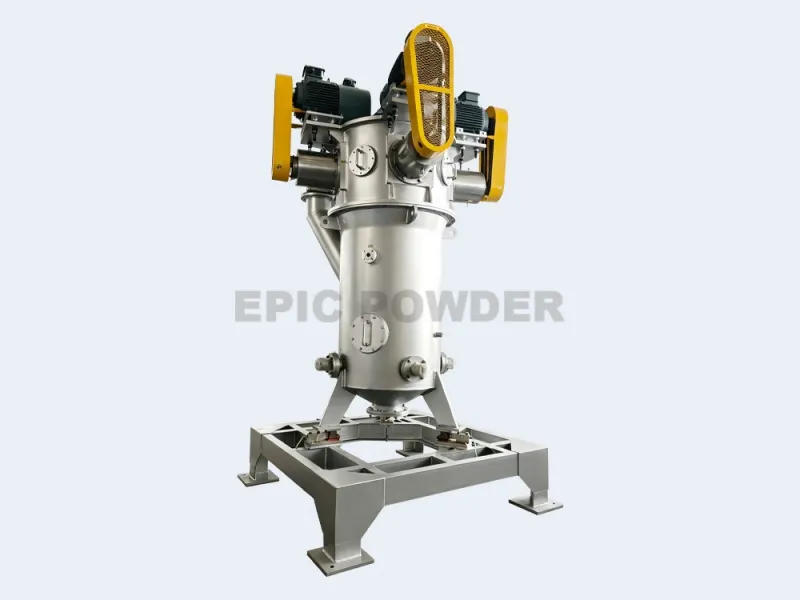
- Capacity vs air consumption: calculate compressed-air demand against target D50 and hourly output; the air compressor, aftercooler and drying system dominate investment cost.
- Liner materials: specify ceramic (Al2O3/SiC), polyurethane or high-abrasion alloy contact surfaces, plus magnetic separators to control magnetic impurities.
- Classification precision: high-precision turbo classifier with adjustable speed and airflow, supporting inline laser particle-size feedback control.
- Explosion protection: graphite dust is combustible and silicon powder is more reactive; specify nitrogen recirculation, venting/suppression systems, and compliance with dust explosion standards.
- System integration: negative-pressure conveying, cyclone + cartridge two-stage dust collection, and automatic packaging for a fully closed line.
- Validation: require lab/pilot trials with the actual feed material, using measured PSD, throughput, specific energy and impurity increment as the selection basis.
6. Typical Applications
- Artificial graphite anode: final grinding and PSD tuning after shaping/coating, D50 controlled at 6–18 µm.
- Silicon-carbon anode: nitrogen-protected jet milling for low-contamination, low-temperature-rise ultrafine grinding of hard, oxidation-prone Si-based materials.
- Natural graphite: classification and fines recovery before and after spheroidization.
- Hard/soft carbon: stable production of narrow-PSD fine powder for sodium-ion and other emerging systems.
Summary
With media-free grinding, narrow PSD, low temperature rise and continuous production, the jet mill is the preferred fine-grinding solution for anode materials. Equipment selection should be evaluated systematically against particle size targets, capacity, magnetic impurity control and explosion safety, with pilot trials confirming the optimal process parameters.
FAQ
Q1: What are typical particle size requirements for anode materials?
A: Mainstream artificial graphite anodes typically have D50 of 6–18 µm depending on rate-type or capacity-type products; fine fraction (D10) and coarse tail (D99) are also tightly controlled.
Q2: Does jet milling graphite introduce contamination?
A: Jet milling is particle-on-particle impact with no grinding media, so contamination is far lower than ball milling; combined with ceramic liners and magnetic separators, ppb-level magnetic impurity targets are achievable.
Q3: Is jet milling energy-intensive?
A: Yes, air consumption makes jet mills less energy-efficient than ball mills per ton, but the trade-off is narrow PSD and low contamination. A combined “coarse + fine” grinding route helps reduce overall cost.
Q4: Can jet mills process silicon-carbon anodes?
A: Yes. Use a nitrogen-recirculation jet mill to combine oxidation prevention with dust explosion safety; fineness can be adjusted to the sub-micron range.